

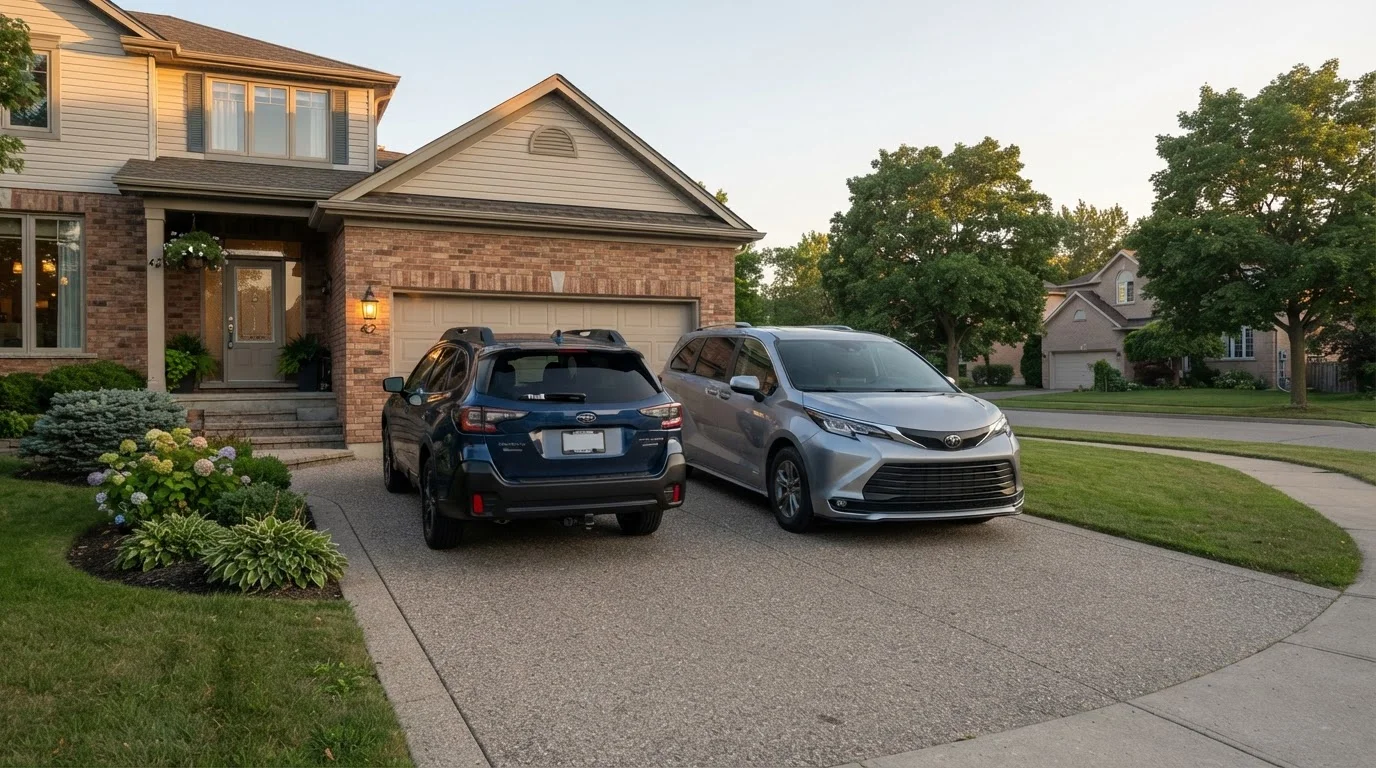
Why Two-Car Costs Compound Faster Than Expected
Most families acquire a second vehicle gradually - a new job, a teenager getting a license, or a lifestyle change - without fully calculating what the addition means to the household budget. The result is that two-car costs rarely feel like a deliberate financial choice, even though they represent one of the largest recurring expenses most US families carry.
Fixed costs are the core of the problem. Insurance, registration, and financing costs exist regardless of whether a car moves an inch. When you double the number of vehicles, you largely double these baseline costs. Add variable expenses - fuel, tires, oil changes, and unexpected repairs - and a two-vehicle household can easily spend $12,000-$18,000 per year on automotive costs combined, depending on vehicle age, location, and financing status. Understanding those common car ownership cost myths helps you see where money is actually going rather than where you assume it goes.
Double Ownership Means Double Fixed Costs
Every vehicle in your household carries its own insurance premium, registration fee, loan or depreciation cost, and maintenance schedule - regardless of how often it's driven. These fixed costs stack, which is why two-car households need an especially deliberate approach to managing automotive spending. Even modest reductions per vehicle compound into meaningful annual savings.
The steps below are designed to help you work through each cost category systematically - starting with a clear-eyed audit and ending with a structure that keeps both vehicles from quietly draining your family's financial flexibility.
What you will need
Step-by-Step: Reducing Your Two-Vehicle Cost Load
Follow these steps in order. Earlier steps build the information you need to make the later decisions well. Skipping the audit phase and jumping straight to insurance changes or trade-in decisions is a common mistake that leads to optimization in the wrong areas.
Insurance Declarations Pages
Used to review current coverage levels, premiums, and multi-vehicle discounts on both policies.
Household Budget Spreadsheet or App
Tracks total monthly automotive spending - loans, insurance, fuel, and maintenance - across both vehicles in one place.
Vehicle Maintenance Log
Records service history and upcoming scheduled maintenance for each car to prevent missed intervals and expensive repairs.
Odometer / Mileage Records
Helps determine which vehicle carries the heaviest driving load and whether usage patterns justify current coverage tiers.
Map out the true cost of each vehicle
Before trimming anything, you need a clear picture of what each vehicle actually costs per month. List every recurring cost: loan or lease payment, insurance premium, fuel, registration, and a monthly estimate for maintenance and repairs based on the past 12 months. Add depreciation if either car is relatively new - a vehicle losing several thousand dollars in value each year carries a cost even if no payment is due.
Many families are surprised to find that the "cheaper" second car is actually the more expensive one once fuel efficiency, higher repair frequency, or a remaining loan balance is factored in. This audit is the foundation of every decision that follows. For a deeper look at how costs compound across a vehicle's life, see managing the full lifecycle cost of a family vehicle.
Audit how each vehicle is actually used
Track who drives each vehicle, for what purpose, and how many miles per week. Common patterns in two-vehicle households include one car that handles the daily commute and one that sits mostly idle, or two cars covering near-identical routes with no meaningful role separation.
If one vehicle is dramatically underused, consider whether your household could consolidate to one car - or at least reduce the underused vehicle to a lower insurance tier. Even keeping both cars but adjusting daily logistics (carpooling one commute, batching errands) can cut fuel costs across both vehicles meaningfully. Our guide on reducing fuel costs without dramatically changing your habits outlines practical techniques.
Consolidate and right-size your insurance
Having both vehicles on the same insurer's policy typically unlocks a multi-vehicle discount and simplifies billing. Review whether the coverage level on each car matches its current value. A vehicle that is paid off and several years old often warrants dropping comprehensive or collision coverage if the annual premium for that coverage approaches or exceeds what a claim would realistically pay out after the deductible.
Also check for discounts tied to low annual mileage - if one car drives under a threshold your insurer recognizes (often around 7,500 miles per year), you may qualify for a reduced rate. Always verify changes with a licensed insurance professional before modifying your policy.
Stay ahead of maintenance on both vehicles
Deferred maintenance is one of the most common reasons two-vehicle households face sudden, large repair bills. When you are managing two cars, it is easy for service intervals on the less-used vehicle to slip. Follow the manufacturer's maintenance schedule for both - not the more aggressive intervals sometimes suggested at quick-lube shops, but also not past the manufacturer's recommended mileage.
Prioritize high-impact, low-cost items: tire pressure, oil changes, fluid levels, and air filters. These prevent the cascading failures - warped rotors, engine damage, transmission wear - that generate four-figure repair bills.
Evaluate whether to keep or replace each vehicle
When a vehicle is paid off, the financial calculus often favors keeping it - even if repairs become more frequent - compared to taking on a new loan. Run a simple comparison: estimate 12 months of realistic repair costs against 12 months of payments on a replacement vehicle, plus the insurance increase a newer car typically brings.
If one vehicle is nearing the end of its reliable life and replacement is unavoidable, review the full trade-off between financing, leasing, and paying cash. Our article on leasing vs. buying a car and the comparison of keeping a car longer vs. trading in early both provide structured frameworks for that decision.
Build a dedicated automotive savings buffer
Two vehicles mean two unpredictable repair timelines. Without a dedicated buffer, even a single unexpected repair - a transmission, tires, or a catalytic converter - can force a family to finance a repair on a credit card at high interest. Set a monthly transfer into a dedicated auto fund sized to cover at least one mid-range repair per vehicle per year.
A reasonable starting target for many households is one to two percent of each vehicle's current value per year, set aside monthly. Adjust based on age and condition. This approach is part of the broader discipline of family budgeting - treating car ownership as a predictable, plannable expense rather than a series of financial surprises.
Use a Shared Maintenance Tracker
Keep a simple shared document or app entry for both vehicles listing the last service date, mileage, and upcoming maintenance items. Staying ahead of scheduled service is one of the most reliable ways to avoid large, unexpected repair bills across a two-vehicle household.
Don't Drop Coverage to Save on Premiums
Reducing your liability limits or dropping uninsured motorist coverage to cut costs can create serious financial exposure after an accident. Before adjusting any coverage, review your state's minimum requirements and consult with a licensed insurance professional to understand the trade-offs. Lowering comprehensive or collision on an older, paid-off vehicle is often reasonable - but do not underinsure a vehicle that is still financed.
This article is for general informational and educational purposes only and does not constitute financial, insurance, or legal advice. Consult a licensed professional before making significant changes to insurance coverage or vehicle financing arrangements.
The content provided on our blog site traverses numerous categories, offering readers valuable and practical information. Readers can use the editorial team’s research and data to gain more insights into their topics of interest. However, they are requested not to treat the articles as conclusive. The website team cannot be held responsible for differences in data or inaccuracies found across other platforms. Please also note that the site might also miss out on various schemes and offers available that the readers may find more beneficial than the ones we cover.