

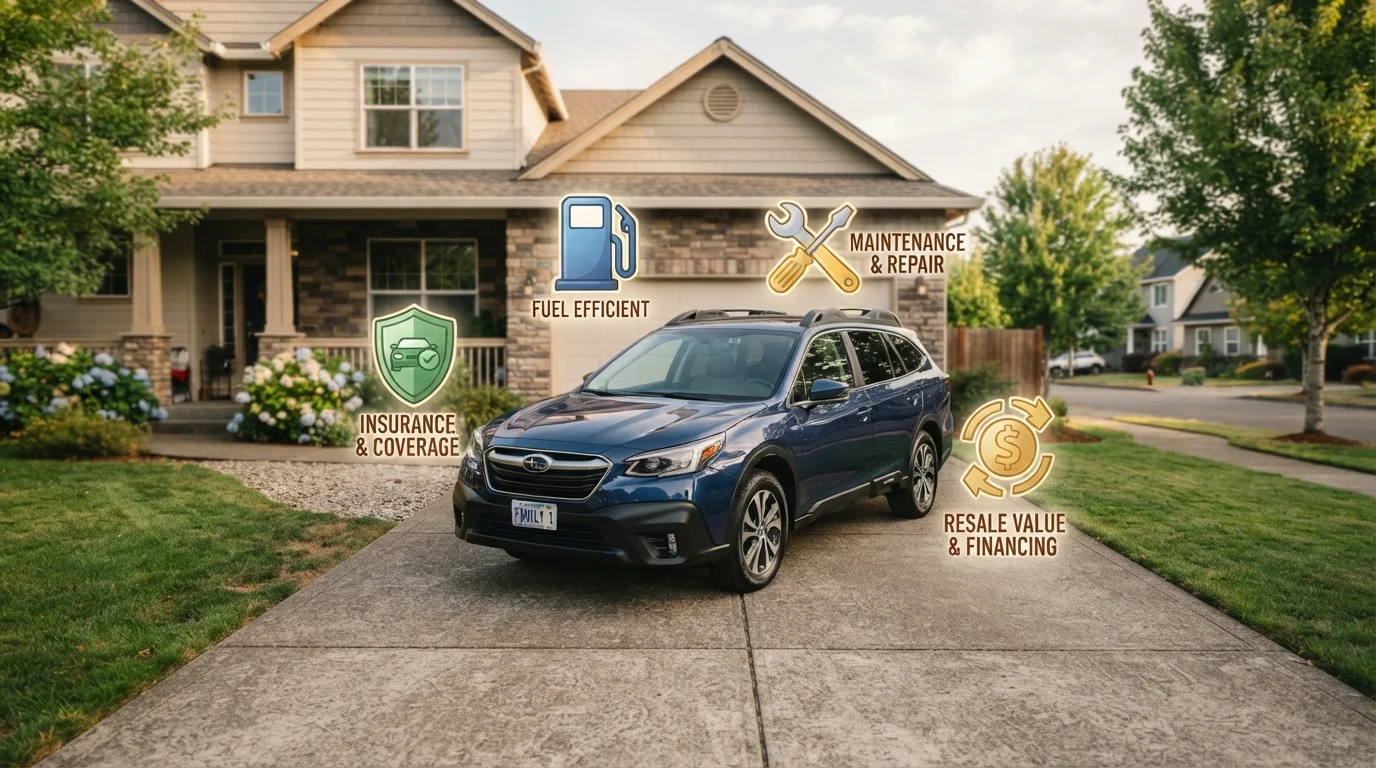
Why the Sticker Price Is Just the Starting Point
Most families walk into a dealership focused on one number: the purchase price. But that figure represents only a fraction of what a vehicle will actually cost to own. The total cost of ownership framework exists precisely because purchase price alone misleads buyers into underestimating their long-term financial commitment.
Car ownership costs fall into two broad categories: fixed costs that occur regardless of how much you drive (depreciation, insurance, registration, financing), and variable costs that scale with use (fuel, tires, routine maintenance). Both categories demand space in your household budget.
$10,000+
Average annual new car ownership cost
AAA's Your Driving Costs study has consistently placed average annual new vehicle costs above $10,000, including depreciation, insurance, fuel, and maintenance.
~20%
Value lost in first year of ownership
Industry analyses broadly estimate new vehicles lose 15-25% of their value within the first 12 months, making depreciation the dominant ownership expense.
50%+
Value lost within five years
Many vehicles lose more than half their original purchase value by the end of year five, though rates vary considerably by make, model, and market conditions.
Depreciation: The Cost Nobody Sends You a Bill For
Depreciation - the gradual loss of your vehicle's market value - is typically the largest single expense of car ownership. A new vehicle can shed 15-25% of its value within the first year, with cumulative losses reaching 50% or more by year five. Because this cost doesn't arrive as a monthly bill, it's easy to ignore until you attempt to trade in or sell.
The practical implication: when you buy a new car, you're effectively pre-paying for that value loss. Understanding how depreciation works can help you choose vehicles that hold their value better and time purchases more strategically.
Insurance, Fuel, and Maintenance: The Monthly Reality
Insurance is a mandatory, recurring cost in every US state. Premiums vary based on your driving record, location, vehicle type, age, and coverage level. Full coverage on a financed vehicle is typically required by the lender and can run several hundred dollars per month for some drivers.
Fuel costs fluctuate with gas prices and driving habits. A vehicle's EPA-estimated fuel economy provides a useful comparison tool, but real-world mileage often differs. Households with long commutes feel fuel costs most acutely.
Maintenance keeps a vehicle safe and operational. Routine services - oil changes, tire rotations, brake inspections, fluid checks - are predictable. Major items like tires, brake pads, and battery replacements are less frequent but more expensive. Setting aside a monthly reserve for these expenses prevents budget disruption when they arrive.
Build a Maintenance Reserve Into Your Budget
Rather than treating car repairs as surprise expenses, set aside a fixed monthly amount - many financial advisors suggest $50-$100 as a starting point - into a dedicated vehicle fund. This smooths out the impact of irregular but predictable costs like tires, brakes, and battery replacements, keeping your overall budget stable.
Financing, Fees, and the Costs Families Often Forget
If you finance a vehicle, interest charges can add thousands of dollars to its real price. How car financing actually works - including the impact of loan term length and interest rate - is critical knowledge before signing. A longer loan term shrinks monthly payments but significantly increases total interest paid over time.
Registration fees, title transfers, state sales tax, and annual renewal costs vary considerably by state and vehicle value. Some states also require periodic safety or emissions inspections with associated fees. These charges are easy to overlook during purchase negotiations but add meaningfully to the annual total.
For a comprehensive view of what these numbers look like in aggregate, the annual car ownership cost reference provides average figures across cost categories that families can use as a planning baseline.
Building a Smarter Ownership Budget
Armed with a full picture of ownership costs, families can make more informed decisions - not just about which vehicle to buy, but whether to buy new or used, how long to finance, and how vehicle choice fits within a broader household budget. Many common car cost assumptions don't survive contact with real numbers.
A practical approach: before committing to a vehicle, estimate the five-year total cost including depreciation, insurance, fuel, maintenance, financing interest, and fees. Compare that figure across a few vehicle options - not just the monthly payment. This shifts the conversation from affordability in the short term to true value over time.
This article is for general informational purposes only and does not constitute financial or legal advice. For decisions specific to your financial situation, consult a qualified financial professional.
Frequently Asked Questions
According to AAA's annual Your Driving Costs study, the average annual cost of owning and operating a new vehicle in the US has exceeded $10,000 in recent years. This figure includes depreciation, financing, insurance, fuel, maintenance, and fees. Actual costs vary significantly by vehicle type, location, and driving habits.
Depreciation is widely considered the largest and most overlooked cost. A new car can lose 15-25% of its value in the first year alone. Because depreciation doesn't generate a monthly bill, many owners underestimate its financial impact.
Used vehicles generally have lower purchase prices and experience less steep depreciation early on. However, they may carry higher maintenance costs and fewer warranty protections. The smartest comparison looks at total ownership cost over your intended ownership period, not just the price tag.
Financing adds interest charges on top of the vehicle price. Longer loan terms lower monthly payments but increase total interest paid. Even a modest interest rate on a multi-year loan can add several thousand dollars to the actual cost of the vehicle.
Budget for depreciation, insurance, fuel, routine maintenance (oil changes, tires, brakes), loan interest if financing, registration and title fees, state taxes, and a reserve for unexpected repairs. Many financial planners suggest keeping total vehicle costs below 15-20% of take-home pay.
Driving fewer miles reduces fuel expenses, slows wear on tires and brakes, and can lower insurance premiums with some carriers. However, fixed costs like depreciation, registration, and comprehensive insurance remain regardless of mileage.
The content provided on our blog site traverses numerous categories, offering readers valuable and practical information. Readers can use the editorial team’s research and data to gain more insights into their topics of interest. However, they are requested not to treat the articles as conclusive. The website team cannot be held responsible for differences in data or inaccuracies found across other platforms. Please also note that the site might also miss out on various schemes and offers available that the readers may find more beneficial than the ones we cover.