

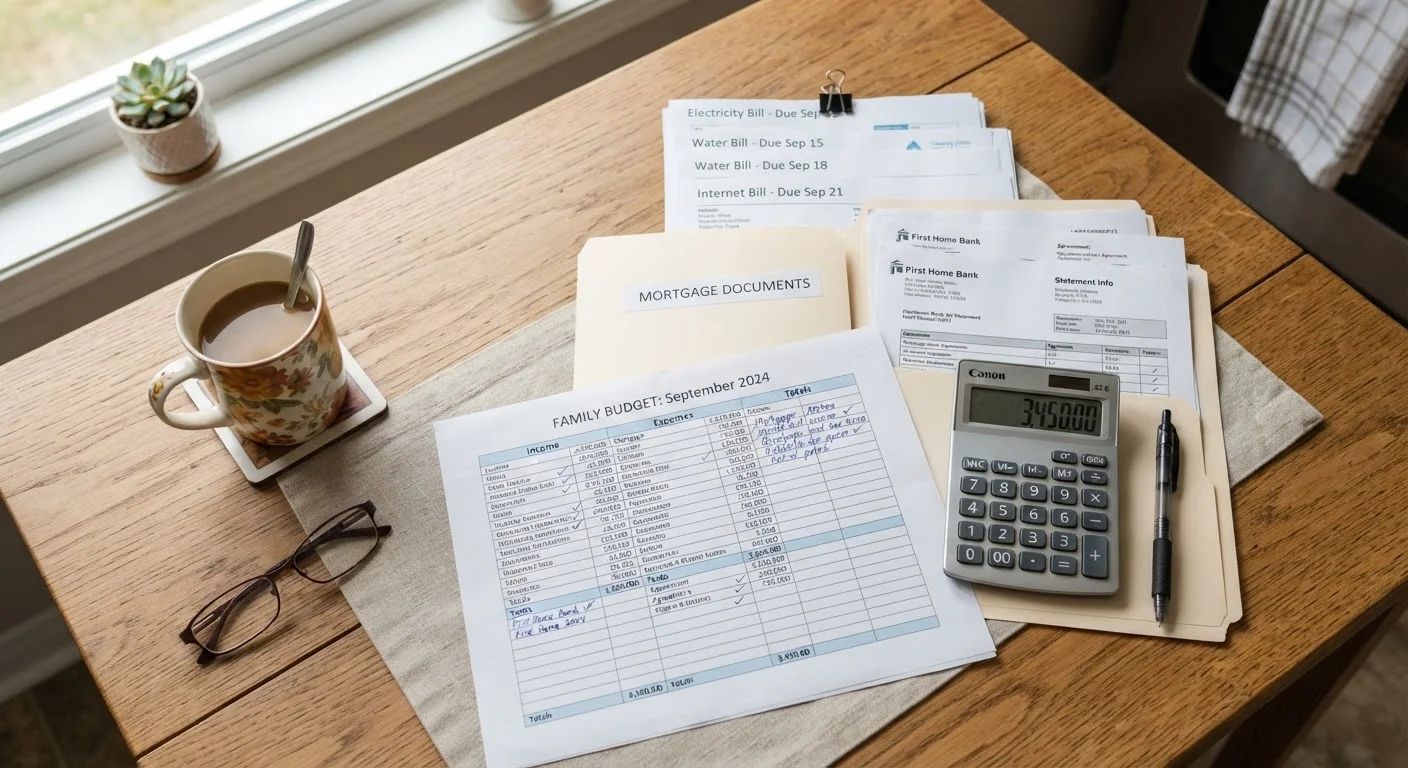
The Core Distinction and Why It Matters
Every dollar leaving your household falls into one of two buckets: it either costs the same amount every single month, or it doesn't. That's the essential difference between fixed and variable expenses - and recognizing it changes how you approach budgeting entirely.
Fixed expenses are predictable by definition. Your mortgage or rent payment, car loan, and health insurance premium don't move month to month. You can write them down once and trust the number. Variable expenses, by contrast, shift based on behavior, season, or circumstance - your grocery bill, gas spending, and electric usage all flex up or down depending on what's happening in your household.
This distinction matters because it tells you where your control actually lives. Fixed expenses are largely locked in by contracts or commitments already made. Variable expenses, on the other hand, are where small, consistent decisions accumulate into real savings. Families who understand this stop trying to cut fixed costs that can't be cut and redirect energy toward variable lines where the leverage exists. For a foundational approach, see our guide to building a family budget from scratch.
Fixed Expense
A recurring cost that stays the same amount each billing period, regardless of usage or behavior. Examples include rent, mortgage payments, and loan installments.
Variable Expense
A cost that changes from month to month based on consumption, choices, or circumstances. Groceries, utilities, and dining out are common variable expenses.
Discretionary Spending
Money spent on non-essential wants rather than needs - things like entertainment, hobbies, or subscriptions you could cancel without affecting basic household function.
Non-Discretionary Spending
Necessary expenses a household cannot reasonably avoid, covering both fixed costs like rent and variable necessities like food and medicine.
Periodic Expense
A cost that occurs infrequently - annually or quarterly - rather than monthly. Car registration and back-to-school supplies are typical examples.
Budget Baseline
The minimum monthly spending required to keep a household running, composed primarily of fixed and non-discretionary variable expenses.
Fixed vs. Variable: A Practical Reference
Use the breakdown below as a quick-reference when categorizing your own expenses.
| Typical fixed expense share of household budget | 50-65% (Consumer Expenditure Survey, U.S. Bureau of Labor Statistics) |
| Most common fixed expenses | Rent/mortgage, car payments, insurance premiums, loan payments |
| Most common variable expenses | Groceries, utilities, gas, dining out, clothing |
| Periodic expense examples | Car registration, property taxes (if not escrowed), annual subscriptions |
| Recommended variable expense review frequency | Monthly |
| Savings potential from tracking variable expenses | Commonly $100-$400/month for average households (General range cited across consumer finance research; individual results vary) |
Fixed Expenses
- Rent or mortgage payment
- Auto loan installments li>Health, auto, home, and life insurance premiums
- Student loan payments
- Fixed-rate internet or phone plan base charges
- Childcare contracts or private school tuition
Variable Expenses
- Groceries and household supplies
- Utilities (electricity, gas, water)
- Gasoline and rideshare costs
- Dining out and takeaway
- Clothing and personal care
- Medical co-pays and over-the-counter expenses
Periodic Expenses (Plan Separately)
Some costs are predictable in size but irregular in timing - annual car registration, semi-annual insurance installments, back-to-school shopping. These aren't monthly fixed costs, but they're not truly variable either. Budget for them by dividing the annual total by 12 and setting that amount aside each month. This prevents periodic expenses from blindsiding your budget.
Grocery spending deserves particular attention because it's simultaneously necessary and highly adjustable. Our article on grocery spending inside a family budget breaks down where the money actually goes and how to bring that line under control.
Some Expenses Blur the Line
Certain costs feel fixed but aren't entirely - like a cell phone plan with a fixed base rate plus variable data overages, or electricity with a fixed customer charge plus variable usage costs. When categorizing these, assign the predictable portion to fixed and track the fluctuating portion as variable. This keeps your budget baseline accurate without oversimplifying.
Applying the Framework to Real Budgeting Decisions
Once you've sorted your expenses, you have a clearer picture of two critical numbers: your budget baseline (the minimum you spend to keep the household running, dominated by fixed costs) and your variable spending envelope (the portion where daily decisions move the needle).
~$6,000
Average annual U.S. household food spending
According to the U.S. Bureau of Labor Statistics Consumer Expenditure Survey - making groceries one of the largest variable line items families can actively manage.
33%
Share of income spent on housing by typical U.S. households
Housing is the single largest fixed expense for most families, per BLS data, underscoring why knowing your fixed baseline matters before budgeting anything else.
If your income comfortably covers your baseline with room left over, focus variable-expense tracking on finding inefficiencies - subscription creep, food waste, energy overuse. If your baseline consumes most of your income, that's a signal to reconsider larger fixed commitments when contracts allow, such as refinancing debt or shopping insurance premiums at renewal time.
Families with children face a particular challenge: childcare and school-related costs often straddle both categories and change substantially as kids age. Reviewing your fixed and variable allocations annually - or whenever a child hits a new life stage - keeps your plan realistic. The guide to budgeting with kids covers exactly how to adjust at each stage.
The practical takeaway is straightforward: treat your fixed expenses as your floor and your variable expenses as your opportunity. Small, consistent choices in variable spending - cooking at home more often, reducing unnecessary subscriptions, batching errands to cut fuel costs - compound meaningfully over months and years. That's how everyday decisions translate into genuine financial progress.
This article provides general financial education and is not personalized financial advice. For guidance tailored to your specific situation, consider consulting a qualified financial professional.
The content provided on our blog site traverses numerous categories, offering readers valuable and practical information. Readers can use the editorial team’s research and data to gain more insights into their topics of interest. However, they are requested not to treat the articles as conclusive. The website team cannot be held responsible for differences in data or inaccuracies found across other platforms. Please also note that the site might also miss out on various schemes and offers available that the readers may find more beneficial than the ones we cover.