

Our Verdict
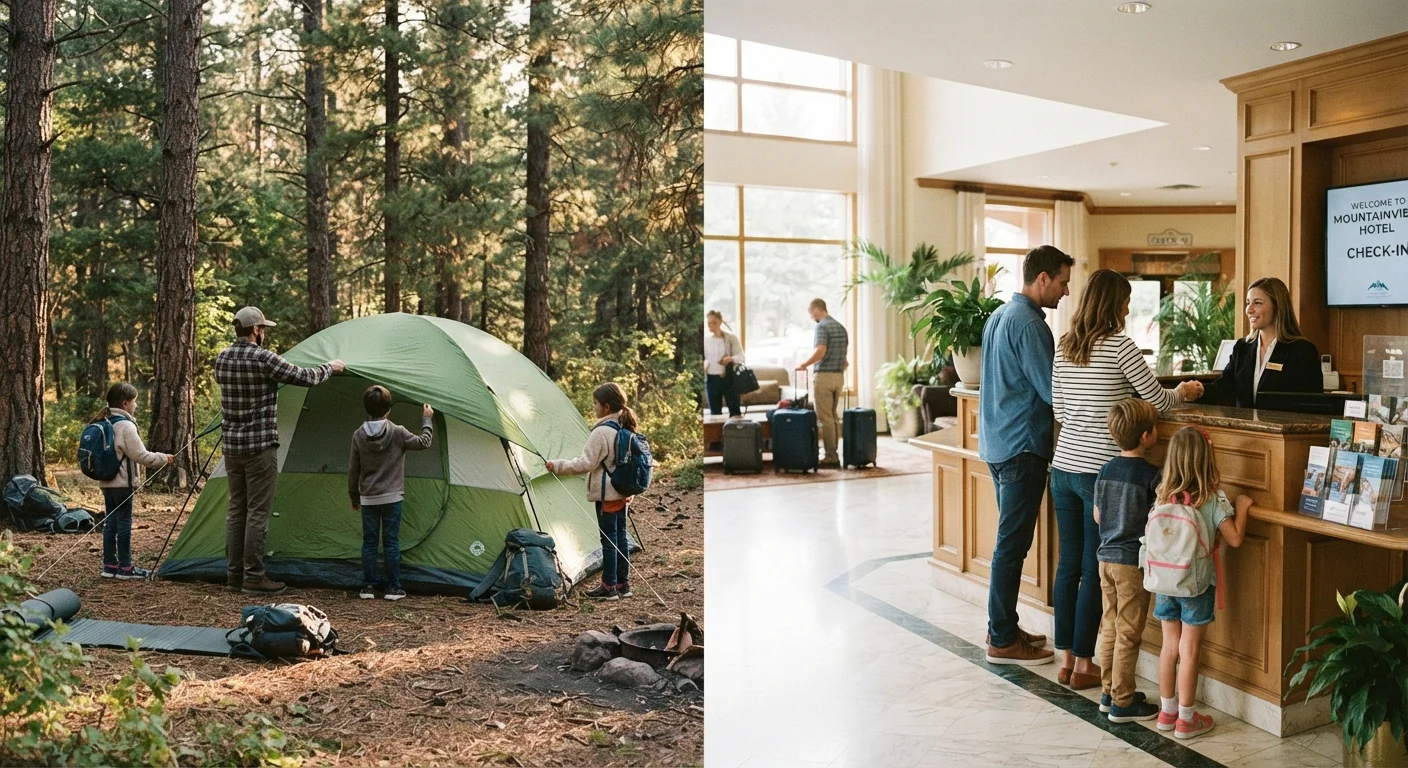
Neither camping nor hotel stays win outright - each suits a different family profile and trip context. Camping delivers real cost savings and outdoor immersion but requires planning, gear, and physical flexibility. Hotels provide comfort and reliability at a higher nightly cost. Many families find the most value in mixing both, or choosing based on destination type and the ages of their children.
| Best for | Recommended |
|---|---|
| Families on tight budgets with older children who enjoy outdoor activities | Camping |
| Families with toddlers, infants, or members with mobility or health considerations | Hotel Stays |
| Longer road trips visiting multiple destinations | Hybrid approach (camping + hotel) |
| Families visiting national parks or wilderness destinations | Camping |
The Core Cost Difference
On a pure nightly-rate basis, camping typically costs far less than a hotel room. A standard campsite at a state or national park commonly runs $20-$35 per night, while a hotel room accommodating a family of four can easily cost $150-$300 or more depending on location and season. Over a week-long trip, that gap is substantial.
But upfront gear costs matter. If your family doesn't already own tents, sleeping bags, cooking equipment, and a cooler, the initial outlay can reach several hundred dollars - money that pays off only over multiple trips. Factor gear amortization into your per-trip math before assuming camping is automatically cheaper. For a full picture of how accommodation fits into total vacation spending, see our guide to the real cost of a family vacation.
| Camping | Hotel Stay | |
|---|---|---|
| Typical nightly cost | $20-$50 per site | $150-$300+ per room |
| Upfront investment | Moderate to high (gear) | None beyond booking |
| Comfort level | Variable, weather-dependent | Consistent, climate-controlled |
| Bathroom access | Shared or pit toilets | Private in-room |
| Planning complexity | High (packing, food, reservations) | Low to moderate |
| Best destination fit | National parks, wilderness | Cities, theme parks, beaches |
| Kid age suitability | Better for school-age and up | Works for all ages |
| Experience quality | Immersive, outdoors-focused | Convenient, amenity-rich |
Comfort, Convenience, and Logistics
Hotels win on convenience - reliably temperature-controlled rooms, on-site bathrooms, daily housekeeping, and often a pool or breakfast option. For families with infants, toddlers, or kids who struggle with disrupted sleep, that predictability has real value that doesn't show up in a price comparison.
Camping requires logistical prep: packing lists, food planning, fire safety awareness, and setting up camp after a long drive - often with tired, hungry kids in tow. Campground bathrooms vary widely in quality, and weather can turn a fun trip into a miserable one without adequate gear. That said, many families with school-age children find that camping's built-in simplicity - no screens, more outdoor time, communal meals - is itself a benefit worth the extra planning work.
Book Campsites Early - Especially National Parks
Popular national park campgrounds can fill months in advance, particularly for summer weekends. Recreation.gov and individual state park systems typically open reservations 4-6 months ahead. If you're flexible on dates, checking for last-minute cancellations can also surface open spots closer to your travel window.
Destination Type Changes the Equation
Where you're going heavily influences which option makes sense. National parks, forests, and lakeside destinations are naturals for camping - the outdoor setting is the attraction, and staying on-site often puts you closer to trails and activities than any nearby hotel would. Our comparison of destination types for budget family travel breaks down how national parks, cities, and beach towns differ on overall value.
Urban destinations or theme park trips, on the other hand, rarely have quality camping options nearby. In those cases, a hotel or vacation rental is the practical choice. Beach towns sometimes offer both - campgrounds within a short drive of the coast - but amenities and safety vary widely, so research specific sites before booking.
Your transportation choice also interacts with accommodation. Camping works best on road trips with a vehicle large enough to haul gear - a consideration covered in depth in our road trip vs. flying trade-offs guide.
Hybrid Strategies Worth Considering
Many experienced family travelers don't choose one or the other - they combine both. A common approach: camp for three or four nights mid-trip to cut costs, then book a hotel for the nights before a long travel day or when you need reliable Wi-Fi and laundry access. This keeps the budget in check while providing a comfort reset when it matters most.
Glamping - furnished tent cabins, yurts, or RV rentals with electricity and beds - occupies a useful middle ground. Nightly rates run higher than tent camping but often below a comparable hotel room, and the setup burden is minimal. It's worth considering for families curious about the camping experience but not ready to invest in gear. For broader trip planning frameworks, the Travel Planning Tips hub offers step-by-step guidance on organizing family vacations from start to finish.
This article provides general travel information for educational purposes. Prices, availability, and campsite conditions vary and should be verified with official park websites and accommodation providers before booking.
The content provided on our blog site traverses numerous categories, offering readers valuable and practical information. Readers can use the editorial team’s research and data to gain more insights into their topics of interest. However, they are requested not to treat the articles as conclusive. The website team cannot be held responsible for differences in data or inaccuracies found across other platforms. Please also note that the site might also miss out on various schemes and offers available that the readers may find more beneficial than the ones we cover.