

Why Free Activities Deserve a Spot in Your Itinerary
The assumption that a great family vacation requires a packed schedule of expensive attractions is one of the most persistent - and costly - myths in travel planning. In practice, kids often remember the afternoon they spent scrambling over rocks at a state park or discovering a surprise street festival far more vividly than the pricey ticketed attraction that took two hours to get through.
That doesn't mean paid experiences have no place in a family trip. But if you're building an itinerary from the ground up, starting with what's free or low-cost and layering in a handful of splurges is a far smarter structure. It also gives you room to absorb the hidden costs that catch most families off guard - covered in detail in our look at the real cost of a family vacation.
The activities below are genuinely entertaining for kids - not just budget filler. Each one has been chosen for its broad age appeal, low planning friction, and real capacity to anchor a vacation day.
National Parks and Public Lands
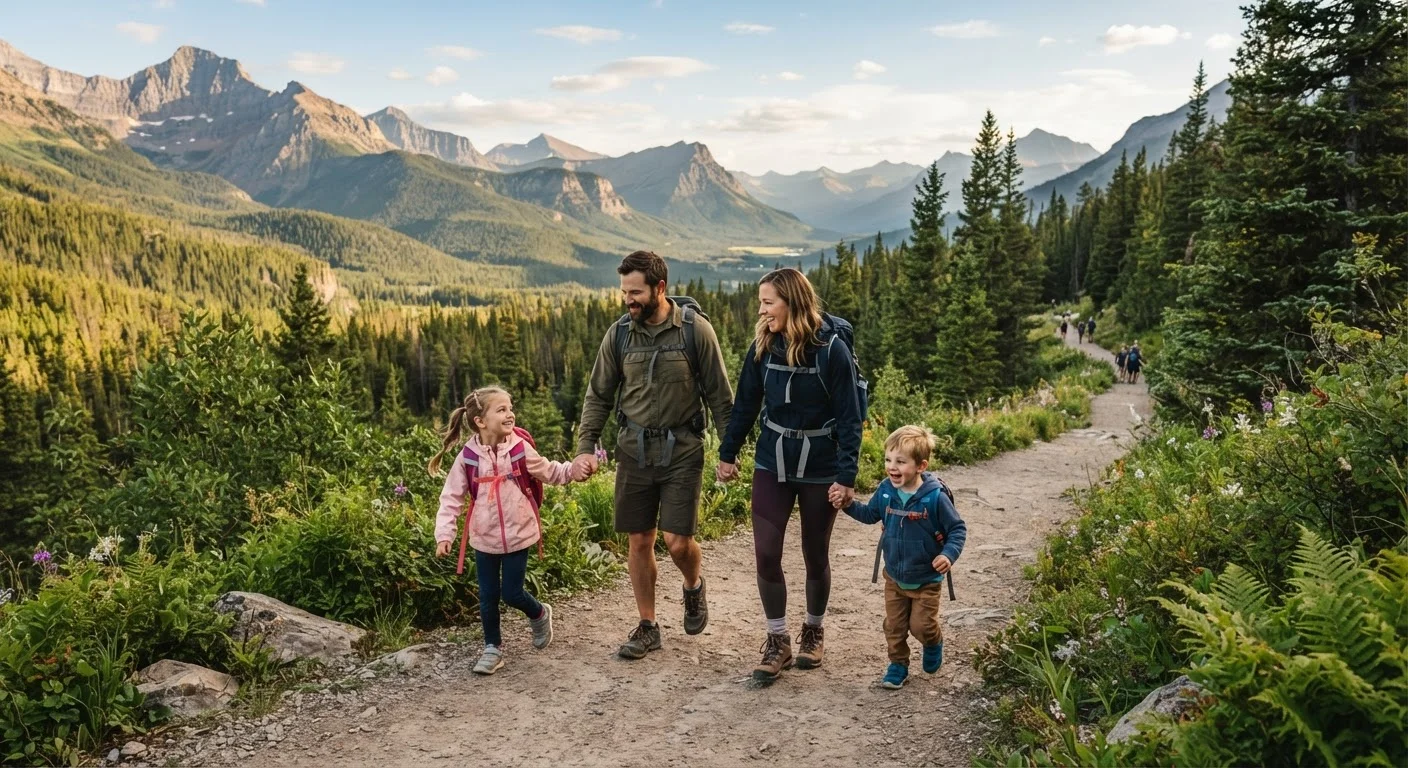
A single annual pass to the federal lands system provides access to hundreds of national parks, monuments, and recreation areas - making it one of the highest-value tools available to traveling families. Even without a pass, entry fees at many parks are modest, and children under 15 enter free at all national park sites.
The outdoor environment itself is the activity: trails, wildlife watching, junior ranger programs, and visitor center exhibits provide hours of genuine engagement. For families with younger children, choosing the right park matters - our guide to national parks that work for families with young kids can help narrow the field.
Junior ranger programs alone can keep kids engaged for an entire park day at no extra cost.
Public Beaches and Lakefronts
Access to most public beaches in the US is free, and the combination of water, sand, and open space is one of the most reliably effective ways to occupy kids across a wide age range. A morning at a public beach - with a packed lunch - can absorb a full vacation day with zero admission cost.
Look beyond the obvious ocean beaches: many inland destinations have public lakefronts, river access, and reservoirs that offer the same basic experience with fewer crowds and lower surrounding costs. Municipal parks departments often maintain these sites and post conditions and facility information online.
A packed lunch and a public beach can fill an entire vacation day for essentially no cost.
Local Festivals and Community Events
Most US cities and towns run a consistent calendar of free community events: farmers markets, outdoor concerts, cultural festivals, food fairs, and seasonal celebrations. These aren't tourist-trap versions of local life - they're where families actually spend their weekends, which makes them inherently kid-oriented and genuinely authentic.
Check the destination's municipal website, local events calendar, or parks department page before your trip. Timing a visit around a free community event - even a modest one - can anchor a day's itinerary and surface local food and entertainment options you wouldn't find in a guidebook.
Municipal event calendars are one of the most underused planning tools for traveling families.
Free Museum Days and Cultural Institutions
Many science museums, children's museums, art institutes, botanical gardens, and historic sites offer free or reduced-admission days on a regular basis - often on specific weekday mornings or the first Sunday of each month. Some destinations have reciprocal membership programs where a home-city museum membership grants free or discounted entry to partner institutions nationally.
Children's museums in particular tend to be purpose-built for high engagement: hands-on exhibits, play structures, and rotating programming keep kids active rather than passive. Check institutional websites directly for current free-access schedules, as these programs change.
Reciprocal museum memberships can unlock free entry at institutions across the country.
State and City Parks With Structured Programming
State parks frequently offer ranger-led programs, nature walks, and interpretive activities that go well beyond a simple hike. Many of these programs are included with standard park admission or available for a nominal fee. City parks in larger destinations often run organized summer programming - outdoor movie nights, splash pads, nature centers - that families can drop into without advance registration.
These structured activities solve one of the core challenges of free outdoor time with kids: direction. Rather than unstructured roaming that can quickly lose younger children's interest, a ranger walk or a scheduled splash pad session provides a clear arc for the activity.
Ranger-led programs give unstructured outdoor time a framework that keeps kids genuinely engaged.
Historic Downtowns and Walkable Neighborhoods
Many US destinations have historic downtown districts or walkable neighborhoods that are interesting to explore at street level - at zero cost. Architecture, public art installations, waterfront promenades, and market districts provide visual stimulation and natural stopping points without requiring a ticket.
This works best when framed as an exploration rather than a walk. Give kids a simple observation task - spot a mural, count fountains, find the oldest building - and the same street becomes a low-cost activity with built-in engagement. This approach pairs naturally with destination types that emphasize walkability and variety, such as beach towns with active main streets.
Framing a neighborhood walk as an exploration task transforms it into a genuine activity for kids.
Building a Trip Around What Actually Works
The activities above share a common thread: they put kids in active, open-ended environments where boredom is hard to sustain. That's the core criterion for evaluating any vacation activity - not the price tag, but whether it matches your children's energy and attention patterns.
Research Before You Arrive
The best free activities tend to have limited visibility in standard travel searches. Before your trip, spend 20 minutes on the destination's official tourism site, municipal parks page, and local event calendar. Look for programming scheduled specifically during your travel dates - many free events are date-specific and won't surface unless you search by week. This prep step alone can significantly change what your trip looks like on the ground.
A practical approach is to block one or two free or low-cost anchor activities per day, then decide in the moment whether to add something paid. This prevents overscheduling - a common source of meltdowns - while leaving room for spontaneity. For a full framework on building this kind of itinerary, the complete family travel budget planning guide covers every stage from destination selection to daily logistics.
If you're still weighing destination types, our comparison of national parks, cities, and beach towns breaks down where each delivers the best value for families - useful context before you commit to a location and start mapping activities.
The content provided on our blog site traverses numerous categories, offering readers valuable and practical information. Readers can use the editorial team’s research and data to gain more insights into their topics of interest. However, they are requested not to treat the articles as conclusive. The website team cannot be held responsible for differences in data or inaccuracies found across other platforms. Please also note that the site might also miss out on various schemes and offers available that the readers may find more beneficial than the ones we cover.