

How to Use This Regional Guide
The U.S. spans more than 3.8 million square miles and dozens of distinct ecosystems - which makes "where should we go?" one of the hardest questions in family travel planning. This reference guide breaks the country into five broad regions and summarizes what each offers in terms of terrain, seasonal access, and age suitability for outdoor activities.
It is not a ranked list, and it does not declare any region "best." Each has real advantages and real limitations depending on your family's ages, fitness levels, budget, and travel window. For a fuller planning framework, see our complete family travel planning guide, and before you commit to any destination, run it through this domestic destination checklist.
| Number of U.S. National Parks | 63 designated national parks (National Park Service) |
| Regions covered in this guide | 5 (West, South/Gulf, Northeast/Mid-Atlantic, Midwest/Great Plains, not including Alaska/Hawaii) |
| Typical peak season (most regions) | Late June through August |
| Altitude concern threshold | Above 8,000 feet (common in CO, UT, NM) (General travel medicine guidance) |
| Best value season (general) | Shoulder seasons: April-May and September-October |
| Junior Ranger programs | Available at most National Park Service sites (National Park Service) |
The West: High Altitude, Wide Open Spaces
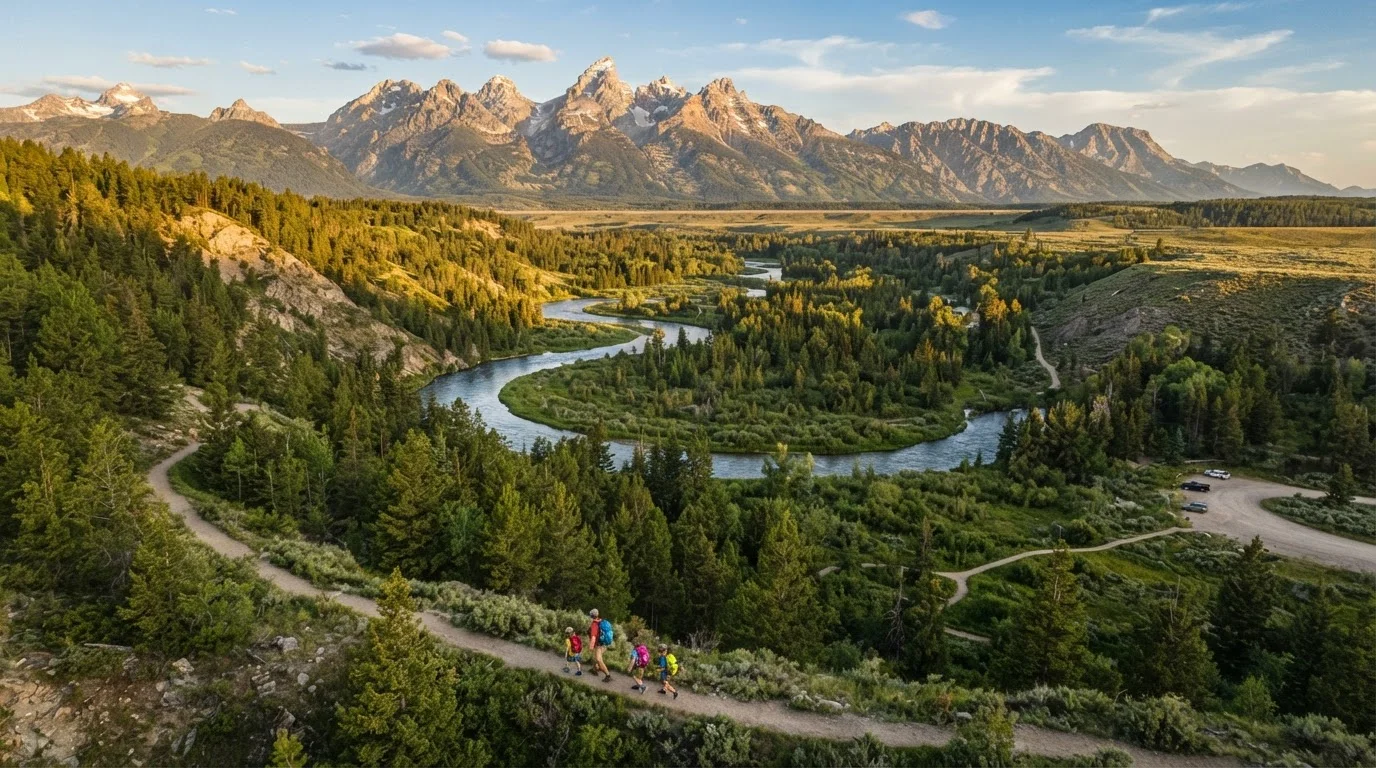
The western states - including California, Oregon, Washington, Utah, Colorado, and Arizona - offer some of the most dramatic outdoor terrain in the country. Families can access slot canyons, old-growth forest, volcanic peaks, and desert plateaus, often within a single road trip loop.
Age suitability: Highly variable. Many western parks have paved or well-graded trails ideal for young children, while backcountry options suit teens and adults. Altitude is a real factor in states like Colorado and Utah - children can feel the effects of elevation above 8,000 feet, so plan a rest day when ascending quickly.
Seasons: Summer is the peak window for the mountain west, though popular parks like Zion and Arches can be extremely crowded and hot in July and August. Spring and fall offer milder conditions. The Pacific Coast is accessible year-round, though winter brings frequent rain in the Pacific Northwest.
Terrain types: Desert, alpine, old-growth forest, coastline, volcanic landscape.
The South and Gulf Coast: Mild Winters, Wetland Access
The southern states - Florida, Georgia, Louisiana, Texas, Tennessee, and the Carolinas among them - offer outdoor access in seasons when northern regions are largely shut down. Families with young children or those looking to avoid extreme cold often gravitate here for fall and winter travel.
Age suitability: Generally accessible for all ages. Much of the terrain is flat or gently rolling, making it easier for strollers and children with limited stamina. Florida's state parks and the Everglades offer kayaking, wildlife spotting, and nature walks well-suited to mixed-age groups.
Seasons: Fall through spring is ideal across most of the Gulf and Deep South. Summers are hot, humid, and - particularly in Florida and the Gulf states - subject to afternoon thunderstorms and occasional tropical weather. Always check seasonal advisories before traveling. Families comparing beach options along both coasts will find useful context in this Gulf vs. Atlantic coast comparison.
Terrain types: Wetlands, barrier islands, barrier reef, river systems, Appalachian foothills.
Shoulder Season
The travel period just before or after peak season. Conditions are often favorable, crowds are smaller, and costs at accommodations and campgrounds tend to be lower than peak summer months.
Barrier Island
A narrow strip of land separated from the mainland by a lagoon or bay, common along the Gulf and Atlantic coasts. These islands often feature wide beaches and wildlife refuges popular with families.
Elevation Acclimatization
The body's process of adjusting to reduced oxygen levels at high altitude. Children and adults both need time to acclimatize when traveling above 8,000 feet to avoid symptoms like headaches or nausea.
Junior Ranger Program
A free National Park Service educational program for children, typically involving activity booklets and a ranger-led badge ceremony. Available at most NPS sites and a strong engagement tool for school-age kids on outdoor trips.
The Northeast and Mid-Atlantic: Accessible Trails, Dense Park Infrastructure
New England and the mid-Atlantic states offer families compact outdoor itineraries - many trails, parks, and natural areas are within a few hours of major metro areas. The Appalachian Trail, Acadia National Park, Shenandoah Valley, and the Catskills are among the most accessible options for families driving from urban centers.
Age suitability: Strong for families with school-age children and above. Trail infrastructure is well-maintained, and ranger programming at national parks tends to be robust. Many parks offer Junior Ranger programs that keep kids engaged regardless of fitness level.
Seasons: Summer and early fall are the clearest windows. Fall foliage peaks between mid-September and late October depending on latitude and elevation - this is a popular and often crowded travel period. Winters can close many facilities, though snowshoeing and cross-country skiing are options in northern states.
Terrain types: Deciduous forest, granite coastline, rolling mountains, river valleys.
The Midwest and Great Plains: Underrated and Uncrowded
States like Minnesota, Wisconsin, South Dakota, Nebraska, and Kansas are often bypassed in favor of coastal or mountain destinations - but they offer real value for families who want outdoor access without the crowds. The Boundary Waters Canoe Area in Minnesota, Badlands National Park in South Dakota, and Indiana Dunes National Lakeshore are examples of genuinely distinctive landscapes with manageable visitor volumes.
Age suitability: Solid for most age groups. Flat to moderately hilly terrain suits younger children, and the region's rivers and lakes make for accessible paddling and fishing trips.
Seasons: Late spring through early fall is the primary window. Midwest winters are harsh and can close recreational areas entirely. Summer is peak season but far less congested than comparable western or northeastern parks.
Terrain types: Prairie, freshwater lake systems, river corridors, badlands formations.
Understanding how destination type affects the overall family experience - beyond just terrain - is covered in detail in this destination format comparison. And if cost is a key factor in your regional decision, the Budget Family Trips hub has practical strategies for keeping outdoor travel affordable.
This article provides general travel information for reference purposes. Conditions, trail access, park hours, and entry requirements can change - always verify current information with official park services and government travel resources before your trip.
The content provided on our blog site traverses numerous categories, offering readers valuable and practical information. Readers can use the editorial team’s research and data to gain more insights into their topics of interest. However, they are requested not to treat the articles as conclusive. The website team cannot be held responsible for differences in data or inaccuracies found across other platforms. Please also note that the site might also miss out on various schemes and offers available that the readers may find more beneficial than the ones we cover.