

Why Portion Size Guidance for Kids Is Different
Children are not simply small adults - their caloric needs, stomach capacity, and growth rates vary significantly by age and developmental stage. Offering adult-sized portions can overwhelm young eaters, while underestimating an older child's needs may leave them hungry and low on key nutrients. Understanding what a reasonable child-sized serving looks like at different ages helps families set realistic expectations without turning mealtimes into a battle.
This guide is grounded in general pediatric nutrition principles, including frameworks from the USDA MyPlate guidelines and widely accepted pediatric dietary recommendations. It is intended as a general educational reference, not personalized dietary advice. Always consult your child's pediatrician or a registered dietitian if you have concerns about your child's growth, appetite, or eating patterns.
For a broader foundation on feeding your family well, see our introduction to family nutrition principles.
Portion Size Reference by Age Group
The examples below represent typical single servings for each food group across three broad pediatric age bands. These are general ranges - individual children vary, and a child's appetite naturally fluctuates from day to day.
Toddlers (Ages 1-3)
- Grains: ¼ slice of bread; 2-3 tablespoons cooked pasta, rice, or oatmeal
- Vegetables: 1-2 tablespoons cooked or soft raw vegetables
- Fruit: 2-3 tablespoons diced soft fruit
- Dairy: ½ cup whole milk; ½-¾ oz cheese; ¼ cup yogurt
- Protein: 1-1½ oz soft-cooked meat, fish, or poultry; 1-2 tablespoons beans
Young Children (Ages 4-6)
- Grains: ½ slice of bread; ¼-⅓ cup cooked pasta, rice, or cereal
- Vegetables: 2-4 tablespoons cooked vegetables; ¼ cup raw
- Fruit: ½ medium fruit; ¼ cup diced or canned (in juice)
- Dairy: ½-¾ cup milk or yogurt; 1 oz cheese
- Protein: 1½-2 oz meat, poultry, or fish; 2 tablespoons nut butter
Older Children (Ages 7-12)
- Grains: 1 slice of bread; ½ cup cooked pasta, rice, or oatmeal
- Vegetables: ½ cup cooked; ½-1 cup raw leafy greens
- Fruit: 1 medium fruit; ½ cup diced, frozen, or canned (in juice)
- Dairy: 1 cup milk or yogurt; 1-1½ oz cheese
- Protein: 2-3 oz meat, poultry, or fish; 3-4 tablespoons beans or legumes
A helpful rule of thumb for toddlers and young children: roughly 1 tablespoon per year of age is a reasonable starting point for a single serving of most solid foods. Adjust based on your child's hunger cues.
Appetite Naturally Varies Day to Day
Children's appetite fluctuates with growth spurts, activity levels, illness, and even the weather. A day of eating very little is usually not cause for alarm if your child is growing normally and has good energy. If you notice persistent changes in appetite or growth, speak with your child's pediatrician.
If your child tends to refuse vegetables at mealtime, you're not alone - explore what drives this behavior and what actually helps in our article on why kids refuse vegetables.
Practical Tips for Everyday Meals
Knowing standard portion sizes is only half the picture - applying that knowledge at real family mealtimes is where it gets challenging. A few strategies that align with pediatric nutrition guidance:
- Serve small, offer more. Start with a modest portion and let your child ask for seconds. This reduces plate waste and respects your child's hunger cues.
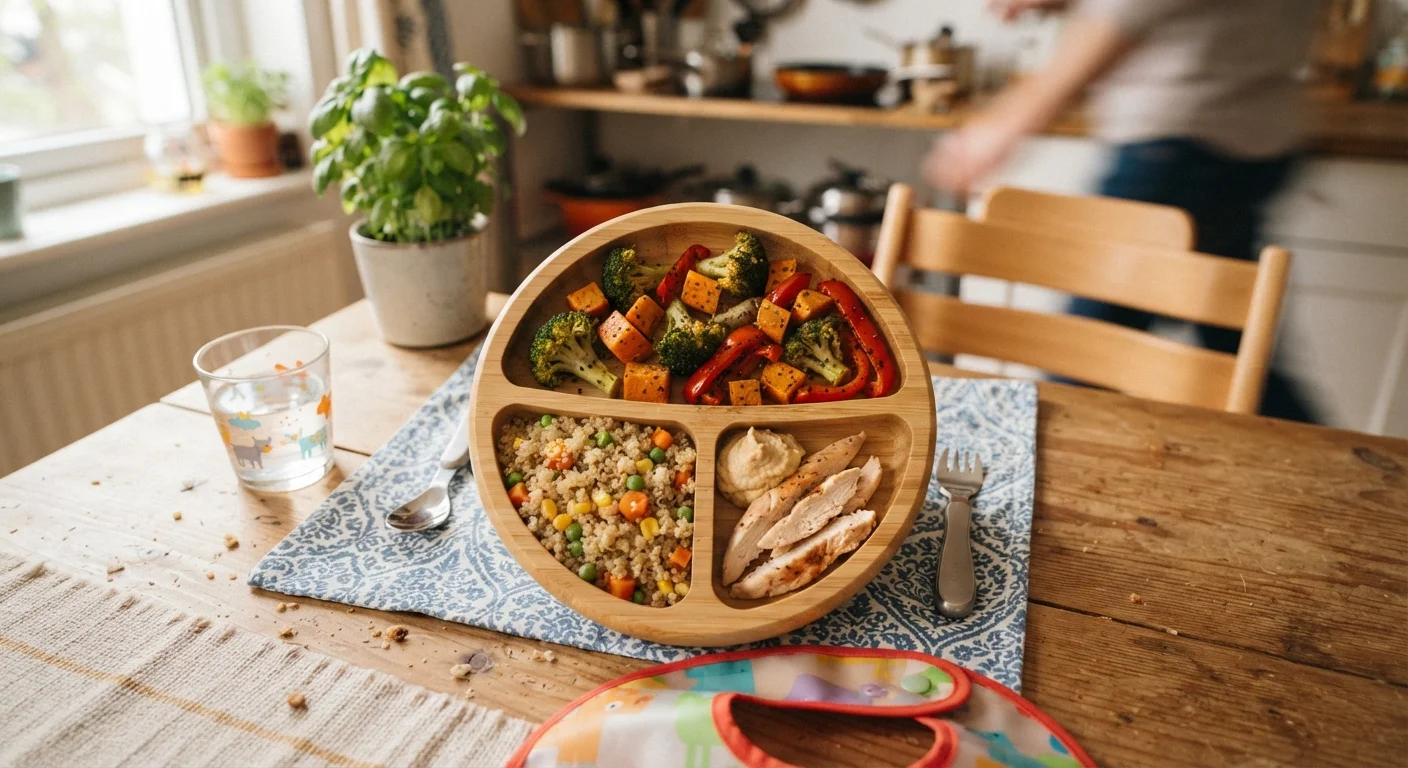
- Use child-sized dishes. A standard dinner plate can make a child's portion look skimpy. Smaller plates and bowls give appropriate portions a more satisfying visual presence.
- Avoid using food as reward or punishment. Tying dessert to eating vegetables can backfire by reinforcing negative associations with both foods.
- Trust the division of responsibility. The widely referenced Satter Division of Responsibility model suggests that parents decide what food is offered and when, while children decide whether and how much to eat.
Getting children involved in preparing meals can also improve food acceptance. Our article on cooking with kids covers the real-world benefits and challenges of that approach.
This article is for general informational and educational purposes only and does not constitute medical or dietary advice. Consult your child's pediatrician or a registered dietitian for guidance specific to your child's health and nutritional needs.
The content provided on our blog site traverses numerous categories, offering readers valuable and practical information. Readers can use the editorial team’s research and data to gain more insights into their topics of interest. However, they are requested not to treat the articles as conclusive. The website team cannot be held responsible for differences in data or inaccuracies found across other platforms. Please also note that the site might also miss out on various schemes and offers available that the readers may find more beneficial than the ones we cover.