

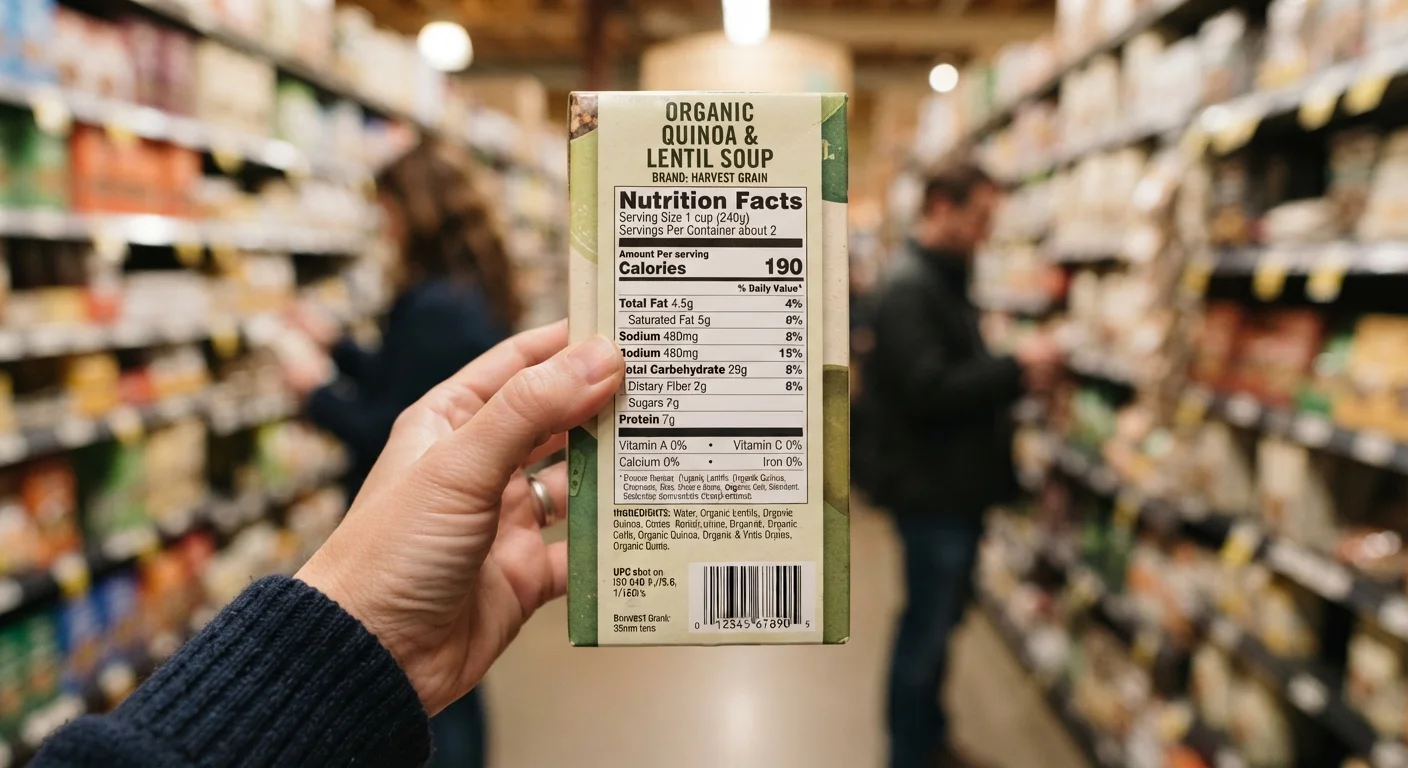
Why Nutrition Labels Feel Harder Than They Should
The Nutrition Facts label is one of the most information-dense surfaces in everyday life, packed into a space the size of a sticky note. It is designed to be standardized and transparent - the FDA updated its format in 2020 to make key information more prominent - but reading it fluently still requires knowing where to look and in what order.
For families navigating a grocery run with a cart, a budget, and multiple opinions about what tastes good, labels can feel like an obstacle rather than a resource. The goal here is not to turn every shopping trip into a nutritional audit. It is to build enough label literacy that you can make faster, more confident comparisons when it matters. That skill compounds over time: once reading labels becomes second nature, better choices take seconds rather than minutes.
If you are also working to align grocery decisions with a household budget, our guide to grocery spending inside a family budget explores how food costs fit into the bigger financial picture.
What you will need
What You Will Need
This walkthrough works with any packaged food that carries a standard Nutrition Facts label. Pick up a product from your pantry or use a package from your next shopping trip - practicing on real items you already buy makes the process stick faster.
FDA Nutrition Facts Label (on packaged foods)
The primary source of standardized nutritional data you will be reading and interpreting.
Smartphone calculator
Useful for quickly multiplying per-serving values when a package contains multiple servings.
This Is General Information, Not Medical Advice
Nutrition labels are a tool for general food awareness, not a substitute for personalized dietary guidance. If a family member has a specific health condition, food allergy, or dietary restriction, consult a registered dietitian or qualified healthcare provider before making changes based on label reading alone.
Step-by-Step: Reading the Label
Start with the serving size and servings per container
Every single number on the label - calories, fat, sodium, everything - is calculated for one serving, not the whole package. Find the Serving Size line at the very top of the Nutrition Facts box and note the amount (e.g., "2/3 cup" or "1 slice"). Directly below it, check Servings Per Container.
If a bag of chips lists 150 calories per serving but contains three servings, eating the whole bag means consuming 450 calories. This single step prevents the most common label-reading mistake families make.
Check total calories in context
Calories measure the energy a food provides per serving. Neither high nor low calorie counts are automatically good or bad - context matters. A handful of nuts is calorie-dense but nutritionally valuable; a calorie-equivalent portion of a sugary snack delivers far less nutrition.
Rather than fixating on calories alone, use them alongside the nutrients below to judge overall food quality. General dietary guidance for adults suggests a daily intake around 2,000 calories, though individual needs vary by age, size, and activity level.
Identify nutrients to limit
The middle section of the label lists nutrients that, when consumed in excess, are associated with health concerns. Focus on three:
- Saturated Fat: Linked to cardiovascular risk when over-consumed. Aim to keep the % Daily Value low.
- Sodium: High intake is associated with elevated blood pressure. Many processed and packaged foods are significant sources - this is often the most surprising number families find.
- Added Sugars: Listed separately from total sugars since the 2020 FDA label update. Added sugars contribute calories without nutritional benefit and are worth minimizing for most households.
Identify nutrients to seek out
Below the nutrients to limit, labels list nutrients many Americans under-consume. Look for higher % Daily Values in:
- Dietary Fiber: Supports digestive health and helps with satiety. Most families fall short of recommendations.
- Calcium and Potassium: Important for bone health and blood pressure regulation, respectively.
- Iron and Vitamin D: Commonly low in typical American diets, especially in children.
Choosing foods with higher percentages of these nutrients is an easy, label-based way to nudge the family diet in a healthier direction without overhauling everything at once.
Read the % Daily Value column
The % Daily Value (%DV) column, running down the right side of the label, tells you how much of a nutrient one serving contributes toward a standard daily reference diet (based on 2,000 calories per day). It transforms raw gram numbers into an immediate sense of scale.
[tip_callout]This column is your most efficient comparison tool at the shelf. Two products with identical calorie counts can look very different once you scan their sodium or fiber %DV side by side.
Scan the ingredients list
Ingredients are listed in descending order by weight - meaning the first ingredient is the most abundant. A bread whose first ingredient is "whole wheat flour" is structurally different from one where "enriched flour" leads and whole wheat appears fifth. For more on why this distinction matters, see Whole Grains vs. Refined Grains.
A shorter ingredients list is not automatically healthier - plain yogurt and highly processed snacks can both have short lists. What matters more is what those ingredients are and where they appear in the order.
Putting It Into Practice at the Store
Label reading becomes genuinely useful when you use it comparatively rather than in isolation. Pull two similar products off the shelf - two yogurts, two pasta sauces, two granola bars - and run through the same sequence: serving size, calories, nutrients to limit, nutrients to seek, %DV. You will usually land on a clearer choice within a minute.
Not every product needs this level of scrutiny. Fresh produce, plain proteins, and minimally processed staples carry straightforward nutritional profiles. Reserve deeper label reading for packaged, processed, and convenience foods where variation between brands is most significant.
For families building balanced meals on a limited grocery budget, see Feeding a Family on a Tight Budget Without Sacrificing Nutrition for practical strategies that pair well with smarter label reading.
This article is for general informational and educational purposes only and is not a substitute for advice from a qualified healthcare professional or registered dietitian. Individual nutrition needs vary. Consult a licensed professional for guidance tailored to your family's specific health circumstances.
The content provided on our blog site traverses numerous categories, offering readers valuable and practical information. Readers can use the editorial team’s research and data to gain more insights into their topics of interest. However, they are requested not to treat the articles as conclusive. The website team cannot be held responsible for differences in data or inaccuracies found across other platforms. Please also note that the site might also miss out on various schemes and offers available that the readers may find more beneficial than the ones we cover.