

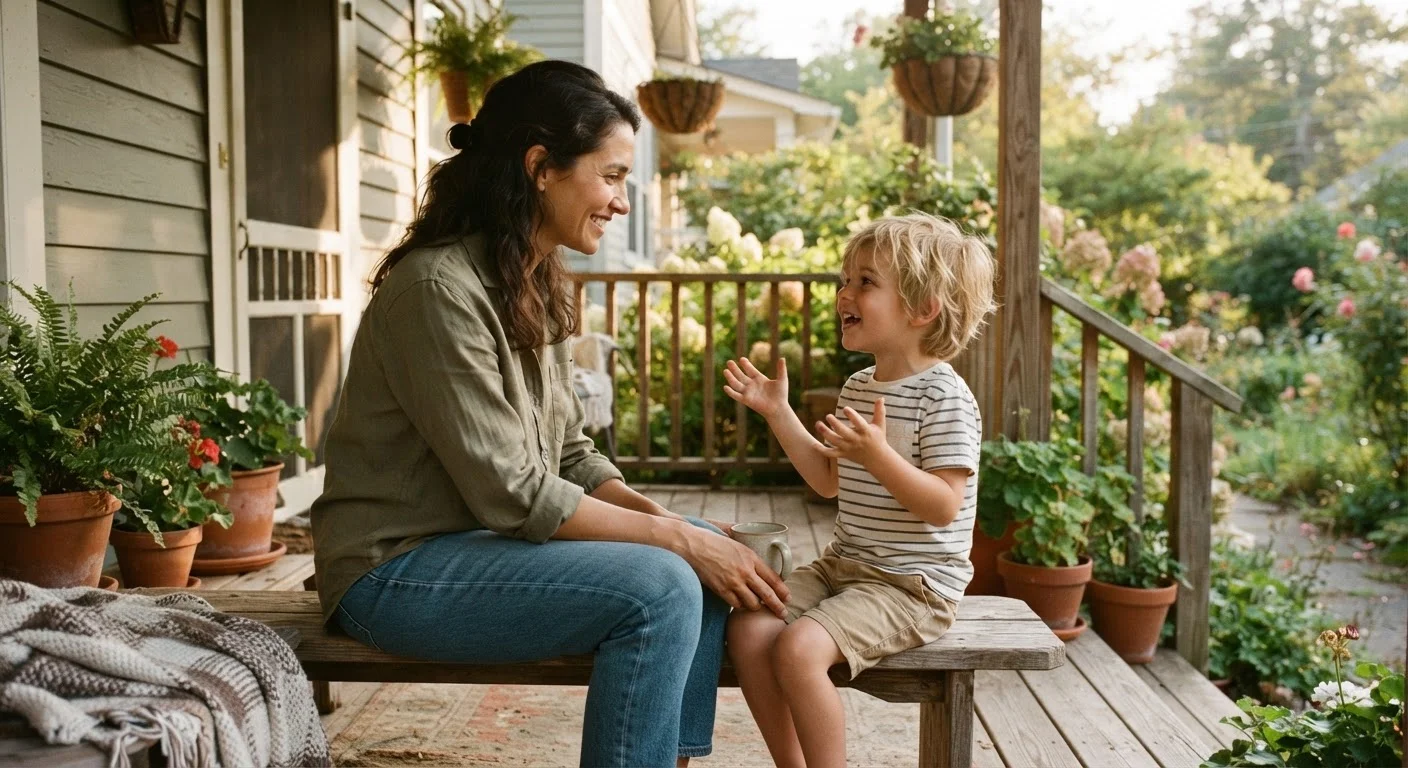
What Resilience Actually Means in Children
Popular culture often frames resilience as toughness - the ability to push through pain without showing weakness. But developmental psychology tells a different story. According to research from institutions like the Center on the Developing Child at Harvard University, resilience in children is not a fixed trait some kids are born with. It is a capacity that develops through relationships, experiences, and supportive environments over time.
This distinction matters enormously for parents. It shifts the question from "Is my child resilient?" to "What conditions am I helping create?" The good news: the most powerful conditions are things ordinary families can cultivate without special expertise or large budgets. A whole-household approach to mental wellness can make this feel more manageable across different ages.
Practices That Build Emotional Resilience
The following evidence-informed practices reflect what developmental and clinical research consistently highlights as meaningful contributors to children's emotional resilience. They are not prescriptions - every child is different, and a qualified child health professional can provide guidance tailored to your family's situation.
Validate feelings before offering solutions
When children feel heard, their nervous systems calm more quickly and they become more receptive to problem-solving. Dismissing emotions - even with good intentions - can teach children that their inner experiences are not trustworthy. Research in emotion coaching, developed by psychologist John Gottman, consistently links emotional validation to better peer relationships and self-regulation in children.
Teach children to name and label their emotions
Neuroscience research suggests that labeling an emotion - sometimes called "affect labeling" - reduces its intensity by engaging the prefrontal cortex. Children who have a richer emotional vocabulary are better equipped to communicate needs and manage distress. This skill, practiced early, compounds through adolescence.
Maintain predictable routines, especially around transitions
Predictability reduces the cognitive and emotional load on children, freeing up mental resources for coping when unexpected challenges arise. The American Academy of Pediatrics notes that consistent routines support healthy social-emotional development. Transitions - school, illness, family change - are when routines matter most.
Let children experience manageable difficulty without immediately rescuing them
Children develop confidence and problem-solving skills when they navigate age-appropriate challenges with support available but not imposed. Over-intervening - often called "helicopter parenting" in the research literature - can inadvertently signal to children that they are not capable. The goal is to be present and encouraging, not absent or directive.
Model healthy emotional regulation as a caregiver
Children are powerful observers. When adults demonstrate how to manage frustration, disappointment, or anxiety in constructive ways, they provide a working template children internalize over time. This does not mean parents must be perfectly calm - it means narrating your own process honestly can itself be instructive.
Foster at least one strong, stable relationship outside the immediate family
Decades of resilience research identify a consistent finding: children who overcome adversity typically have at least one reliable, caring adult in their lives. This does not have to be a parent. Grandparents, teachers, coaches, and mentors all serve as significant protective factors. Widening a child's network of trusted adults strengthens their safety net.
Making Resilience-Building Part of Daily Life
One of the most durable findings in developmental research is that consistency matters more than intensity. Brief, repeated moments of emotional connection are more protective than occasional big conversations. This means resilience-building doesn't require a formal program - it fits naturally into routines families already have.
“Resilience is not something that develops in isolation. It emerges from the interaction between a child's inner strengths and the supportive relationships and environments that surround them.”
— Center on the Developing Child, Harvard University research center focused on child development science
If you find it difficult to model emotional regulation yourself, that's worth acknowledging honestly. The emotional load of parenting is real, and adults benefit from support too. When parents tend to their own mental wellness, they are better positioned to show children what healthy emotional habits look like in action - a point explored further in our guide to everyday habits that support emotional balance for adults.
This article is for general informational and educational purposes only. It is not a substitute for professional mental health or medical advice. If you have concerns about your child's emotional development or wellbeing, please consult a qualified healthcare or mental health professional.
The content provided on our blog site traverses numerous categories, offering readers valuable and practical information. Readers can use the editorial team’s research and data to gain more insights into their topics of interest. However, they are requested not to treat the articles as conclusive. The website team cannot be held responsible for differences in data or inaccuracies found across other platforms. Please also note that the site might also miss out on various schemes and offers available that the readers may find more beneficial than the ones we cover.