

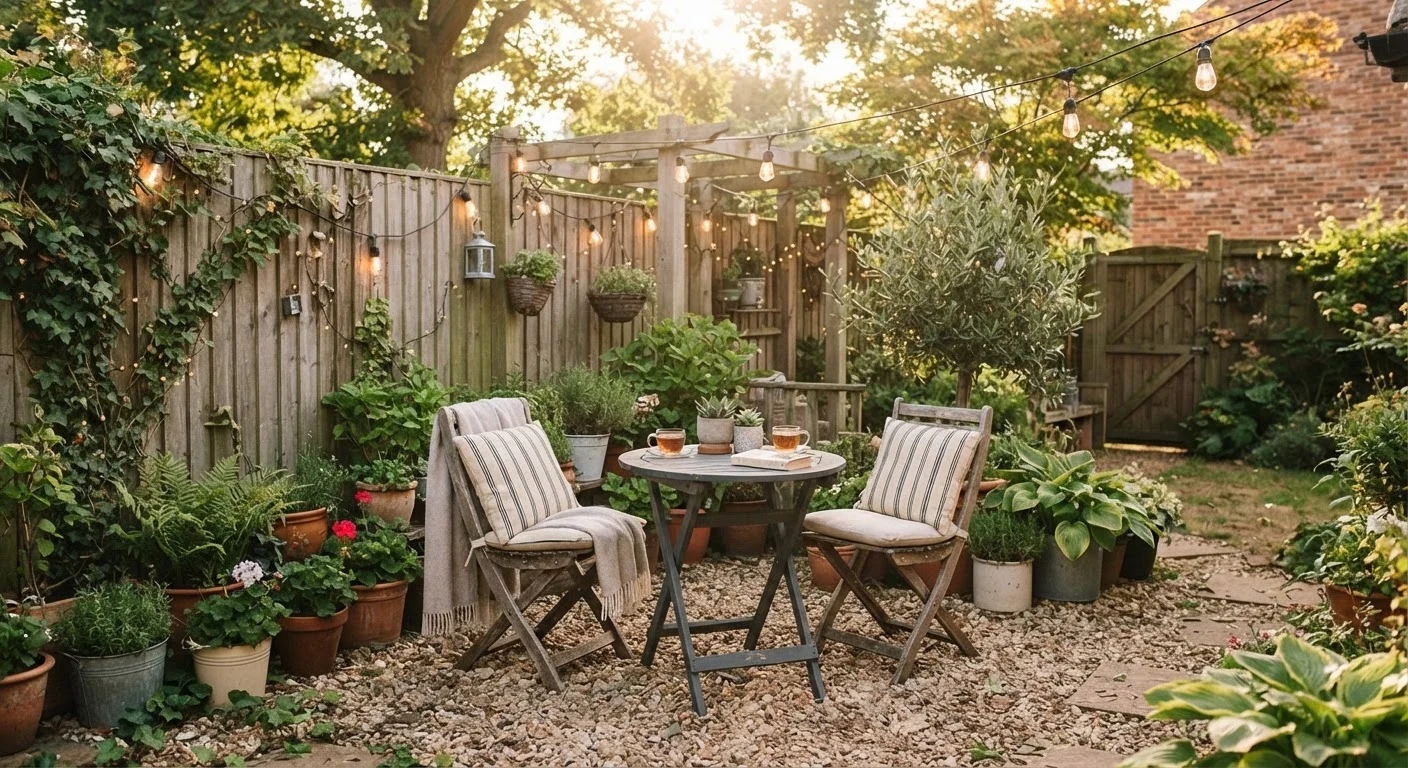
Why Outdoor Seating Areas Are Worth the Planning Effort
An outdoor seating area - even a modest one - expands usable living space without the cost of an addition. For families, it provides a dedicated space for meals, conversation, and low-cost recreation. Research in environmental psychology consistently suggests that time spent in outdoor environments supports stress reduction and overall wellbeing, though the effect varies by individual and context.
The challenge most families face is not imagination but execution: how to create something functional and lasting without overspending. The answer lies in planning before purchasing, choosing durable materials from the start, and resisting the urge to furnish everything at once.
What you will need
Step-by-Step: Building Your Budget Outdoor Space
Follow these steps in order. Skipping the planning and surface stages and jumping straight to furniture is the most common - and costly - mistake families make when setting up an outdoor area.
Tape measure
Accurately measure your available outdoor space to avoid buying furniture or materials that don't fit.
Graph paper or free online floor planner
Sketch a scaled layout so you can visualize furniture placement before committing to purchases.
Rubber mallet
Seat pavers or edging stones firmly and evenly into a gravel or sand base.
Garden rake
Level a gravel or crushed stone surface area before placing furniture.
Landscape fabric
Suppress weed growth beneath a gravel or stone surface for easier long-term maintenance.
Measure your space and set a firm budget
Before buying a single item, measure the full dimensions of your outdoor area - length, width, and any irregular angles. Sketch it on graph paper using a simple scale (for example, one square equals one foot). Note fixed obstacles such as utility boxes, downspouts, or existing plantings.
Alongside your sketch, set a firm spending ceiling. Treat this the same way you would any household budget line. If you need guidance on keeping discretionary spending in check, the principles in family budgeting apply equally well to home improvement projects.
Choose a low-cost surface material
The floor of your seating area anchors the whole space. Poured concrete and composite decking are durable but expensive. Budget-friendly alternatives include:
- Pea gravel or crushed stone: Inexpensive, drains well, and easy to level yourself. Lay landscape fabric first to suppress weeds.
- Stepping stones or concrete pavers: Can be set on a sand base without mortar. Irregular flagstone offcuts are often sold cheaply at stone yards.
- Pressure-treated lumber or cedar decking tiles: Interlocking deck tiles sit directly on a flat surface and require no construction skills. For a deeper look at wood durability outdoors, see pressure-treated lumber vs. cedar.
Source seating without overspending
Seating is where many families blow their outdoor budget. Consider these approaches before buying new:
- Check local online marketplaces and community swap groups for secondhand patio sets - outdoor furniture is frequently listed when families move or remodel.
- Untreated wooden pallets can be stacked and fitted with outdoor cushions to create low sectional-style seating. Sand edges thoroughly and seal the wood to prevent splinters and moisture damage.
- Folding camp chairs and a small folding table provide flexible, storable seating that costs very little and works for renters with no permanent outdoor space.
Add shade without a permanent structure
Shade dramatically increases how often a family actually uses an outdoor space in warm months. Permanent pergolas and shade sails attached to structures may require a building permit in many municipalities - always check local code requirements before installing anything fixed to your home's exterior.
Low-permit or no-permit shade options include:
- A freestanding market umbrella with a weighted base
- A pop-up canopy (ideal for renters or renters)
- Fast-growing container plants such as tall ornamental grasses or climbing vines on a freestanding trellis
Layer in greenery and lighting at low cost
Container plants define the edges of a seating area and add privacy without fencing costs. If you want to take your containers further by growing food, growing food in small spaces offers practical guidance on plant selection and container depth.
For lighting, solar-powered string lights and stake lights require no wiring and cost very little to operate. Hang string lights from a market umbrella frame or along a fence line to extend usable evening hours without an electrician.
Phase future additions to spread costs
You do not need to complete every element at once. A phased approach - surface first, seating second, shade and lighting third - lets you live with the space before committing to additional spending. Families managing tight household cash flow will recognize this as the same logic behind building savings incrementally, similar to the approach described in building an emergency fund on a tight budget.
Reassess the space each season. You may find that some planned additions are unnecessary once the basics are in place.
Common Mistakes That Inflate Outdoor Project Costs
Even well-intentioned projects can run over budget when a few predictable errors creep in:
- Buying furniture before measuring: Oversized sets crowd small spaces and rarely fit through gates or around corners. Always measure twice.
- Choosing style over durability: Certain materials look appealing in a showroom but deteriorate quickly outdoors without heavy maintenance. Prioritize weather resistance first.
- Treating accessories as essentials: Outdoor rugs, decorative lanterns, and throw pillows are pleasant additions - but they are finishes, not foundations. Add them only after the core structure is in place.
- Neglecting drainage: A surface that pools water will damage furniture, breed mosquitoes, and make the space unusable after rain. Assess drainage before committing to any surface material.
Start with What You Already Own
Before purchasing anything, do a full inventory of what you already have: folding chairs from the garage, an old side table, or planters from a previous season. Repurposing existing items can meaningfully reduce your starting costs and clarify exactly what gaps remain to fill.
The content provided on our blog site traverses numerous categories, offering readers valuable and practical information. Readers can use the editorial team’s research and data to gain more insights into their topics of interest. However, they are requested not to treat the articles as conclusive. The website team cannot be held responsible for differences in data or inaccuracies found across other platforms. Please also note that the site might also miss out on various schemes and offers available that the readers may find more beneficial than the ones we cover.