

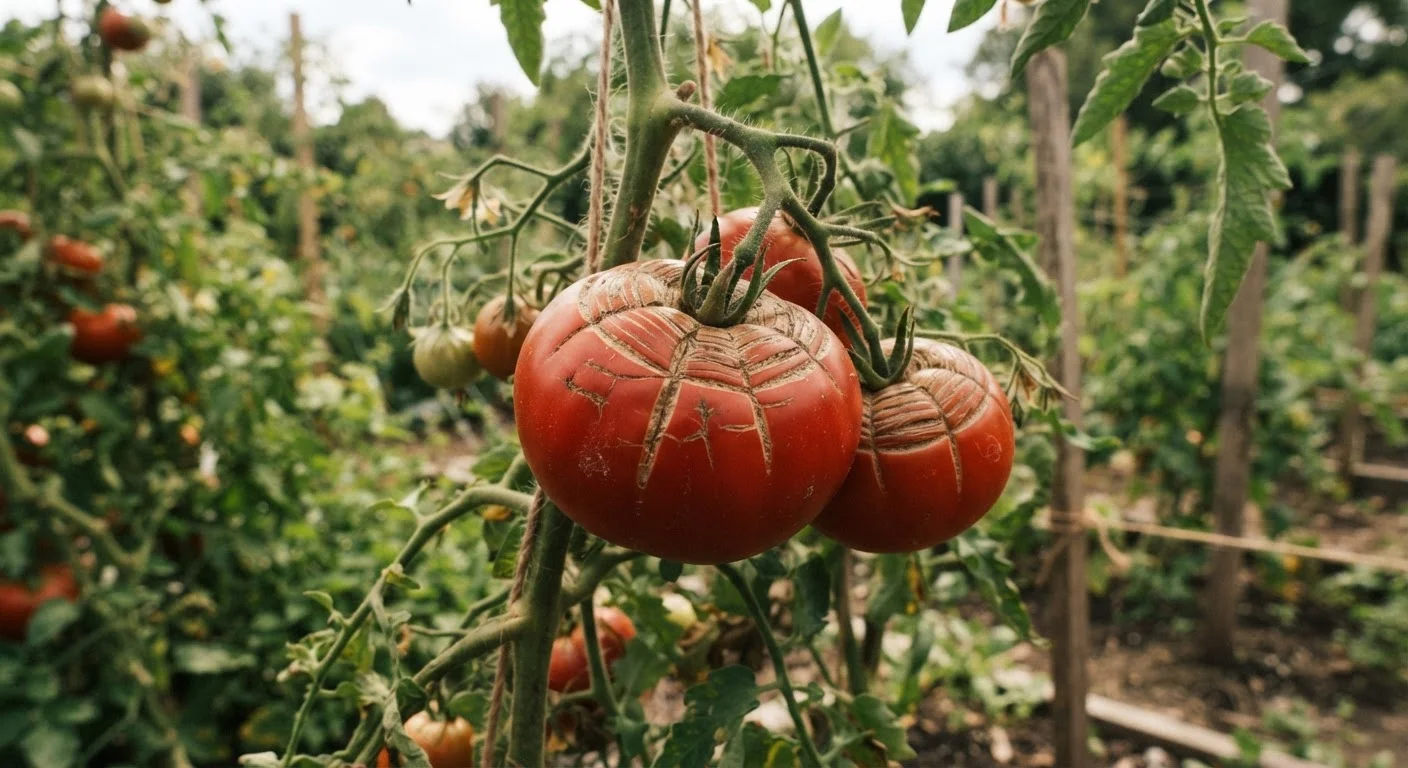
What Is Actually Happening When Tomatoes Crack
Tomato cracking occurs when the fruit's inner flesh expands faster than its outer skin can stretch to accommodate. The skin, which toughens slightly as the fruit ripens, simply can't keep pace - and it splits. There are two distinct crack patterns home gardeners typically encounter:
- Radial cracks run from the stem end downward toward the blossom end, like spokes on a wheel. These are usually the deepest and most damaging.
- Concentric cracks form rings around the stem end. They're often shallower but can still open the fruit to mold and pests.
Both types share the same root cause: sudden, uneven changes in the moisture available to the plant. Understanding this mechanism is the first step to preventing it season after season.
Up to 30%
Tomato yield lost to cracking in home gardens
University extension research suggests irregular irrigation is a leading contributor to cosmetic and physical fruit damage in home vegetable gardens.
1-1.5 inches
Weekly water needed for consistent tomato growth
Most land-grant university gardening guides recommend this range as the baseline for stable tomato moisture management.
Common Mistakes That Lead to Cracked Tomatoes
Most cracking is entirely preventable once you identify the habits and conditions that trigger it. Review the mistakes below and consider which ones may be occurring in your own garden.
Watering infrequently and then heavily all at once.
Why it happens: Many gardeners water by convenience rather than by schedule, letting the soil dry out significantly between sessions and then compensating with a large dose of water.
Allowing tomatoes to stay on the vine through heavy rainfall without intervention.
Why it happens: Gardeners often assume rain counts as a watering session and step back, not realizing a sudden, heavy downpour delivers far more water than the plant can absorb gradually.
Neglecting to mulch around the base of tomato plants.
Why it happens: Mulching can feel like an optional extra step, especially for gardeners who are new to vegetable growing or working with limited time.
Ignoring soil calcium levels, which affects skin strength.
Why it happens: Calcium deficiency is invisible until symptoms appear, and many gardeners focus on nitrogen and water without testing soil nutrient levels.
Planting varieties prone to cracking in climates with unpredictable summer rainfall.
Why it happens: Gardeners often choose varieties based on flavor or size alone, without considering how the variety handles moisture stress.
Practical Steps to Keep Tomatoes Intact Through Harvest
Beyond correcting individual mistakes, a few proactive practices dramatically reduce cracking rates across your entire crop.
Apply a Deep Layer of Mulch
A 2-3 inch layer of organic mulch - straw, shredded leaves, or wood chips - around the base of each plant acts as a buffer. It slows evaporation between waterings and moderates soil temperature swings, both of which help maintain steady moisture uptake.
Choose Crack-Resistant Varieties
Some tomato varieties have been bred with more elastic skin that tolerates moisture fluctuations better. When selecting seeds or transplants, look for variety descriptions that note crack resistance - this trait is often listed on seed packets and plant tags. Cherry tomato varieties tend to crack more readily than larger slicing types, so manage expectations accordingly.
Harvest Slightly Early During Rainy Spells
Tomatoes continue to ripen off the vine once they've reached the breaker stage - the point where color has just begun to develop. During extended rainy periods, harvesting fruit at this stage and allowing it to ripen indoors at room temperature can prevent a sudden rainfall from splitting an otherwise perfect tomato.
Don't Eat Deeply Cracked Fruit Without Inspection
Shallow cracks on freshly harvested tomatoes are generally safe to eat if you use the fruit promptly and cut away the damaged area. However, deep cracks that have been exposed to rain or soil for more than a day or two can harbor mold, bacteria, or insects inside the fruit. When in doubt, discard badly split tomatoes rather than risk spoilage spreading to other produce in your kitchen.
With consistent attention to watering rhythm, soil health, and timing, most families find that cracking becomes rare rather than routine - and that more of their harvest makes it to the table intact.
The content provided on our blog site traverses numerous categories, offering readers valuable and practical information. Readers can use the editorial team’s research and data to gain more insights into their topics of interest. However, they are requested not to treat the articles as conclusive. The website team cannot be held responsible for differences in data or inaccuracies found across other platforms. Please also note that the site might also miss out on various schemes and offers available that the readers may find more beneficial than the ones we cover.