

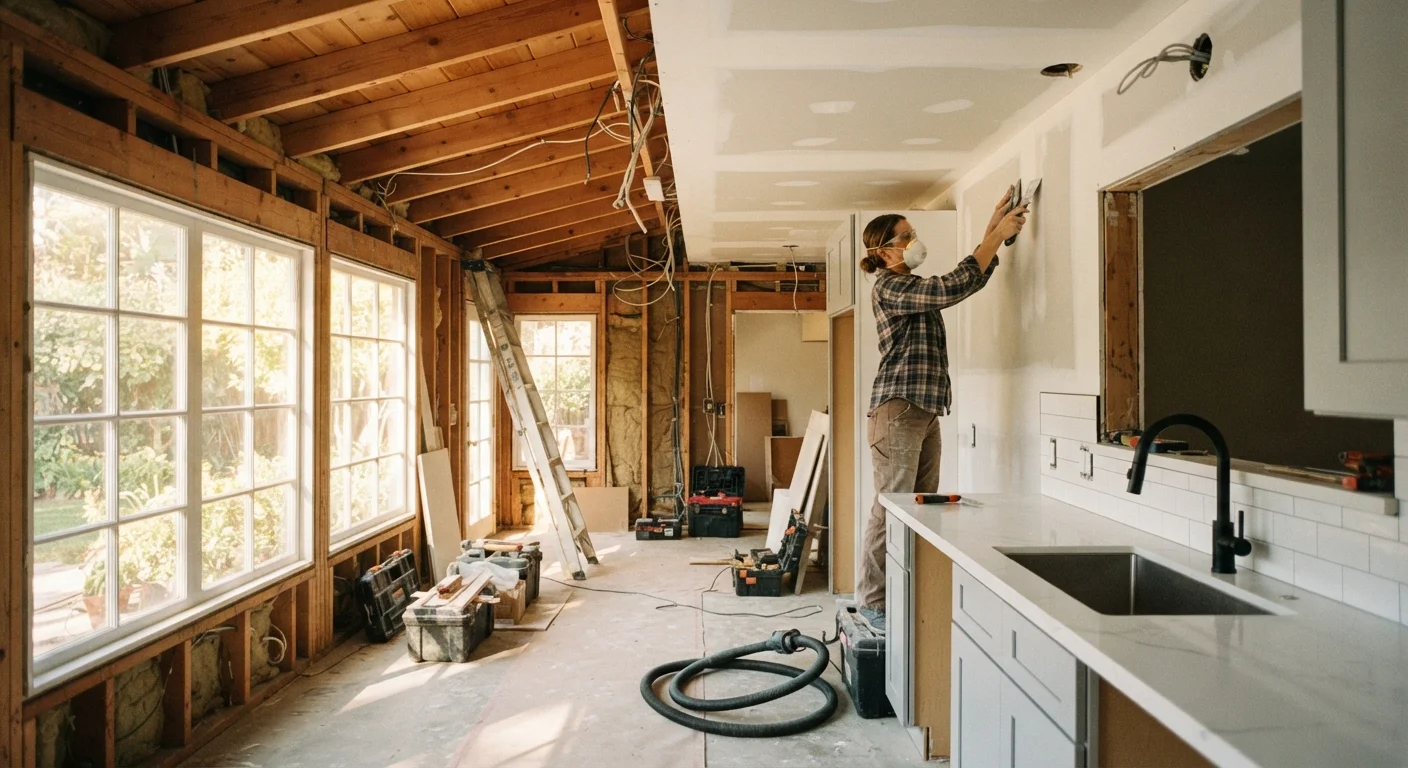
Equity at a Glance: More Than a Paper Number
Many homeowners hear the word equity and picture a vague, abstract figure on a bank statement. In reality, it is one of the most tangible measures of financial progress you can track as a homeowner. If your home is currently valued at $350,000 and you owe $210,000 on your mortgage, your equity is $140,000 - money that represents real ownership, even if you can't spend it today like cash in a checking account.
Equity builds in two main ways: through mortgage paydown (each monthly payment chips away at your loan balance) and through appreciation (rising property values in your area). Renovations represent a third lever - one that homeowners can actively pull. Understanding how that lever works, and when it's wise to use it, is at the heart of smart renovation planning.
For a broader foundation before starting any project, see our family renovation roadmap.
~$300K
Average U.S. homeowner equity (recent years)
According to CoreLogic's periodic equity reports, average tappable equity per U.S. mortgaged homeowner has climbed significantly over the past decade, reflecting sustained home price growth.
60-80%
Typical cost recouped on mid-range kitchen remodel
Remodeling Magazine's annual Cost vs. Value reports have consistently shown mid-range kitchen remodels recouping roughly 60-80% of project costs at resale, depending on region.
1 in 5
Homeowners who have unpermitted renovation work
Industry surveys suggest a notable share of homes carry at least one unpermitted improvement, which can complicate appraisals, sales, and insurance claims.
How Renovations Actually Affect Your Equity
Not all home improvements are created equal when it comes to equity impact. A project that costs $30,000 does not automatically add $30,000 in market value. Appraisers and buyers weigh upgrades based on comparable sales in your neighborhood - what similar homes with similar features actually sold for recently.
Some projects consistently recoup a strong percentage of their cost at resale. Minor kitchen refreshes (updated hardware, refinished cabinets, new fixtures) and mid-range bathroom remodels often perform well in national surveys. Major splurges - like a luxury master suite in a modest neighborhood - can cost far more than they return because your home's value is partly capped by what surrounding properties sell for.
Energy efficiency improvements occupy a special category: they may not always show dramatically on an appraisal, but they lower ongoing utility costs, making your home more attractive to budget-conscious buyers and potentially qualifying for tax incentives. Always verify current incentive programs with a tax professional.
Match Your Upgrade to Your Neighborhood
Before finalizing any renovation scope, research what comparable homes in your immediate area have sold for recently. If your planned upgrade would price your home significantly above neighborhood comps, scale back or redirect the budget to improvements with broader buyer appeal. A local real estate agent can help you identify which features buyers in your market actively seek out.
It's also worth reading about common renovation myths before committing to a project, since widely-held assumptions can lead to costly mistakes.
Borrowing Against Equity: What Families Should Know
Once you've built meaningful equity, lenders may offer products that let you tap into it - most commonly a home equity loan (a lump sum at a fixed rate) or a HELOC (Home Equity Line of Credit, which works more like a credit card with a variable rate). Both use your home as collateral, which means failing to repay could put your home at risk.
This is general financial information, not personalized advice. Before using equity to fund a renovation, speak with a licensed financial adviser who can assess your full financial picture, including income stability, existing debt, and long-term goals. The Saving & Debt hub offers broader guidance on managing household borrowing responsibly.
HELOCs Have Variable Rates - Plan Accordingly
Unlike a fixed-rate home equity loan, a HELOC typically carries a variable interest rate that can rise over time. This means monthly payments can increase, sometimes significantly, if market rates climb. Factor this uncertainty into your budget planning and discuss rate caps and repayment terms thoroughly with your lender before proceeding.
One practical principle worth keeping in mind: if a renovation doesn't clearly improve livability or add demonstrable market value, financing it with equity-backed debt adds risk without a proportional reward. Use the renovation planning checklist to pressure-test your project scope before you commit.
Planning Renovations with Equity in Mind
The smartest approach treats a renovation as both a lifestyle decision and a financial one. Before starting, ask two questions: Will this project make daily life meaningfully better for our family? And: Is this likely to hold or grow the home's value in our local market? Projects that satisfy both criteria are almost always worthwhile. Those that satisfy only one deserve careful cost-benefit thinking.
Get a realistic baseline by consulting a local real estate professional or appraiser about which improvements matter most in your specific neighborhood. What adds value in a suburb of Minneapolis may not carry the same weight in coastal Florida. Local data is irreplaceable.
Finally, always ensure major work is properly permitted and inspected. Unpermitted improvements can create legal headaches at sale and may not be recognized - or may be penalized - in an appraisal. Your equity is one of your family's most significant financial assets; protecting it through careful, informed decision-making is just as important as building it.
This article is for general informational purposes only and does not constitute financial, legal, or investment advice. Consult a licensed financial adviser or real estate professional for guidance specific to your situation.
Frequently Asked Questions
Not necessarily. Some projects add more market value than they cost, but others return far less than the money spent. The impact depends on the type of project, quality of work, and your local real estate market.
Yes - products like home equity loans or lines of credit (HELOCs) let you borrow against your equity. However, these are secured loans, meaning your home is collateral. Consult a licensed financial adviser before taking on this type of debt.
You can get a general estimate from online valuation tools, but a licensed appraiser or a comparative market analysis from a real estate professional will give you a more accurate figure. Lenders typically require a formal appraisal.
Kitchen updates, bathroom remodels, and projects that improve energy efficiency or curb appeal are commonly cited as strong performers. Returns vary significantly by region and market conditions, so local data matters.
Yes. Unpermitted work, poor craftsmanship, or highly personalized designs can reduce buyer interest and lower appraised value. Always pull required permits and use qualified contractors for significant work.
The content provided on our blog site traverses numerous categories, offering readers valuable and practical information. Readers can use the editorial team’s research and data to gain more insights into their topics of interest. However, they are requested not to treat the articles as conclusive. The website team cannot be held responsible for differences in data or inaccuracies found across other platforms. Please also note that the site might also miss out on various schemes and offers available that the readers may find more beneficial than the ones we cover.