

Why Insulation Myths Are So Persistent - and So Costly
Home insulation sits in an awkward category: it's invisible once installed, its benefits show up slowly on utility bills, and most families only think about it when something goes wrong. That combination makes insulation fertile ground for misconceptions. Acting on the wrong assumptions can mean spending money on improvements that underperform, or skipping upgrades that would genuinely reduce monthly costs.
These myths aren't harmless. They can lead families to over-insulate one area while ignoring critical gaps elsewhere, choose the wrong material for their climate, or skip the air-sealing step that makes insulation work. Similar patterns appear across home improvement - for a broader look at how renovation misconceptions backfire, see our piece on renovation myths that cost homeowners more than they save.
Myth
More insulation is always better, so piling it on is a safe bet.
Fact
Insulation follows the law of diminishing returns - each additional inch beyond the recommended R-value yields smaller energy savings.
R-value measures resistance to heat flow. The U.S. Department of Energy publishes recommended R-values by climate zone, and those targets reflect the point at which additional insulation stops paying for itself in energy savings. Exceeding those targets by a large margin rarely makes financial sense and can create problems such as blocking attic ventilation or compressing batts, which actually reduces their effective R-value. Focus on meeting - not dramatically exceeding - zone-appropriate targets.
Myth
New homes are already well insulated, so upgrades aren't necessary.
Fact
Building code sets minimum insulation standards, not optimal ones, and installation quality varies considerably between builders.
Code compliance means a home met the legal floor at the time it was built - it does not mean the insulation is performing at its best. Common issues in newer construction include compressed batts, gaps around recessed lighting, and under-insulated rim joists (the horizontal framing members at the top of the foundation wall). A home energy audit, often available through utilities at low or no cost, can reveal exactly where heat is escaping regardless of the home's age.
Myth
Insulation alone will dramatically lower your energy bills.
Fact
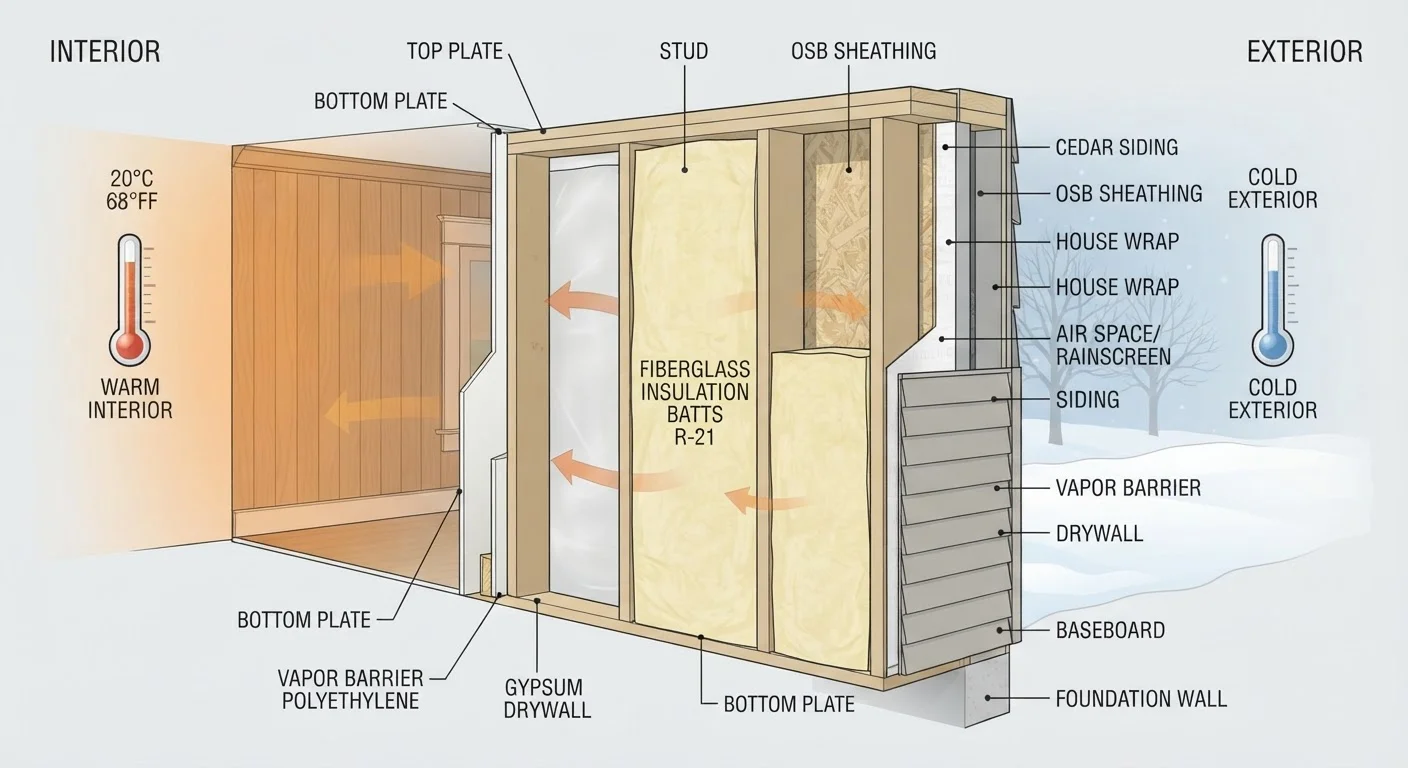
Insulation and air sealing work together; insulation without sealing air leaks delivers only partial results.
Insulation slows conductive heat transfer - the movement of heat through solid materials. But air leaks allow heat to move by convection, bypassing insulation entirely. A home with high R-value insulation but poorly sealed gaps around outlets, attic hatches, and plumbing can still lose substantial conditioned air. The Saturday afternoon fixes that quietly cut your energy bills that pair air sealing with insulation deliver the most measurable results.
For a full breakdown of attic work - where both tasks intersect - see our guide on attic insulation from start to finish.
Myth
All insulation materials perform the same way - it's just a matter of price.
Fact
Different insulation types have distinct performance profiles, best-use applications, and long-term behavior.
Fiberglass batts, blown cellulose, rigid foam board, and spray polyurethane foam each fill different roles. Spray foam, for example, creates an air barrier as it insulates - making it valuable in hard-to-reach cavities - while fiberglass batts are better suited to open stud bays with careful, gap-free installation. Choosing the wrong type for an application can result in moisture problems or underperformance. Our comparison of fiberglass vs. spray foam insulation walks through the practical trade-offs clearly.
Myth
You always need a vapor barrier when adding insulation.
Fact
Vapor barrier requirements depend on climate zone, wall assembly, and the specific insulation material being used.
In cold climates, a vapor retarder on the warm-in-winter side of the wall assembly can help control moisture migration. But in mixed or hot-humid climates, placing a traditional plastic vapor barrier in the wrong location can trap moisture and cause damage. Some modern insulation materials - like closed-cell spray foam - act as their own vapor retarder, making an additional layer redundant or even counterproductive. Consult your local building department or a certified energy auditor to determine what's appropriate for your specific climate and wall system.
Myth
Insulation upgrades are too expensive to be worth it for most families.
Fact
Federal tax credits and state utility rebates can significantly offset upfront insulation costs for eligible homeowners.
The Inflation Reduction Act introduced home energy efficiency tax credits that, as of the legislation's provisions, allow eligible homeowners to claim credits on qualifying insulation improvements. Many state utility programs and weatherization assistance initiatives layer on top of federal programs for lower-income households. Even without incentives, attic insulation upgrades are among the projects with shorter payback periods in home improvement - though actual savings vary by home, climate, and energy prices. Cross-reference what you spend on home improvements against broader household saving strategies to prioritize projects that make financial sense for your situation.
What Families Should Actually Do With This Information
Correcting insulation myths is only useful if it translates into better decisions. Start with a home energy audit - many utility companies offer them free or at reduced cost - which gives you a map of where your home is losing energy rather than requiring you to guess. This turns insulation from a vague home improvement concept into a specific, prioritized list of actions.
Don't Skip the Air-Sealing Step
Adding insulation over unsealed air gaps is one of the most common and costly insulation mistakes. Warm air carrying moisture can penetrate gaps, condense inside wall cavities, and cause mold or rot over time. Always address air leaks - around outlets, plumbing penetrations, and attic hatches - before or alongside adding insulation material.
When reviewing upgrade options, compare material types carefully and match them to their appropriate application. A well-installed fiberglass batt in an accessible attic floor may outperform a poorly installed spray foam job in the same space. The installation quality often matters as much as the material itself.
Finally, don't make insulation decisions in isolation from the rest of your household budget. Insulation improvements are among the more financially sound home upgrades when properly scoped, but they still represent real expenditure. The same critical thinking that helps you avoid savings myths that stall financial progress applies here: evaluate the real numbers, account for available incentives, and make decisions based on your home's specific conditions rather than general rules of thumb.
Electrical and Structural Work Requires a Licensed Professional
Some insulation projects - particularly in attics, crawl spaces, or around electrical panels - may involve hazardous conditions or require permits. Always consult a licensed contractor before beginning any insulation work near wiring, HVAC equipment, or load-bearing structures. Verify local permit requirements with your municipality before starting any project.
The content provided on our blog site traverses numerous categories, offering readers valuable and practical information. Readers can use the editorial team’s research and data to gain more insights into their topics of interest. However, they are requested not to treat the articles as conclusive. The website team cannot be held responsible for differences in data or inaccuracies found across other platforms. Please also note that the site might also miss out on various schemes and offers available that the readers may find more beneficial than the ones we cover.