

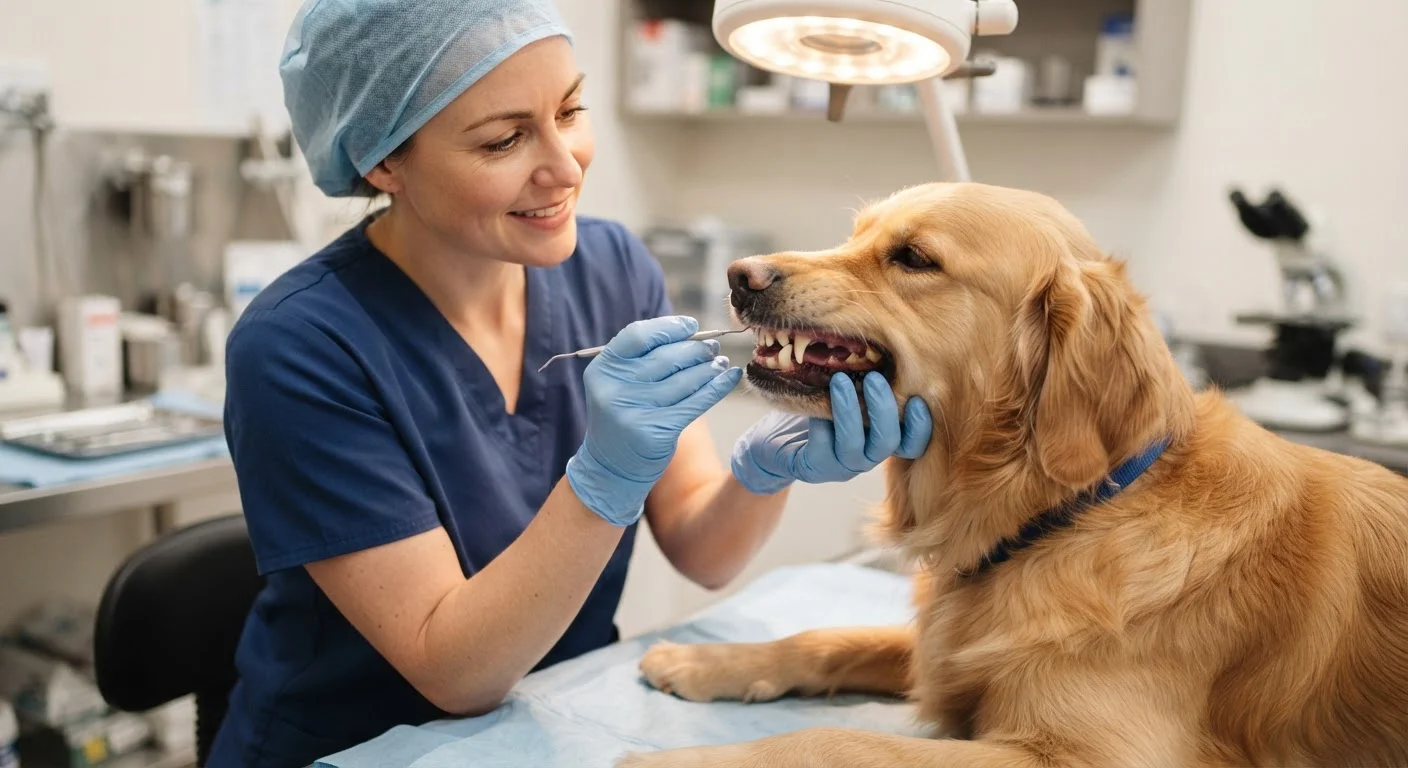
Why Dental Health Is a Whole-Body Issue
When a pet's breath smells unpleasant, it's tempting to write it off as just a quirk of animal life. But persistent bad breath is often one of the earliest signs of periodontal disease - a bacterial infection of the gums and supporting tooth structures. According to veterinary dental specialists, periodontal disease is among the most common health conditions diagnosed in adult dogs and cats.
What makes this more than a cosmetic concern is the systemic risk. Bacteria from infected gum tissue can enter the bloodstream and travel to major organs. Research in veterinary medicine has linked severe periodontal disease with changes in the kidneys, liver, and heart. This doesn't mean every pet with mild tartar faces organ failure, but it does underscore why oral health deserves serious attention as part of your overall pet care routine. You can learn more about building that routine in our month-by-month preventive care calendar.
80%
Dogs with dental disease by age three
The American Veterinary Medical Association notes that the majority of dogs show signs of periodontal disease by their third year of life.
70%
Cats affected by dental disease by age three
Veterinary dental surveys suggest that most cats also develop some degree of periodontal disease before middle age, often without obvious outward symptoms.
Recognizing the Warning Signs
Pets instinctively hide discomfort, which means dental problems can progress silently. Knowing what to watch for helps families catch issues before they become serious.
- Persistent bad breath that doesn't resolve
- Yellow or brown buildup along the gumline (tartar)
- Red, swollen, or bleeding gums
- Dropping food or chewing only on one side
- Pawing at the mouth or reluctance to be touched near the face
- Loose or missing teeth
- Drooling more than usual
Cats in particular tend to mask oral pain, so behavioral shifts - eating less, becoming withdrawn, or grooming less - can be indirect signals. If you notice any of these signs, a veterinary evaluation is the appropriate next step. This is general guidance, not a substitute for professional assessment of your individual pet.
“Periodontal disease is the most prevalent disease we see in small animal practice. The unfortunate reality is that most owners don't realize how much pain their pet may be in because animals are so good at hiding it.”
— Jan Bellows, Board-certified veterinary dentist and author of clinical texts on small animal dental care
Practical Dental Care You Can Do at Home
Establishing a consistent at-home routine makes a meaningful difference, especially when started early in a pet's life. Here are the most effective approaches:
Brush your pet's teeth daily using a pet-safe toothpaste
Daily mechanical removal of plaque is the single most effective at-home measure. Human toothpaste contains fluoride and other ingredients that are harmful to pets, so species-appropriate products are essential.
Introduce dental habits gradually, using positive reinforcement
Forcing tooth brushing can create fear and resistance, making future care much harder. Starting slowly - letting a pet lick toothpaste off your finger before progressing to a brush - builds trust and cooperation over time.
Offer veterinarian-approved dental chews or toys
Chewing action helps mechanically reduce plaque and tartar on chewing surfaces. Look for products that carry the Veterinary Oral Health Council (VOHC) seal, which indicates they have met standards for effectiveness.
Schedule a veterinary dental exam at least once a year
Annual exams allow a professional to catch early-stage disease before it progresses to tooth loss or systemic infection. Vets can also identify breed-specific concerns and recommend a personalized cleaning schedule.
Feed a complete, balanced diet appropriate for your pet's life stage
Nutrition influences gum tissue health and immune response, both of which affect the mouth's ability to resist bacterial overgrowth. Some veterinary dental diets are formulated with specific kibble textures that encourage chewing and reduce plaque accumulation.
As with other aspects of your pet's wellbeing - including weight management, which you can explore in our guide on overfeeding and pet health - small daily habits compound into significant long-term outcomes.
When Professional Cleaning Is Necessary
At-home care is essential, but it has limits. Professional dental cleanings performed by a veterinarian - typically under general anesthesia - allow for full examination of every tooth surface, probing of the gum pockets, dental X-rays, and removal of tartar below the gumline that brushing simply cannot reach.
Anesthesia-free dental cleaning, sometimes offered by grooming salons, does not allow safe or thorough examination and is generally not recommended by veterinary professional organizations. Always consult your veterinarian about what's appropriate for your pet's age and health status.
How often your pet needs a professional cleaning will depend on breed, diet, home care consistency, and individual anatomy. Smaller dog breeds and flat-faced (brachycephalic) breeds tend to be more prone to dental crowding and disease. Your vet is the right person to guide a schedule that fits your pet. Keep in mind that professional cleanings do carry a cost - factoring dental care into your broader pet budget is worth planning for ahead of time. Our article on the hidden costs of pet ownership can help families prepare.
This article is for general informational and educational purposes only and does not constitute veterinary medical advice. Always consult a licensed veterinarian for guidance specific to your pet's health needs.
The content provided on our blog site traverses numerous categories, offering readers valuable and practical information. Readers can use the editorial team’s research and data to gain more insights into their topics of interest. However, they are requested not to treat the articles as conclusive. The website team cannot be held responsible for differences in data or inaccuracies found across other platforms. Please also note that the site might also miss out on various schemes and offers available that the readers may find more beneficial than the ones we cover.