

Why Skipping Maintenance Always Costs More
For most American families, a vehicle is the second-largest household expense after a home. Yet routine maintenance - the single most effective way to protect that investment - is consistently the first thing delayed when budgets feel tight. The math rarely works in favor of waiting. A $75 oil change skipped repeatedly can lead to an engine replacement that costs $4,000 or more. A $25 cabin air filter ignored long enough degrades system performance and stresses the blower motor.
The maintenance schedule in your owner's manual isn't a manufacturer suggestion - it's an engineering blueprint for how long your vehicle's components last under normal operating conditions. Deviating from it systematically raises your long-term ownership costs. The tasks below are the ones most worth staying current on, particularly for families managing tight household budgets.
Keep a Simple Maintenance Log
Recording the date, mileage, and service performed each time you maintain your vehicle takes only a minute but pays dividends. A log helps you track what's due, provides documentation that can support a vehicle's resale value, and makes it easier to spot patterns - like an oil consumption issue - before they become serious problems.
The Maintenance Tasks That Pay for Themselves
Engine Oil and Filter Changes
Engine oil lubricates hundreds of moving metal parts. As it degrades, it thickens, loses its protective properties, and allows metal-on-metal contact that causes irreversible wear. Most modern vehicles call for an oil change every 5,000 to 7,500 miles, though full-synthetic oils can extend that interval - check your owner's manual for the exact specification.
Neglecting this service long enough leads to sludge buildup inside the engine, which restricts oil flow and can cause catastrophic failure. Engine replacement or rebuilding is among the most expensive repairs a family vehicle can face. An oil change, by comparison, is one of the lowest-cost services you'll ever pay for.
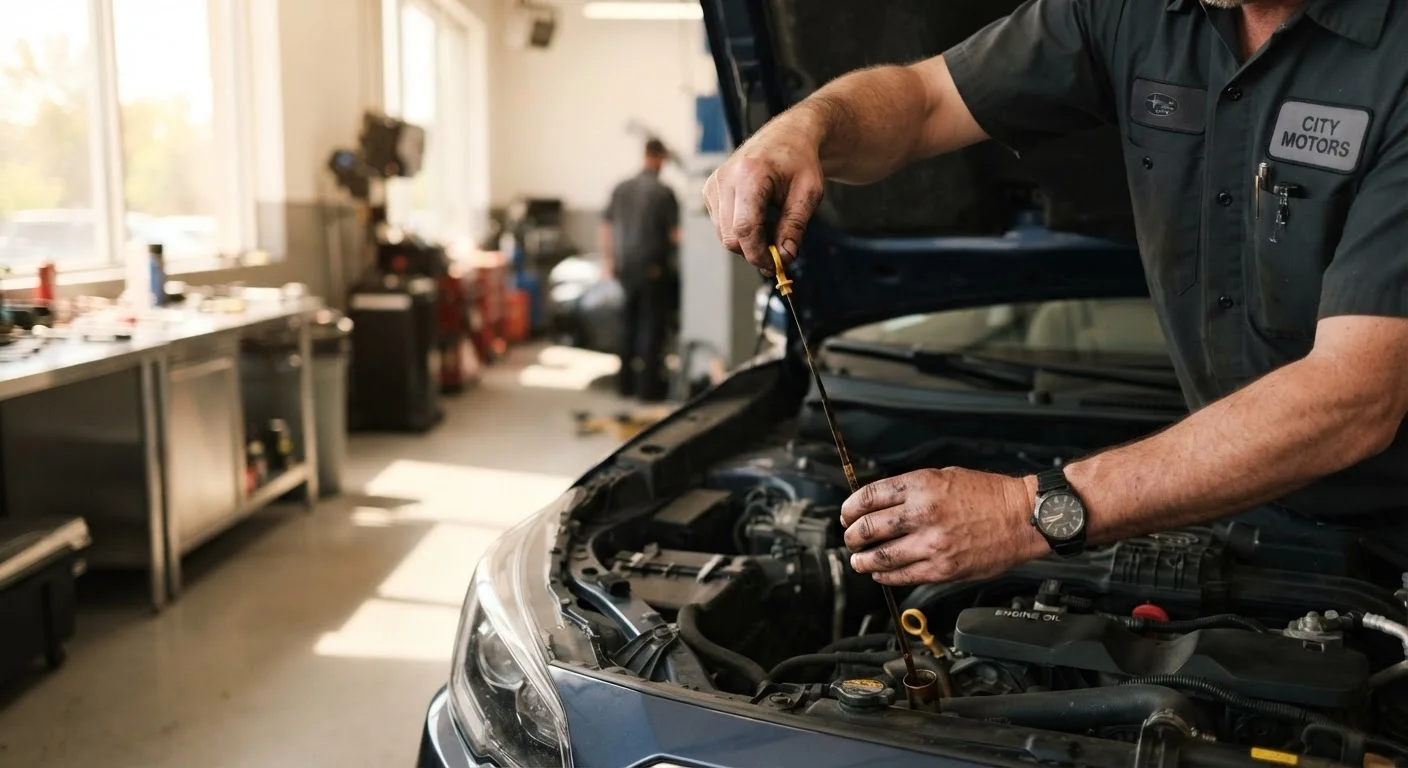
Engine oil changes are among the cheapest services you'll pay for - and among the costliest to skip.
Tire Rotation and Pressure Monitoring
Tires wear unevenly depending on their position on the vehicle. Front tires on front-wheel-drive cars, for example, handle both steering and power delivery, wearing faster than rear tires. Rotating tires every 5,000 to 8,000 miles - often done at the same visit as an oil change - equalizes that wear and extends the full set's usable life significantly.
Maintaining correct tire pressure matters just as much. Underinflated tires wear faster, reduce fuel economy, and can overheat at highway speeds. A properly inflated tire also handles better in emergency maneuvers. Pressure checks take under five minutes and cost nothing beyond a basic gauge.
Rotating tires on schedule can extend their usable life by tens of thousands of miles.
Coolant System Maintenance
Coolant - also called antifreeze - regulates engine temperature and prevents both overheating in summer and freezing in winter. Over time, coolant degrades chemically, becoming acidic and less effective at heat transfer. It can also corrode the metal components of the cooling system, including the radiator and water pump.
Most manufacturers recommend a coolant flush every 30,000 to 50,000 miles, though this varies. Engine overheating caused by neglected coolant is one of the most destructive failures a vehicle can experience - warped cylinder heads and blown head gaskets are the typical result, with repair costs that can reach several thousand dollars. Flushing the system on schedule is far less expensive.
Engine overheating from neglected coolant can result in repair costs reaching several thousand dollars.
Brake System Inspections
Brake pads are designed to wear down gradually and are far cheaper to replace than the rotors (the metal discs they clamp against). When pads wear past their minimum thickness and aren't replaced, the metal backing plate begins grinding directly against the rotor. This damages the rotor surface, often requiring rotor replacement alongside new pads - doubling or tripling the repair cost.
Most brake pads include a wear indicator that produces a high-pitched squeal when they're running low. That sound is a prompt to schedule service, not ignore it. A visual brake inspection is typically included in tire rotation visits, making it easy to stay ahead of the wear curve without additional appointments.
Replacing worn pads promptly can save you the significantly higher cost of rotor replacement.
Air Filter Replacement
Your vehicle has two air filters worth monitoring: the engine air filter and the cabin air filter. The engine air filter prevents dust, debris, and contaminants from entering the combustion system. A clogged filter restricts airflow, forcing the engine to work harder and reducing fuel efficiency. Most need replacement every 15,000 to 30,000 miles, depending on driving conditions.
The cabin air filter cleans the air flowing through the heating, ventilation, and air conditioning (HVAC) system. A blocked cabin filter strains the blower motor and reduces system effectiveness. Both filters are relatively low-cost items that are straightforward to replace - making this one of the maintenance tasks most worth staying current on. For more on tasks families commonly defer, the costs add up faster than most expect.
A clogged engine air filter reduces fuel efficiency and forces your engine to work harder over time.
Transmission Fluid Service
The transmission is one of a vehicle's most mechanically complex and expensive components. Transmission fluid lubricates and cools the internal components, and like engine oil, it degrades over time. In automatic transmissions especially, old or low fluid leads to slipping, rough shifting, and eventually failure. Transmission replacement or rebuilding can cost anywhere from $2,500 to over $5,000 depending on the vehicle.
Service intervals vary widely - some manufacturers specify fluid changes every 30,000 miles, others at 60,000 or beyond, and some vehicles have sealed transmissions requiring professional service. The key is to check your owner's manual rather than assume. This is also one service where professional shop work is often the right call, as transmission systems require specific tools and fluid types to service correctly.
Transmission failure is one of the most expensive repairs a family vehicle can face - fluid service helps prevent it.
Owner's Manual Trumps General Guidelines
Service intervals mentioned in this article are general ranges based on common manufacturer guidance. Your vehicle's owner's manual contains the specific intervals recommended by the engineers who designed your car. Driving conditions - frequent short trips, towing, extreme temperatures, or stop-and-go traffic - can also shorten recommended intervals. When in doubt, consult your manual or a qualified mechanic.
Making Maintenance a Budget Habit, Not a Surprise
The most financially damaging pattern in car ownership isn't one skipped service - it's letting small deferrals compound over months and years. Treating maintenance as a fixed monthly budget line, even a modest one, smooths out the cost and eliminates the shock of unplanned repairs. Many families find that setting aside a consistent amount each month covers the majority of scheduled services without strain.
If you're unsure which tasks your vehicle is due for, your owner's manual is the authoritative starting point. A trusted mechanic can also perform a multi-point inspection to identify what's overdue. For guidance on which jobs are reasonable to handle yourself versus when professional service is genuinely necessary, see our overview of DIY versus shop maintenance. And if your vehicle has crossed the 100,000-mile mark, high-mileage maintenance priorities deserve extra attention. Consistency, not perfection, is what keeps repair bills manageable over the life of a vehicle.
This article is for general informational purposes only. Always consult your vehicle's owner's manual and a qualified mechanic for guidance specific to your car's make, model, and condition.
The content provided on our blog site traverses numerous categories, offering readers valuable and practical information. Readers can use the editorial team’s research and data to gain more insights into their topics of interest. However, they are requested not to treat the articles as conclusive. The website team cannot be held responsible for differences in data or inaccuracies found across other platforms. Please also note that the site might also miss out on various schemes and offers available that the readers may find more beneficial than the ones we cover.