

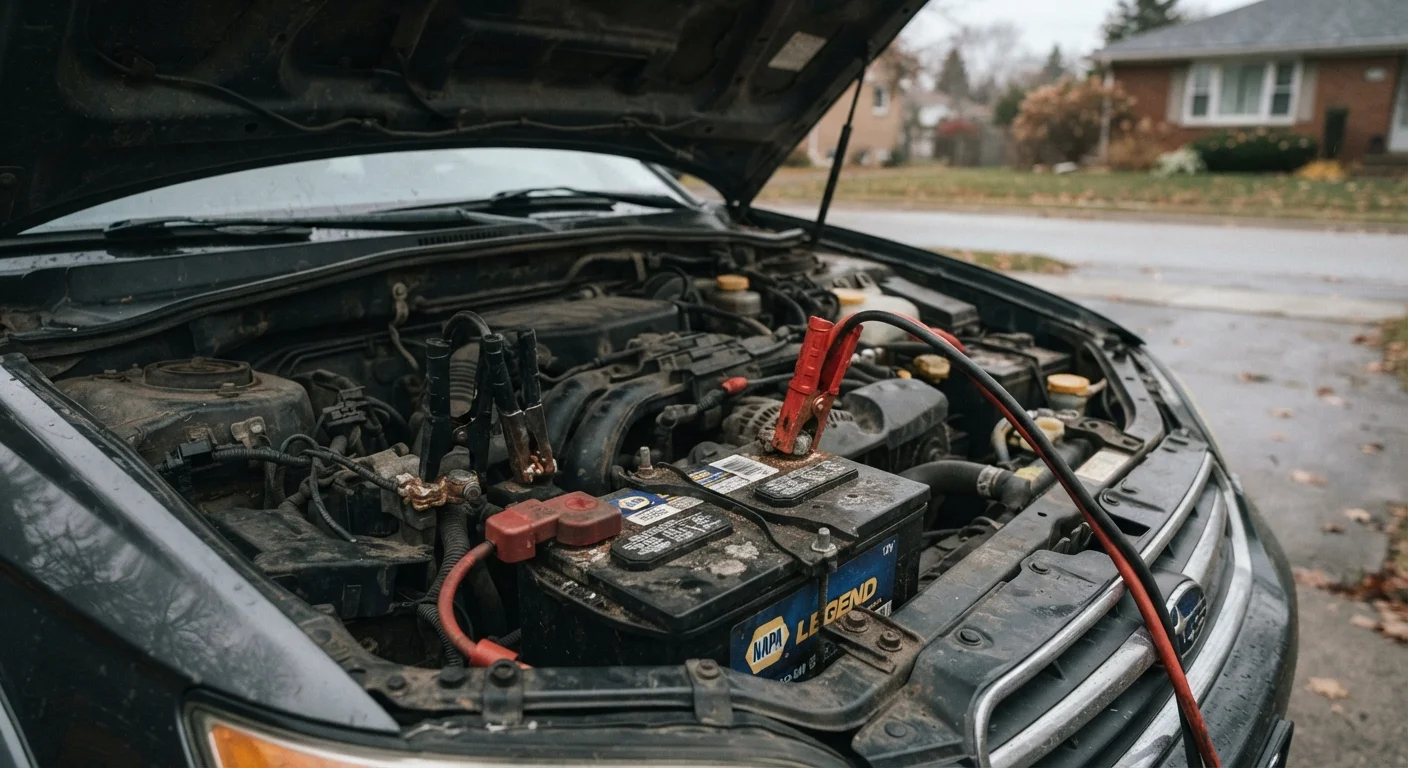
Why Your Battery Dies Sooner Than Expected
A car battery is easy to ignore - until the morning it refuses to start. Most drivers assume batteries simply wear out with age, but the reality is that everyday habits and environmental conditions often cut battery life well short of its potential. The average car battery is rated to last roughly three to five years, yet many fail closer to the two- or three-year mark due to entirely preventable stressors.
Understanding what accelerates battery wear puts you in control. Whether you're managing a family minivan, a weekend commuter, or a truck used for errands, the factors below apply broadly - and recognizing them early can save you both an unexpected breakdown and the cost of an early replacement. For a broader look at keeping ownership costs in check, see our guide to vehicle maintenance tasks that prevent expensive repairs.
Extreme Heat Degrades Battery Chemistry
Cold weather gets most of the blame for dead batteries, but heat is actually the more damaging long-term stressor. High under-hood temperatures - which can exceed 140°F in summer - accelerate the internal chemical reactions inside a battery, causing fluid evaporation and plate corrosion. This internal breakdown reduces the battery's capacity over time, often leaving it unable to hold a full charge by the following winter when demands are highest.
Parking in shaded areas when possible and ensuring your cooling system is functioning properly both help manage under-hood heat. The seasonal car care checklist includes cooling system checks that directly affect battery longevity.
Heat - not cold - is the primary culprit behind long-term battery capacity loss.
Frequent Short Trips Prevent Full Recharging
Every time you start your engine, the battery expends a significant burst of energy. The alternator - driven by the running engine - is supposed to replenish that charge during your drive. But on trips shorter than five to ten minutes, the alternator doesn't have enough time to return what was used. Over weeks and months of repeated short trips, the battery operates in a chronically undercharged state, which accelerates sulfation - a buildup of lead sulfate crystals on the battery plates that permanently reduces capacity.
If your driving is primarily short-haul, consider combining errands into fewer, longer trips when practical. This single habit change can meaningfully extend battery life.
Short trips leave batteries chronically undercharged, accelerating internal plate damage over time.
Parasitic Drain from Electronics and Accessories
Modern vehicles draw a small, continuous current even when parked - powering alarm systems, keyless entry, clocks, and onboard computers. This is normal and accounted for in battery design. What isn't accounted for is abnormal parasitic drain: a malfunctioning module, a glove box light that stays on, a phone charger left plugged into an always-on port, or an aftermarket accessory wired incorrectly. Any of these can silently discharge a battery over several hours or days.
If you regularly find your battery flat after the car sits for a few days without being driven, have a technician perform a parasitic draw test to identify the source before replacing the battery.
A single faulty module or forgotten accessory can drain a fully charged battery in under 48 hours.
Extended Periods of Inactivity
Batteries self-discharge naturally over time, even with no electrical load. A car left parked for two to four weeks without being driven can drop below the voltage threshold needed for reliable starting. This is a common issue for seasonal vehicles, second cars, or vehicles left at airports during long trips. Deep discharge - where the battery falls to very low voltage repeatedly - causes cumulative internal damage that shortens its service life.
For vehicles stored longer than two weeks, connecting a battery maintainer (sometimes called a trickle charger) is a straightforward way to keep the battery at an optimal charge level without overcharging it.
Leaving a car parked for more than two weeks without a maintainer risks deep discharge damage.
A Failing Alternator or Charging System Issue
The battery and alternator work together as a system. If the alternator isn't producing enough voltage - due to a worn belt, failing diodes, or internal damage - the battery never receives a proper charge, even on long drives. Conversely, an overcharging alternator pushes too much voltage into the battery, causing overheating and internal damage. Either failure mode puts premature stress on the battery.
If you've replaced a battery and it fails again within a year, the alternator or voltage regulator is often the underlying cause worth investigating. Addressing charging system health is part of the broader maintenance picture covered in our family car maintenance schedule guide.
A faulty alternator will kill a new battery just as quickly as it killed the old one.
Corroded or Loose Battery Terminals
Even a fully healthy battery can underperform if its terminals are corroded or loosely connected. Corrosion - that whitish or bluish-green buildup around the terminal posts - increases electrical resistance, reducing the current available to start the engine and disrupting the charge flowing back from the alternator. Over time, a poor connection also causes voltage fluctuations that stress battery chemistry.
Inspecting terminal connections is one of the simplest battery maintenance steps available: clean visible corrosion with a terminal brush and a baking soda solution, then ensure connections are snug. This costs almost nothing and takes under ten minutes. Keeping up with small maintenance habits like this aligns with broader cost-saving strategies described in our fuel and vehicle cost reduction guide.
Corroded terminals increase resistance and can mimic the symptoms of a failing battery entirely.
How to Tell Your Battery Is Struggling
Battery decline is rarely sudden. Common early signals include a slow or labored engine crank when starting, dashboard warning lights related to the charging system, dimming headlights at idle, or electronic accessories behaving erratically. If your vehicle takes noticeably longer to start in the morning - especially after the car has sat overnight - treat that as a prompt to have the battery tested, not a reason to wait and see.
Get a Free Load Test Before Replacing
Many auto parts retailers offer free battery load testing, which evaluates real-world starting performance rather than just resting voltage. If your battery is three or more years old and showing slow cranking or intermittent electrical issues, a load test can tell you whether replacement is genuinely necessary - or whether the issue lies elsewhere in the charging system. This small step can prevent unnecessary spending.
Most auto parts retailers and repair shops offer free battery load testing, which measures how well the battery holds a charge under real-world starting conditions. A load test is more informative than simply checking the voltage with a basic multimeter. If your battery is more than three years old and showing any symptoms, a load test is a low-cost way to assess where you stand. Pairing good battery habits with broader seasonal awareness is also worthwhile - the seasonal car care guide covers which checks matter most heading into summer and winter.
This article is for general informational purposes only. For diagnosis of specific vehicle issues, consult a qualified mechanic.
The content provided on our blog site traverses numerous categories, offering readers valuable and practical information. Readers can use the editorial team’s research and data to gain more insights into their topics of interest. However, they are requested not to treat the articles as conclusive. The website team cannot be held responsible for differences in data or inaccuracies found across other platforms. Please also note that the site might also miss out on various schemes and offers available that the readers may find more beneficial than the ones we cover.