

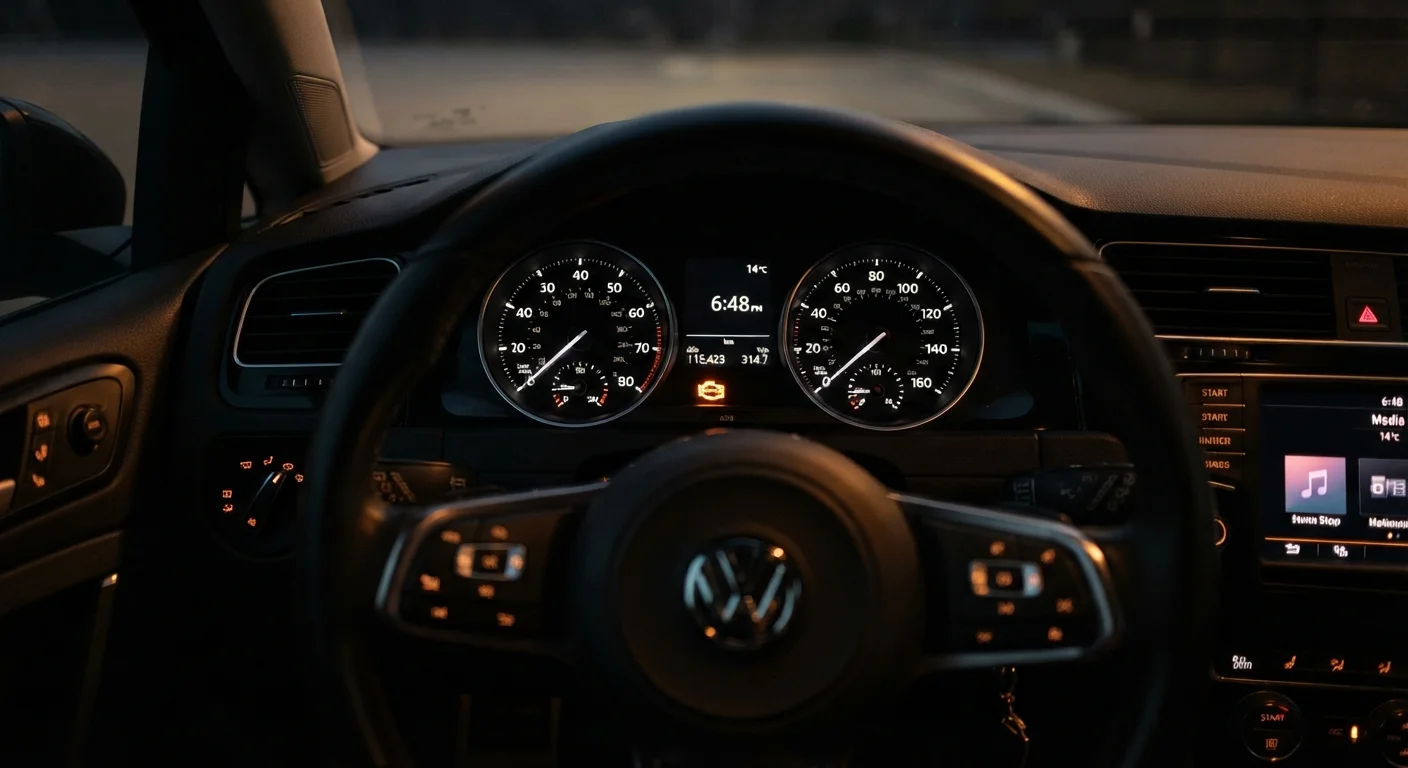
What the Check Engine Light Actually Monitors
The check engine light is your vehicle's way of saying its onboard computer - called the ECM or PCM - has detected a reading outside its expected range. That could come from the engine, the transmission, or the emissions system. What it doesn't do is tell you how serious the problem is just by turning on.
Understanding this distinction is the first step to responding calmly and intelligently. The light is informational, not a countdown clock - with one key exception.
Flashing Light Means Stop Driving Now
A check engine light that flashes or blinks - rather than glowing steadily - signals an active misfire that can rapidly damage your catalytic converter, an expensive component. If the light is flashing, reduce speed, avoid hard acceleration, and have the vehicle inspected by a qualified mechanic as soon as possible. Do not continue driving normally until the cause is diagnosed.
Staying on top of scheduled maintenance, covered in our family car maintenance schedule guide, reduces the likelihood that deferred service items will eventually trigger the light.
Common Myths - and What's Actually True
Misconceptions about the check engine light are widespread, and they lead drivers to two equally unhelpful extremes: panicking at a minor sensor fault, or ignoring a warning that genuinely needs attention. The myth-and-fact pairs below address the most common misunderstandings.
Myth
When the check engine light comes on, I need to pull over immediately and stop driving.
Fact
A steady check engine light generally means you can continue driving cautiously to a mechanic - it's a flashing light that signals an urgent, stop-now situation.
The check engine light (formally called the Malfunction Indicator Lamp, or MIL) uses two distinct modes for a reason. A steady glow indicates that your vehicle's onboard diagnostic system has logged a fault, but the engine is not in immediate danger. Common steady-light causes include a faulty oxygen sensor, a loose or missing gas cap, or a worn spark plug.
A flashing or blinking light, however, means an active engine misfire is occurring - raw fuel is entering the exhaust and can destroy the catalytic converter within minutes of continued driving. In that case, reduce speed and seek service promptly.
Myth
The check engine light always points to a major, expensive engine problem.
Fact
The most common check engine triggers include low-cost issues like a loose gas cap, a failing oxygen sensor, or worn spark plugs.
Studies of OBD-II diagnostic data consistently show that a loose or improperly tightened gas cap ranks among the most frequent check engine causes. It creates a small evaporative emissions leak that the system flags immediately. Tightening or replacing the cap - often under $10 - resolves it.
Other frequent, relatively affordable culprits include oxygen sensors, mass airflow sensors, and spark plugs or ignition coils. None of these are emergencies, though leaving them unaddressed can reduce fuel efficiency and eventually cause secondary damage.
Myth
Once the light turns off on its own, the problem is gone and I can forget about it.
Fact
A self-clearing light means the fault condition wasn't detected again in recent drive cycles - the underlying problem may still exist and can return.
Onboard diagnostic systems automatically clear a stored fault code after a set number of drive cycles if the triggering condition doesn't reappear. This can give the impression that everything is fine. In reality, intermittent faults - such as a failing sensor that only misbehaves under certain temperatures - can cause real damage over time even when the light is off.
If your light came on and then cleared itself, it's still worth retrieving any stored or pending codes with an OBD-II scanner. Many auto parts retailers will do this at no charge, giving you a starting point for an informed conversation with a mechanic.
Myth
Only a dealership can read the check engine light's codes - it's too technical for everyday drivers.
Fact
Any OBD-II compatible scanner - including inexpensive handheld models - can read the diagnostic trouble code from virtually any car made after 1996.
Since 1996, all vehicles sold in the U.S. have been required to include a standardized OBD-II port, usually located beneath the dashboard near the steering column. Plug in a compatible reader, and within seconds you'll see a trouble code like P0420 or P0171. These codes are publicly documented and easily searchable.
You don't need to diagnose and fix the problem yourself - but knowing the code puts you in a much stronger position when talking to a mechanic, helping you avoid unnecessary upsells and verify that any repair actually addressed the flagged fault.
Myth
The check engine light covers all vehicle warnings, so other dashboard lights aren't as important.
Fact
The check engine light is specific to the engine and emissions system; other warning lights - oil pressure, temperature, battery - monitor entirely separate, equally critical systems.
Your dashboard is designed as a layered warning system. The check engine light specifically monitors the powertrain and emissions controls. A low oil pressure warning or a high coolant temperature light are separate indicators that can signal imminent engine damage if ignored - sometimes within minutes.
Never let familiarity with the check engine light breed complacency about other warnings. Refer to your owner's manual to understand what each light means for your specific vehicle. As our guide Everything Your Owner's Manual Is Trying to Tell You explains, that booklet contains manufacturer-specific detail that generic advice simply can't replace.
How to Respond When the Light Comes On
A practical first response follows a straightforward sequence. First, check whether the light is steady or flashing - that single distinction shapes everything else. Second, check your gas cap; remove it, inspect the seal, and retighten it firmly. A loose cap is responsible for a surprisingly large share of check engine events.
Third, if the light remains on after a day or two of normal driving, retrieve the stored trouble code. Many national auto parts retailers offer free code scans. Write the code down before any repairs begin so you can confirm the fix resolved the specific fault.
Don't Rely on Light Color Alone
Some vehicles display a yellow check engine light for minor issues and a red one for serious faults - but not all do. Never assume the severity based on color alone. Always retrieve the diagnostic trouble code (DTC) with an OBD-II scanner or have a professional do so. Driving without understanding the underlying cause carries real risk.
If your vehicle shows other simultaneous symptoms - rough idling, loss of power, unusual smells, or any red warning lights - treat the situation as more urgent and consult a qualified mechanic rather than waiting. Similarly, brake warning signs and tire-related alerts deserve their own immediate attention, separate from whatever the check engine light may be communicating.
This article is for general informational purposes only. For diagnosis, repair decisions, or safety concerns specific to your vehicle, consult a qualified automotive technician.
The content provided on our blog site traverses numerous categories, offering readers valuable and practical information. Readers can use the editorial team’s research and data to gain more insights into their topics of interest. However, they are requested not to treat the articles as conclusive. The website team cannot be held responsible for differences in data or inaccuracies found across other platforms. Please also note that the site might also miss out on various schemes and offers available that the readers may find more beneficial than the ones we cover.