

Why Your Brakes Communicate Through Symptoms
Your braking system is one of the most safety-critical systems in your vehicle, and it is also one of the most communicative. Unlike a transmission failure that can arrive without much warning, brake problems almost always announce themselves gradually - through sound, feel, and behavior - giving drivers time to respond before a serious failure occurs.
The challenge is knowing how to read those signals. Not every squeak means an emergency, and not every quiet brake is a healthy one. Understanding what different symptoms typically indicate helps you make smarter decisions: when to monitor, when to schedule an appointment, and when to pull over immediately. As part of a broader approach to car ownership, staying on top of brake health is one of the highest-value maintenance habits a family can build.
The Most Common Brake Symptoms Explained
Squealing or High-Pitched Noise
This is the most common brake symptom, and it is often intentional. Most brake pads include a small metal wear indicator that produces a high-pitched squeal when the friction material wears to a low level. Think of it as a built-in alarm. Morning squeaks that fade quickly can result from light surface rust after overnight moisture - usually harmless. Persistent squealing during every stop, however, is the system signaling that an inspection is overdue.
Check Your Pads Through the Wheel Spokes
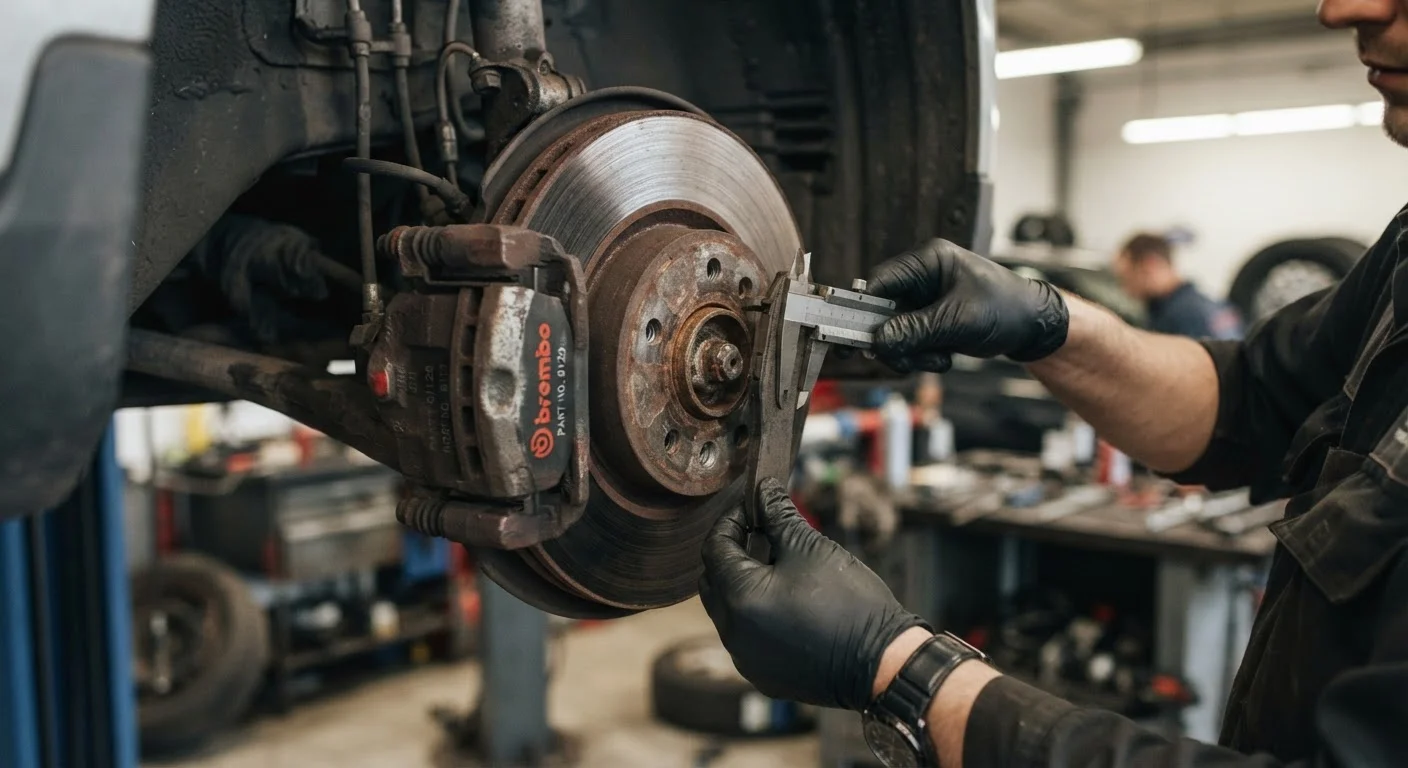
On many vehicles, you can get a rough visual check of brake pad thickness by looking through the wheel spokes at the rotor and caliper. If the pad material looks thinner than a quarter-inch, it is worth scheduling an inspection. This is not a substitute for a professional evaluation but can help you gauge urgency between service appointments.
Grinding or Growling Sensation
Grinding is a step beyond squealing and should be treated with urgency. It typically means the pad material has worn away entirely, and the metal backing plate is contacting the rotor directly. Left unaddressed, this damages the rotor surface - turning a pad replacement into a more expensive rotor replacement as well. If you hear or feel grinding, have the vehicle seen by a qualified mechanic promptly.
Pulling to One Side
When a vehicle drifts left or right during braking, the cause is typically uneven braking force. A stuck caliper, uneven pad wear, or a problem with a brake hose can all produce this symptom. Because pulling affects your ability to steer predictably in an emergency stop, this symptom warrants professional evaluation rather than a wait-and-see approach.
Soft, Spongy, or Low Brake Pedal
A brake pedal that feels mushy underfoot or travels unusually far before resistance builds suggests a hydraulic issue. Air in the brake lines, a brake fluid leak, or a failing master cylinder are the most common causes. Brake fluid is hygroscopic - it absorbs moisture over time - which is one reason following your maintenance schedule includes periodic fluid checks. A spongy pedal is a safety-critical symptom that requires immediate professional attention.
Vibration or Pulsing Through the Pedal
If the pedal pulses or the steering wheel shudders during braking, the rotors are likely warped or unevenly worn. This reduces braking consistency and should be inspected. Rotors can sometimes be resurfaced rather than replaced, depending on their remaining thickness.
Brake Noise After Rain Is Often Normal
A brief squeal or light scraping sound when first applying the brakes after a vehicle has sat overnight - especially in wet or humid conditions - is usually caused by a thin layer of surface rust forming on the rotor. This typically clears within a few stops and is generally not a cause for concern. Persistent noise that continues through dry conditions is the symptom worth watching.
Dashboard Warning Lights and What They Add
The brake warning light - typically a red exclamation mark inside a circle, sometimes labeled BRAKE - can signal several conditions: the parking brake is still engaged, brake fluid is low, or the hydraulic system has detected a pressure imbalance. Some vehicles also tie pad-wear sensors into this light. If the light activates alongside any of the physical symptoms above, treat the combination as urgent. If it appears alone, start by checking whether the parking brake is fully released, then check fluid level. When in doubt, have the vehicle inspected. See our guide on dashboard warning lights for a broader look at what indicator lights typically signal.
When to Act - and What to Expect
Not every brake symptom demands an immediate roadside stop, but none should be indefinitely ignored. Here is a practical way to triage:
- Grinding noise or metal-on-metal contact: Avoid unnecessary driving and seek professional inspection as soon as possible.
- Spongy pedal or pulling: Have the vehicle inspected before your next regular driving day if possible.
- Persistent squealing: Schedule an inspection within the next week or two.
- Occasional light squeak (only in wet conditions): Monitor; mention it at your next scheduled service.
When buying a used vehicle, brake condition is one of the first things a pre-purchase inspection should cover. Our used car inspection checklist walks through that process in detail. Brakes are also closely related to overall stopping safety, which includes your tires - tire tread and pressure work alongside your brakes to bring your vehicle to a safe stop.
This article is for general informational purposes only. Brake systems are safety-critical components. Always consult a qualified, licensed mechanic for diagnosis and repair of any braking issue.
Frequently Asked Questions
Squealing brakes are your vehicle's way of signaling that brake pads are wearing low. While a brief squeal is not an immediate emergency, continuing to drive without inspection risks pad wear down to bare metal, which damages the rotor and significantly extends your stopping distance. Have the brakes inspected promptly.
Grinding typically means the brake pad friction material has worn away completely and metal is contacting the rotor. This is a serious safety issue that can compromise stopping ability and cause expensive rotor damage. Stop driving and have the vehicle inspected by a qualified mechanic as soon as possible.
Pulling to one side during braking is commonly caused by a stuck brake caliper, uneven pad wear, or a difference in brake fluid pressure between sides. It can also indicate a brake hose issue. This symptom warrants a mechanic's inspection, as it directly affects steering control in emergency stops.
Brake pad lifespan varies significantly depending on driving habits, vehicle weight, and pad material. A general guideline is to have pads inspected every 12,000 miles and replaced roughly every 25,000-70,000 miles, but your owner's manual and a mechanic's visual inspection are the most reliable guides.
The brake warning light can indicate low brake fluid, a problem with the brake hydraulic system, or that the parking brake is engaged. Some vehicles use it to alert drivers to worn pads as well. Never ignore this light - have the system diagnosed promptly, especially if paired with any physical symptoms.
You can get a visual sense of pad thickness by looking through the wheel spokes - pads typically should be thicker than a quarter-inch. However, a thorough brake inspection requires removing the wheel and examining the rotor, caliper, and lines. A qualified mechanic can perform this safely and reliably.
The content provided on our blog site traverses numerous categories, offering readers valuable and practical information. Readers can use the editorial team’s research and data to gain more insights into their topics of interest. However, they are requested not to treat the articles as conclusive. The website team cannot be held responsible for differences in data or inaccuracies found across other platforms. Please also note that the site might also miss out on various schemes and offers available that the readers may find more beneficial than the ones we cover.