

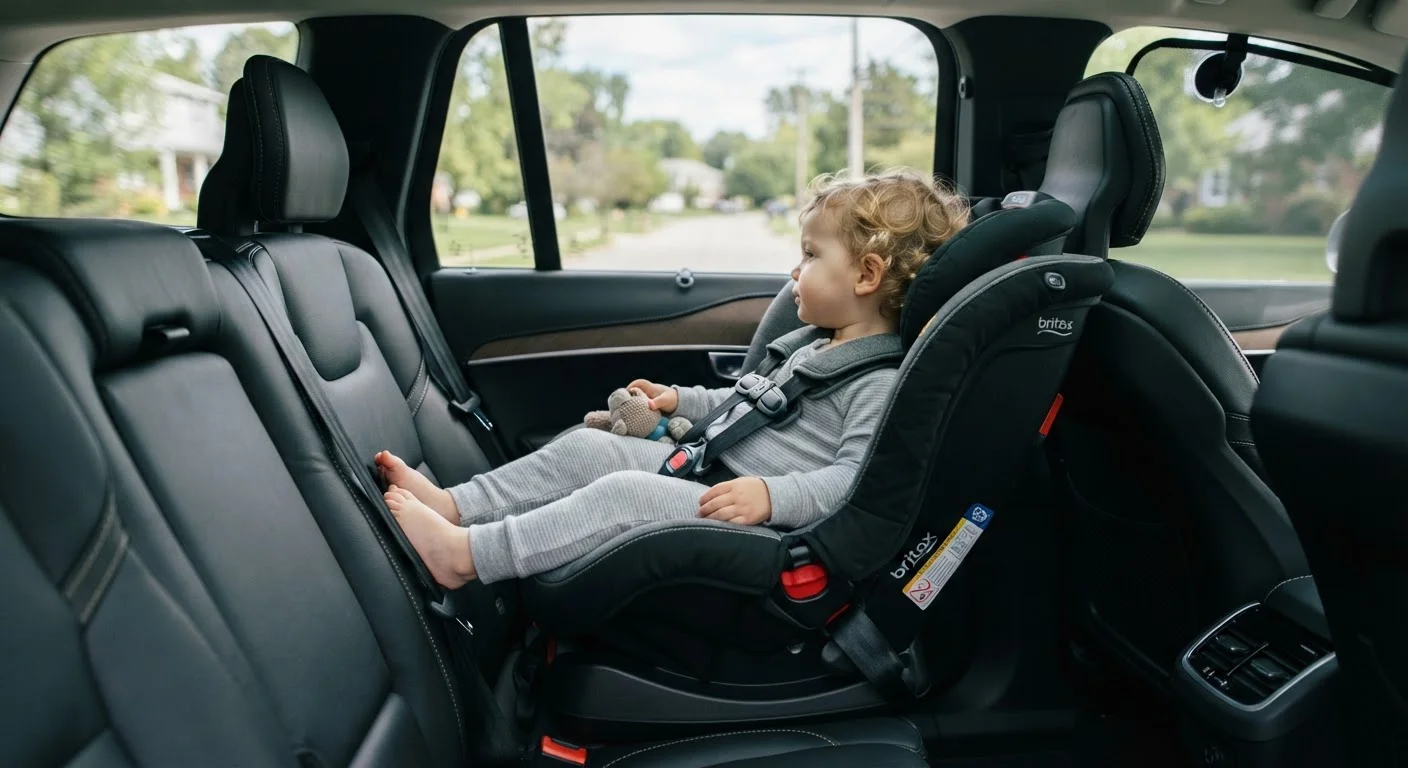
Why Car Seat Errors Are So Common
Car seats are among the most regulated and tested child safety products on the market - yet studies by the National Highway Traffic Safety Administration (NHTSA) have consistently found that close to half of all child restraint systems are used with at least one critical error. The problem isn't that parents don't care; it's that the instructions are often dense, installation varies by vehicle, and well-meaning advice from friends or family doesn't always reflect current guidelines.
Common mistakes include loose harness straps, incorrectly routed seatbelts, misused locking clips, and seats installed at the wrong recline angle. Any one of these can significantly reduce the seat's effectiveness in a crash. Understanding the fundamentals - by seat type and by developmental stage - is the most reliable way to close that gap.
Never Use an Expired or Damaged Seat
Car seats have expiration dates - typically 6 to 10 years from manufacture - printed on a label on the base or shell. Materials degrade over time, and older seats may not meet current safety standards. Similarly, any seat involved in a moderate or severe crash should be replaced, even if no visible damage is apparent. Check the manufacturer's guidance for crash replacement criteria specific to your seat.
Rear-Facing Seats: The First and Most Critical Stage
Rear-facing car seats cradle and move with a child during a frontal collision, distributing crash forces across the entire back, shoulders, and head rather than concentrating them on a single harness point. This is why both the American Academy of Pediatrics (AAP) and NHTSA recommend keeping children rear-facing for as long as the seat's weight and height limits allow - not just until age two.
Infant-only seats and convertible seats used in the rear-facing position must be installed at the correct recline angle - typically 30-45 degrees - so that a young infant's airway stays open and their head doesn't flop forward. Most seats include a built-in angle indicator. Check it every time, as the angle can shift with vehicle seat cushion compression over time.
Harness straps should sit at or below shoulder level in the rear-facing position and pass the pinch test: when the chest clip is at armpit level and the harness is snug, you should not be able to pinch any slack fabric at the shoulder.
After installing any car seat, grab the base near the belt path and try to move it side to side and front to back - less than one inch of movement in any direction is the standard you're aiming for.
NHTSA and certified technicians use this one-inch rule as the benchmark for a secure installation, and it's the single fastest way to confirm the seat isn't too loose.
When dressing your child for a car ride in winter, skip the bulky coat before buckling - run the harness snugly, then place the coat over the straps like a blanket.
Thick coats compress in a crash, creating dangerous slack in the harness. This is one of the most common cold-weather errors CPSTs see during inspections.
Forward-Facing Seats: Transitioning Safely
Once a child outgrows the rear-facing limits of their seat - measured by the manufacturer's stated maximums, not by age - they move to a forward-facing harnessed seat. This seat uses a five-point harness and, critically, a top tether that attaches to an anchor point in the vehicle. The top tether reduces head movement in a crash by up to 6 inches and is frequently skipped, even by attentive parents.
Harness straps in the forward-facing position should be routed at or above the child's shoulders. The same pinch test applies. Children should remain in a harnessed forward-facing seat until they hit that seat's upper limits - many seats accommodate children up to 65 lbs or more, meaning a child could be in this stage until age 5 or 6.
Booster Seats and the Seatbelt Graduation
A booster seat's job is to position the vehicle's own seatbelt correctly across a child's body. There are two types: high-back boosters (which provide head and neck support and are appropriate for vehicles without headrests) and backless boosters. Neither type uses a harness - the lap and shoulder belt do the work.
The seatbelt fits correctly when the shoulder belt crosses the center of the chest and collarbone - not the neck - and the lap belt lies flat across the upper thighs, not the stomach. Children typically need a booster until they are approximately 4 feet 9 inches tall, which often falls between ages 8 and 12. Rushing this transition puts children at greater risk of internal injury from a poorly positioned lap belt.
For a broader look at how child safety fits into overall family vehicle ownership, see our guide to family vehicle lifecycle costs.
Vehicle Fit: Not Every Seat Works in Every Car
A car seat's safety rating is established under controlled test conditions - but real-world safety also depends on how well that specific seat installs in your specific vehicle. Seat belt geometry, rear seat cushion depth, and the location of LATCH anchors all vary by make and model. Some combinations result in excessive movement, angle problems, or seats that simply cannot be tightened adequately.
NHTSA publishes vehicle compatibility information, and many seat manufacturers list tested vehicle pairings. LATCH (Lower Anchors and Tethers for Children) anchors have a combined weight limit - typically 65 lbs including the child and seat - after which you should use the seatbelt instead, even if the anchors are physically accessible.
If you're evaluating your vehicle's overall suitability for a growing family, our car maintenance hub has guidance on keeping a family vehicle in reliable working order.
LATCH Weight Limits Apply to the Total Load
The 65-lb LATCH anchor weight limit in most vehicles includes both the child's weight and the weight of the car seat itself. A seat weighing 15 lbs combined with a 55-lb child already exceeds that threshold. Once at or above the limit, switch to installing with the vehicle seatbelt and continue using the top tether, which does not have the same combined-weight restriction.
Getting a Professional Inspection
Child Passenger Safety Technicians (CPSTs) are certified inspectors trained to evaluate your specific seat in your specific vehicle. They can identify installation errors, confirm correct harness routing, and show you exactly how to make adjustments. Inspections are offered at no charge through Safe Kids Worldwide, fire stations, hospitals, and many police departments.
Plan to bring the car seat manual and your vehicle owner's manual to the inspection. Expect the appointment to take 20-30 minutes. Even parents who have installed seats before often discover a correctable error during inspection.
Before any long family drive, it's worth pairing a seat check with a full vehicle review. Our pre-road-trip family safety checklist walks through every other pre-departure step worth taking.
This article is for general informational and educational purposes only. Always follow the instructions provided with your specific car seat and consult a certified Child Passenger Safety Technician for guidance specific to your vehicle and child.
The content provided on our blog site traverses numerous categories, offering readers valuable and practical information. Readers can use the editorial team’s research and data to gain more insights into their topics of interest. However, they are requested not to treat the articles as conclusive. The website team cannot be held responsible for differences in data or inaccuracies found across other platforms. Please also note that the site might also miss out on various schemes and offers available that the readers may find more beneficial than the ones we cover.