

Why Big Predictable Expenses Still Catch Families Off Guard
Car registration is due every year. The holidays land on December 25 every year. School starts every fall. Yet for millions of households, these costs arrive feeling like emergencies - because the money was never specifically set aside for them.
This happens because most budget frameworks focus on monthly recurring expenses: rent, utilities, groceries, insurance. Irregular costs that occur annually or semi-annually tend to get lumped into "miscellaneous" or ignored until the bill appears. The result is a scramble - a credit card charge, a dip into emergency savings, or a month of painful spending cuts to compensate.
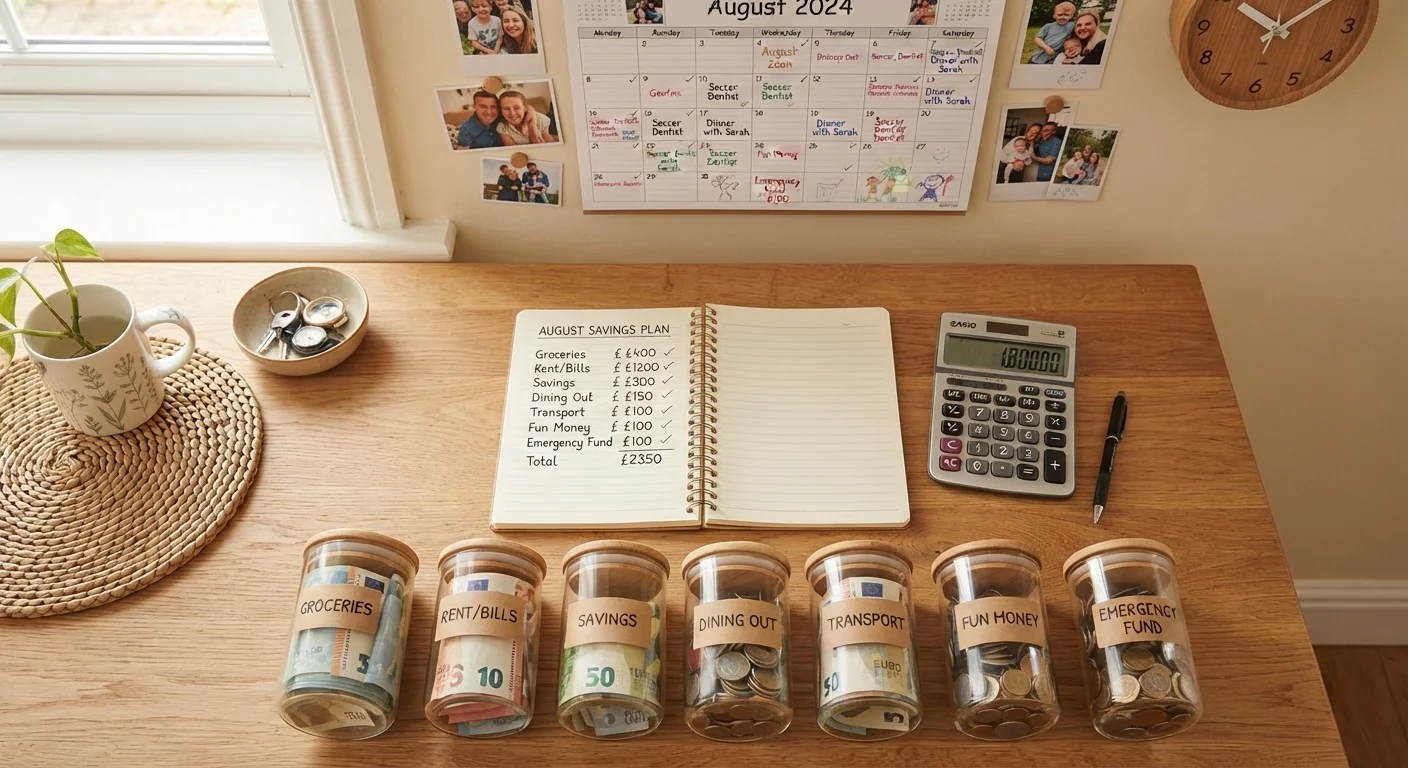
Sinking funds solve this at the root. Rather than treating a $600 car registration as a once-a-year shock, a sinking fund turns it into a $50 monthly line item that quietly accumulates until the payment is due. Understanding fixed vs. variable expenses is a useful foundation here, because sinking funds occupy a third category: expenses that are variable in timing but fixed in their eventual arrival.
~$1,000
Average holiday spending per U.S. household
National Retail Federation surveys consistently show average household holiday spending in this range, making it one of the most impactful sinking fund categories.
$9,000+
Average annual out-of-pocket vehicle operating costs
AAA's annual Your Driving Costs study estimates total ownership costs - including maintenance and fees - for the average American vehicle owner.
3 in 5
Americans report living paycheck to paycheck
Multiple consumer finance surveys indicate a majority of U.S. adults have little buffer for irregular expenses, underscoring the value of advance planning.
How to Build a Sinking Fund in Three Steps
Setting up a sinking fund is straightforward. The discipline is in the setup - once it's running, the system largely manages itself.
Step 1: List Every Predictable Non-Monthly Expense
Go through last year's bank and credit card statements and flag every charge that wasn't a regular monthly bill. Common categories include: vehicle registration and inspection fees, holiday and birthday gifts, annual insurance premiums, back-to-school supplies and clothing, home maintenance (furnace tune-ups, gutter cleaning), veterinary checkups, and family vacations.
Step 2: Calculate the Monthly Contribution
For each category, estimate the annual cost and divide by 12 - or by the number of months remaining before the expense is due. A $480 holiday budget divided by 12 months equals $40 per month. A $300 vehicle inspection due in 9 months requires $33.34 per month. Keep the math visible in a simple spreadsheet or budgeting app so you can adjust as costs change.
Step 3: Automate and Label
Open a dedicated savings account - or use named sub-accounts if your bank supports them - and set up automatic transfers on payday. Automating your savings removes the monthly decision of whether to contribute, which is where most people stall. Label each fund clearly so the balance is always interpretable at a glance.
Name Your Accounts Specifically
Labeling a savings account 'Holiday 2025' or 'Car Registration' rather than 'Savings Account 2' makes the purpose concrete and reduces the temptation to spend the balance on something else. Many online banks and credit unions allow multiple named sub-accounts at no extra cost.
Sinking Funds for Common Family Expense Categories
Every household has a slightly different mix of predictable irregular costs. Here are the categories most families find most impactful:
- Vehicle costs: Registration, annual inspections, tires, and scheduled maintenance. For a deeper look at keeping these costs predictable, see keeping repair costs predictable on a family budget.
- Medical and dental: Annual deductibles, out-of-pocket maximums, glasses, orthodontic payments, and planned procedures.
- Home upkeep: Seasonal maintenance, appliance replacement reserves, and exterior repairs that come around predictably.
- Holidays and gifts: Including birthdays, graduations, and other celebrations spread across the year - not just December.
- Education: Back-to-school shopping, extracurricular fees, field trips, and school picture packages.
- Travel and recreation: Family vacations, summer camps, or annual memberships.
The goal isn't to fund every possible category from day one. Start with whichever two or three expenses caused the most financial stress in the past year and build from there. Visit our Saving & Debt hub for additional strategies that complement this approach.
Integrating Sinking Funds Into Your Existing Budget
Sinking fund contributions should appear as real budget line items, treated with the same priority as rent or utilities. If the monthly total of all contributions feels unmanageable, two adjustments help: extend the savings window (contribute for 18 months instead of 12) or scale back the expense estimate for that category.
One practical approach is to review all sinking fund categories quarterly. Annual costs shift - kids grow out of one school-supply budget into a larger one, car maintenance needs change as vehicles age. A quarterly 15-minute check keeps contributions calibrated to reality.
Sinking funds also reduce pressure on the emergency fund by handling the costs that are predictable. That frees the emergency fund to do its actual job: true financial surprises. Many families find that once sinking funds are running, the emergency fund balance stays more stable because it is no longer being raided for expenses that were never truly unexpected.
This article is for general informational and educational purposes only and does not constitute personalized financial advice. Consult a qualified financial professional for guidance tailored to your household's specific circumstances.
Frequently Asked Questions
An emergency fund covers unexpected costs - a sudden job loss, a burst pipe, or an urgent medical bill. A sinking fund covers expenses you know are coming but don't pay monthly, such as car registration or holiday gifts. Both are valuable, but they serve completely different purposes and should be kept separate. See <a href="/family-finance/saving-and-debt/building-an-emergency-fund-on-a-tight-budget">how to build an emergency fund</a> for guidance on that parallel goal.
There is no single right number - it depends on which irregular expenses your household faces. Most families find 4-8 categories practical: car maintenance, medical costs, home repairs, annual subscriptions, holidays, vacations, back-to-school, and clothing are common choices. Start with the two or three largest annual expenses and add categories as your budget stabilizes.
Keeping sinking fund money in a separate high-yield savings account makes it easier to track balances and reduces the temptation to spend the money on daily expenses. Some families use one account with a running spreadsheet; others open individual sub-accounts per category. Either method works as long as the funds remain clearly earmarked.
Prioritize the expenses with the soonest deadlines and the largest dollar amounts first. Even partial contributions are useful - putting $20 toward a $300 annual expense is better than putting in nothing. Adjust contributions as income or expenses shift; sinking funds are flexible by design.
Yes, though the math requires a small adjustment. Instead of a flat monthly contribution, calculate a percentage of each paycheck to direct toward each fund. In higher-income months, contribute more; in leaner months, contribute less. The key is consistency of habit, not a rigid fixed amount.
The content provided on our blog site traverses numerous categories, offering readers valuable and practical information. Readers can use the editorial team’s research and data to gain more insights into their topics of interest. However, they are requested not to treat the articles as conclusive. The website team cannot be held responsible for differences in data or inaccuracies found across other platforms. Please also note that the site might also miss out on various schemes and offers available that the readers may find more beneficial than the ones we cover.