

Why Food Costs Derail Family Travel Budgets
Food is one of the most underestimated line items when building a realistic family travel budget. Parents often budget for one or two restaurant splurges but don't account for the cumulative cost of every meal, every snack, every airport coffee, and every convenience-store run when tired kids are melting down in a parking lot.
A family of four eating three restaurant meals daily can easily spend $150-$250 per day on food alone, depending on the destination. Over a seven-day trip, that's $1,050 to $1,750 - sometimes more than the flights themselves. The fix isn't to avoid enjoying local food; it's to be deliberate about when you spend and when you don't.
30-40%
Of vacation budget consumed by food for many families
Travel industry planners and consumer budgeting surveys consistently identify food as one of the top two or three largest categories of family vacation spending.
$150-$250
Estimated daily food spend eating out three meals
Based on general mid-range restaurant pricing for a family of four in a typical US tourist destination; costs vary considerably by location and dining choice.
Core Practices for Managing Food Costs on the Road
These strategies work across destination types - beach trips, city breaks, national park visits, and theme park vacations alike. None require sacrifice; they require planning.
Book accommodations with kitchen or kitchenette access whenever feasible.
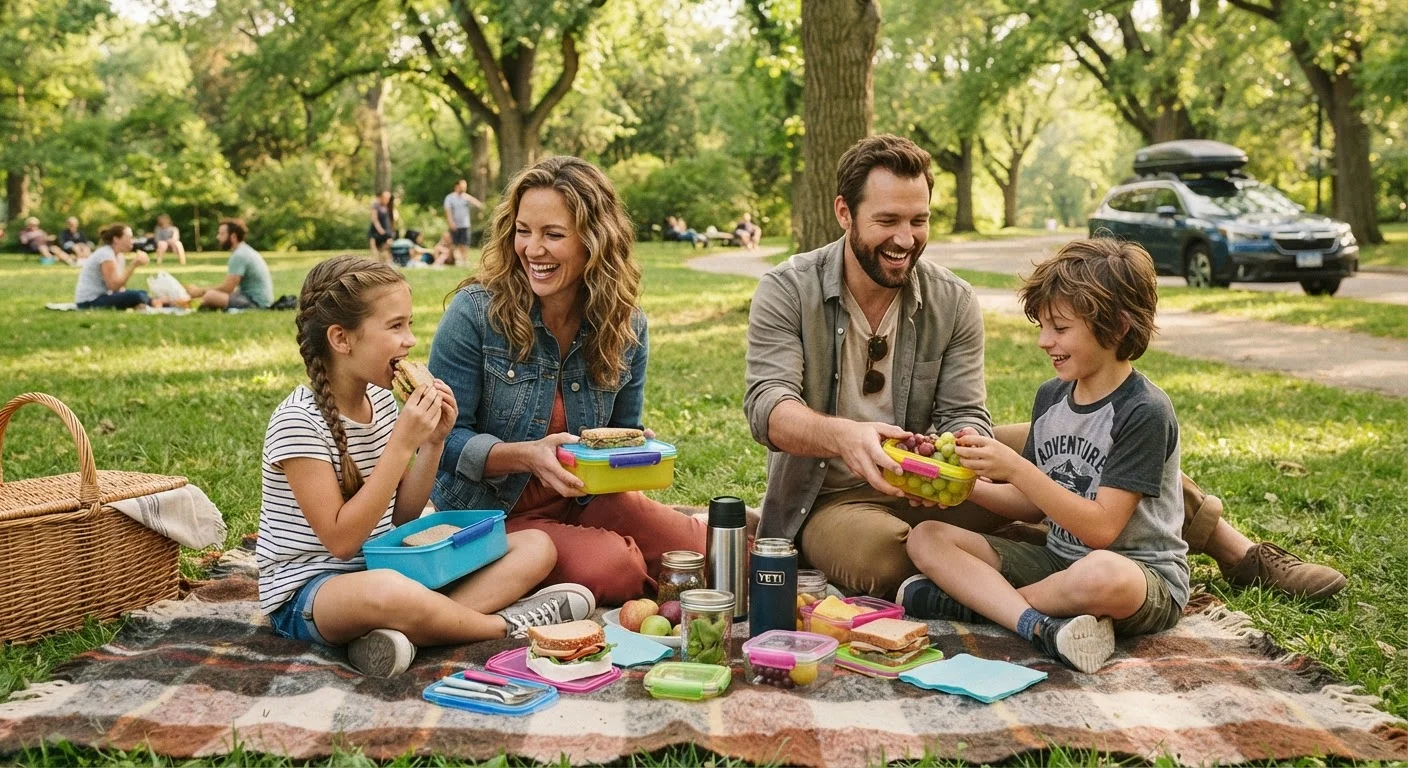
Having access to even a basic kitchen - a mini-fridge, microwave, or two-burner stovetop - gives a family the ability to prepare breakfast and simple lunches daily. These two meals alone account for the majority of daily food spend when eating out. Eliminating or reducing them dramatically changes the budget math.
Do a grocery run within the first few hours of arriving at your destination.
Early grocery shopping sets the tone for the trip and ensures you have breakfast food, snacks, drinks, and lunch staples before hunger-driven decisions take over. Delaying this errand means more expensive convenience purchases and missed opportunities to stock up strategically.
Pack a dedicated snack bag for every day out.
Snack spending at attractions, airports, and transit stops is one of the most invisible budget drains on a family trip. A hungry child at a tourist site will cost $5-$10 in impulse purchases that a granola bar from your bag would have prevented. Multiply that by four people over seven days and the number becomes meaningful.
Reserve restaurant dining for dinner, when it delivers the most experience value.
Dinner tends to be the meal families most enjoy sitting down for - it's relaxed, the day is winding down, and local restaurants are at their liveliest. Using restaurants primarily for dinner, and handling other meals more economically, concentrates spending where it has the highest return on enjoyment.
Use refillable water bottles and avoid purchasing bottled drinks at venues.
Beverage purchases at tourist sites, theme parks, and restaurants are priced at a significant premium. A family of four buying drinks with every meal or activity stop can easily spend $20-$40 per day on beverages alone. Refillable bottles, filled at hotel or accommodation taps, eliminate this cost almost entirely.
Order strategically at restaurants - share large portions and skip expensive extras.
Restaurant portion sizes in the US are frequently large enough for two people to share comfortably. Children's menus often offer adequate, lower-cost alternatives for younger kids. Skipping appetizers, specialty drinks, and desserts at full-service restaurants can reduce a single meal bill by 20-30%.
Quick Moves You Can Make Right Now
You don't need to overhaul your entire trip plan to make meaningful savings. A few targeted decisions, made before or during the trip, can cut food spending significantly without touching the experiences that matter most to your family.
For more on where vacation spending quietly goes wrong, see why families overspend on vacation - impulse dining is one of the most common culprits identified.
Eating Well Still Matters - Here's How to Balance Both
Budget-focused food strategies shouldn't mean surviving on crackers and string cheese for a week. Nutrition matters, especially when kids need energy for long activity days. The goal is to be selective: spend on meals that deliver experience or genuine enjoyment, and keep the functional meals - breakfast, snacks, simple lunches - affordable and nutritious.
Nutrition Shouldn't Take a Back Seat
Active travel days - hiking, walking theme parks, swimming - place real physical demands on kids and adults. Skimping on protein and produce to save money can backfire in energy crashes and cranky afternoons. Grocery-sourced options like fruit, yogurt, nuts, and pre-made sandwiches provide solid nutrition at a fraction of restaurant cost. For ongoing guidance on affordable, balanced family eating, the family nutrition hub covers practical meal strategies that translate well to travel contexts.
Families traveling to theme parks face a particularly concentrated version of this challenge. Venue food pricing is typically well above market rate, and options can be limited. Understanding the hidden costs of theme park vacations - including dining - before you book helps you plan realistically rather than absorb sticker shock on arrival.
For a broader approach to keeping the whole trip financially grounded, the complete family travel budget planning guide walks through every planning stage, including food, from destination selection onward.
The content provided on our blog site traverses numerous categories, offering readers valuable and practical information. Readers can use the editorial team’s research and data to gain more insights into their topics of interest. However, they are requested not to treat the articles as conclusive. The website team cannot be held responsible for differences in data or inaccuracies found across other platforms. Please also note that the site might also miss out on various schemes and offers available that the readers may find more beneficial than the ones we cover.