

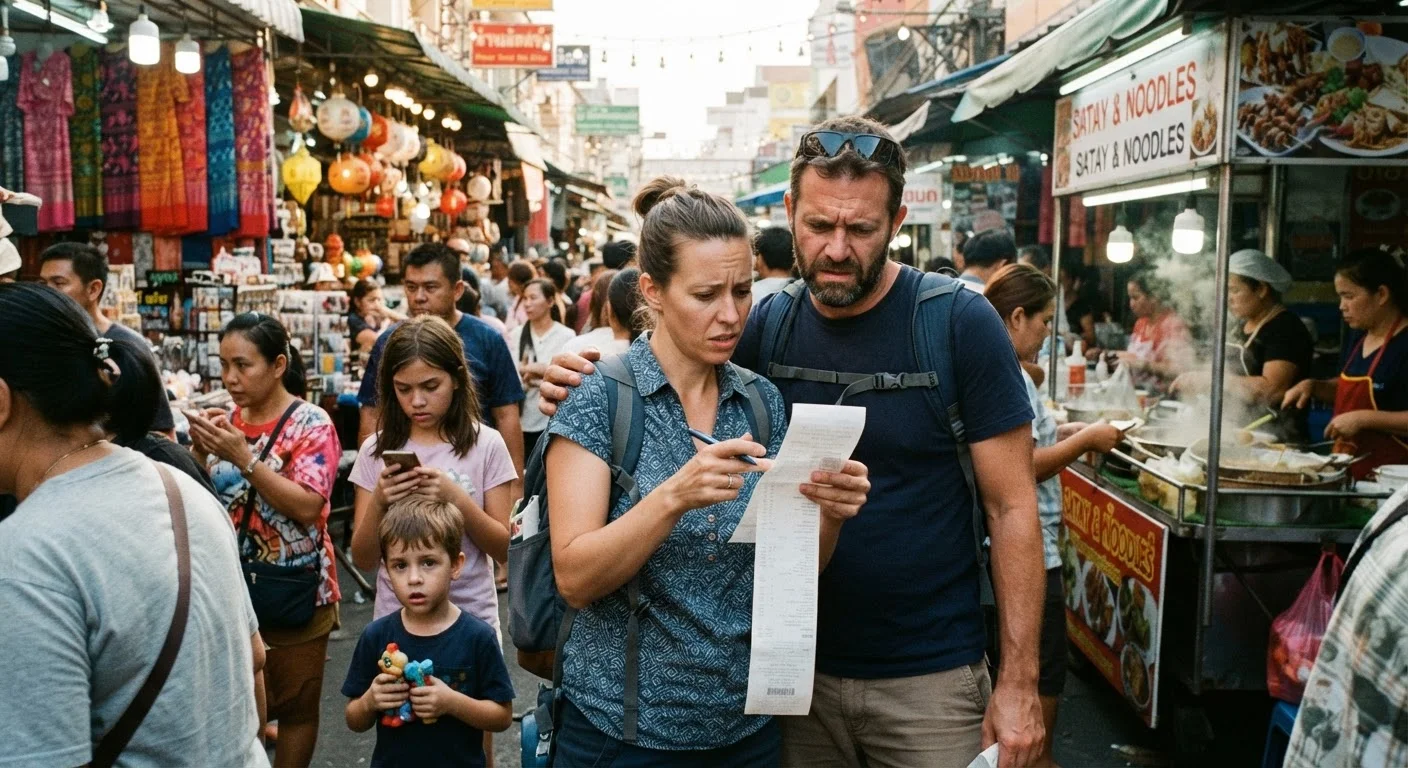
The Gap Between What Families Budget and What They Actually Spend
Most families don't blow their travel budget on one reckless decision. They lose it incrementally - a tourist-priced breakfast here, a few impulse souvenirs there, a last-minute activity that wasn't in the plan. By the time they're on the flight home, the final tally is 20-40% higher than what they expected. Understanding why this happens is the first step to preventing it.
The core problem is that most families plan for the big, visible costs - flights, hotels, theme park tickets - and underestimate or entirely skip planning for everything else. Those secondary costs (food, transport within the destination, activities, tips, and incidentals) routinely account for a third or more of total trip spending. For a full breakdown of what belongs in your pre-trip estimate, see the real cost of a family vacation.
Booking flights and hotels at the wrong time - either too early or, more often, too late.
Why it happens: Families wait until school calendars are confirmed, which often pushes booking into high-demand windows where prices have already risen. The assumption that 'we still have time' is the most expensive thought in family travel planning.
Treating tourist-area restaurants as the default for every meal.
Why it happens: When you're tired, kids are hungry, and a restaurant is right there, convenience wins. Repeat that decision three times a day for seven days and food costs can approach or exceed what was spent on flights.
Allowing souvenir spending to go untracked across the whole family.
Why it happens: Individual purchases feel small - a $12 magnet, a $9 postcard set, a $15 stuffed animal. Multiplied across multiple kids and multiple stops, souvenir spending can quietly total $150-$300 on a week-long trip without anyone noticing.
Skipping the buffer and treating the budget as a precise forecast rather than an estimate.
Why it happens: Families build their budget from known costs - booked flights, reserved hotels - and assume the rest will fall in line. In practice, parking fees, resort charges, transit costs, tips, and small emergencies almost always push spending above the initial estimate.
Paying for add-ons and upgrades impulsively at the destination rather than evaluating them in advance.
Why it happens: Theme parks, resorts, and tourist attractions are designed to surface upsells at the moment of peak excitement - fast passes, photo packages, character dining, rental equipment. Deciding in the moment, without a budget reference point, almost always results in saying yes.
Failing to communicate the budget to the whole family before the trip.
Why it happens: Parents often carry the financial picture alone, while kids (and sometimes partners) make spending requests without context. This creates constant friction and negotiation - and often results in parents caving to avoid conflict.
Building Habits That Keep Spending on Track
Avoiding overspending isn't about being cheap - it's about being intentional. The families who return from vacation without financial regret tend to share a few concrete habits.
~$5,000
Average annual US family vacation spend
According to survey data from the American Express Spending & Saving Tracker and similar consumer research, US families routinely spend between $4,500 and $6,000 on a week-long domestic vacation when all costs are included.
30-40%
Typical budget overrun on family trips
Travel industry surveys consistently find that a significant share of vacationing families return home having spent meaningfully more than planned, with food and activities as the most commonly cited culprits.
Set a per-category daily budget before you leave. Rather than one lump-sum vacation number, break it into food, activities, transport, and discretionary spending. When kids know the souvenir allowance is $15 per person for the whole trip, negotiations get a lot simpler. For guidance on structuring those numbers realistically, building a realistic family travel budget walks through the process step by step.
Do a quick daily spending check-in. It takes five minutes at the end of each day to total what was spent. Families who do this catch overruns early, when there's still time to adjust - not when the credit card statement arrives. This habit mirrors what prevents failure in household budgets generally; why family budgets fail in month two explains the same psychological pattern at home.
Resort and Destination Fees Can Blindside Families
Many hotels - particularly in resort destinations - charge mandatory daily fees that appear separately from the quoted room rate. These can range from $20 to $50 or more per night and are often not prominently displayed during initial booking searches. Always check the full nightly total, including all mandatory fees, before confirming a reservation. See why family trips fall apart at the last minute for other common planning oversights that lead to budget shocks.
Plan food intentionally. Eating out three times a day for a family of four can easily reach $150-$250 daily in popular tourist destinations. Mixing in grocery store runs, picnic lunches, and one sit-down meal per day is a proven way to cut that number significantly. See food strategies for traveling families for practical approaches that don't sacrifice the experience.
Finally, don't overlook what you bring from home. smart packing habits that eliminate checked bag fees and prevent expensive on-trip purchases of forgotten essentials can quietly save a family $100 or more before the trip even begins.
This article provides general travel budgeting information for educational purposes. Prices, availability, and travel conditions vary widely and should be verified directly with providers and official sources before booking.
The content provided on our blog site traverses numerous categories, offering readers valuable and practical information. Readers can use the editorial team’s research and data to gain more insights into their topics of interest. However, they are requested not to treat the articles as conclusive. The website team cannot be held responsible for differences in data or inaccuracies found across other platforms. Please also note that the site might also miss out on various schemes and offers available that the readers may find more beneficial than the ones we cover.