

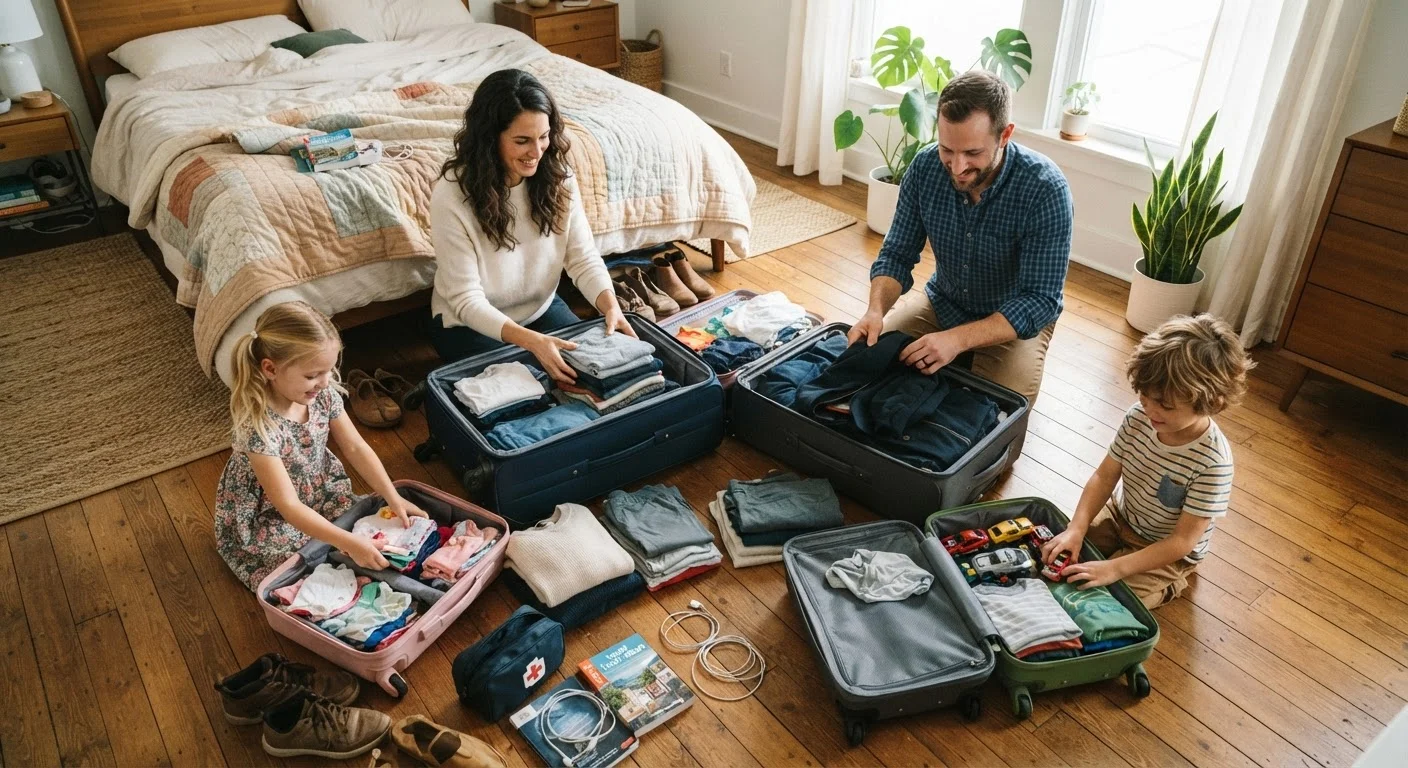
Why Packing Strategy Is a Budget Issue
Most families think of packing as a logistics problem. It's actually a financial one. Checked bag fees, overweight luggage surcharges, and last-minute purchases of forgotten items quietly inflate trip costs before the vacation even starts. For a family of four flying a domestic route, checked bag fees alone can run $100-$200 each way depending on the carrier - and that's before anyone forgets sunscreen or a child's medication.
Smarter packing habits don't require buying expensive gear or obsessing over ounces. They require a clear system applied before every trip. The families who travel most affordably tend to share that quality: they make packing decisions at home, where the cost of alternatives is low, rather than at the airport or the hotel gift shop, where everything carries a premium.
For a fuller look at where family trip spending goes wrong before you even leave, see why families overspend on vacation.
Consolidate luggage to reduce the total number of checked bags.
Airlines charge per bag, not per person, so combining kids' clothes into one shared checked bag instead of two cuts your fee in half. Fewer bags also means less to track, lose, or drag through a busy airport.
Weigh your bags at home before leaving for the airport.
Overweight bag fees - typically triggered above 50 lbs on domestic US flights - can run $75-$100 per bag each way. Catching this at home lets you redistribute or remove items without penalty.
Pack a dedicated travel essentials kit with medications, sunscreen, and first-aid supplies.
Tourist-area pharmacies and hotel shops charge premium prices for everyday items. A pre-packed kit means you won't pay $18 for a small bottle of ibuprofen or $12 for a travel-size sunscreen at a resort gift shop.
Use a master packing checklist and review it 48 hours before departure.
Last-minute packing increases the odds of forgetting items and rushing, which leads to impulse purchases at airports - some of the most expensive retail locations in the country. A checklist reviewed early leaves time to borrow or buy items at normal prices.
Wear your bulkiest items on travel day rather than packing them.
Jackets, sneakers, and heavier pants take up significant luggage volume and add weight. Wearing them instead frees bag space and can be the difference between needing a checked bag or not.
Plan outfits around mix-and-match pieces rather than packing a separate outfit per day.
Over-packing is the single most common reason families end up with checked bags they didn't plan on. Building a capsule wardrobe for each family member - with pieces that work across multiple outfit combinations - reduces total clothing volume by roughly a third on most trips.
Core Packing Practices That Cut Real Costs
The following practices address the most common and expensive packing mistakes families make. Each one is achievable on any trip, regardless of budget or destination.
Building These Habits Into Every Trip
The most effective approach is to standardize your packing process rather than reinventing it before each vacation. Maintain a master family packing list - updated after every trip based on what you actually used and what you left behind. This document alone eliminates the majority of forgotten-item purchases.
Assign a dedicated travel toiletries bag that stays packed between trips. Stock it with travel-size essentials (repllenishing after you return), so there's no scrambling the night before departure. Many families find that this single habit saves them $30-$60 per trip in airport and destination convenience-store markups.
If you're flying, compare your airline's carry-on and checked bag policies before deciding on a bag strategy - policies and fees vary significantly. Traveling by car opens up more flexibility, though overpacking still leads to discomfort and unnecessary fuel weight on long drives. The road trip vs. flying cost comparison breaks down how luggage factors into the broader cost calculation for families.
Smart packing is one piece of a larger budget picture. For a complete framework, the family travel budget planning guide covers the full trip from destination choice through day-of spending - including how packing decisions connect to food and activity costs on the ground.
This article provides general travel planning information for educational purposes. Fees, policies, and costs referenced are illustrative and subject to change; always verify current airline policies and pricing directly with your carrier before travel.
The content provided on our blog site traverses numerous categories, offering readers valuable and practical information. Readers can use the editorial team’s research and data to gain more insights into their topics of interest. However, they are requested not to treat the articles as conclusive. The website team cannot be held responsible for differences in data or inaccuracies found across other platforms. Please also note that the site might also miss out on various schemes and offers available that the readers may find more beneficial than the ones we cover.