

Our Verdict
Summer mountain trips generally deliver stronger overall value for families with mixed ages, offering wider activity ranges and lower total costs. Winter trips are a better fit when skiing or snow activities are the primary goal and the family budget can absorb lift tickets, gear rental, and resort pricing. Neither season is inherently superior - the right choice depends on what your family actually wants to do once you arrive.
| Best for | Recommended |
|---|---|
| Families with toddlers or non-skiers | Summer mountain visit |
| Families where skiing or snowboarding is the primary goal | Winter ski resort trip |
| Budget-conscious families seeking outdoor adventure | Summer shoulder-season trip (late May or early September) |
| Families with older kids wanting varied multi-day activities | Summer trip with national forest or park base |
Why Season Changes Everything in Mountain Travel
Mountain destinations are among the most season-dependent places families can visit. The same town that offers wildflower meadows and bike trails in July may be accessible only by four-wheel drive - or closed entirely - in November. Understanding this variability before you book prevents the most common family travel frustration: arriving somewhere that doesn't match expectations.
The core trade-off is this: summer offers broader accessibility and activity variety; winter offers a specific, snow-focused experience that comes at a premium. For families with young children, non-skiers, or mixed-age groups, that distinction shapes nearly every decision from lodging type to daily itinerary. See our guide to picking destinations for mixed-age families for a deeper look at how age range affects destination fit.
What Summer Mountain Trips Actually Look Like
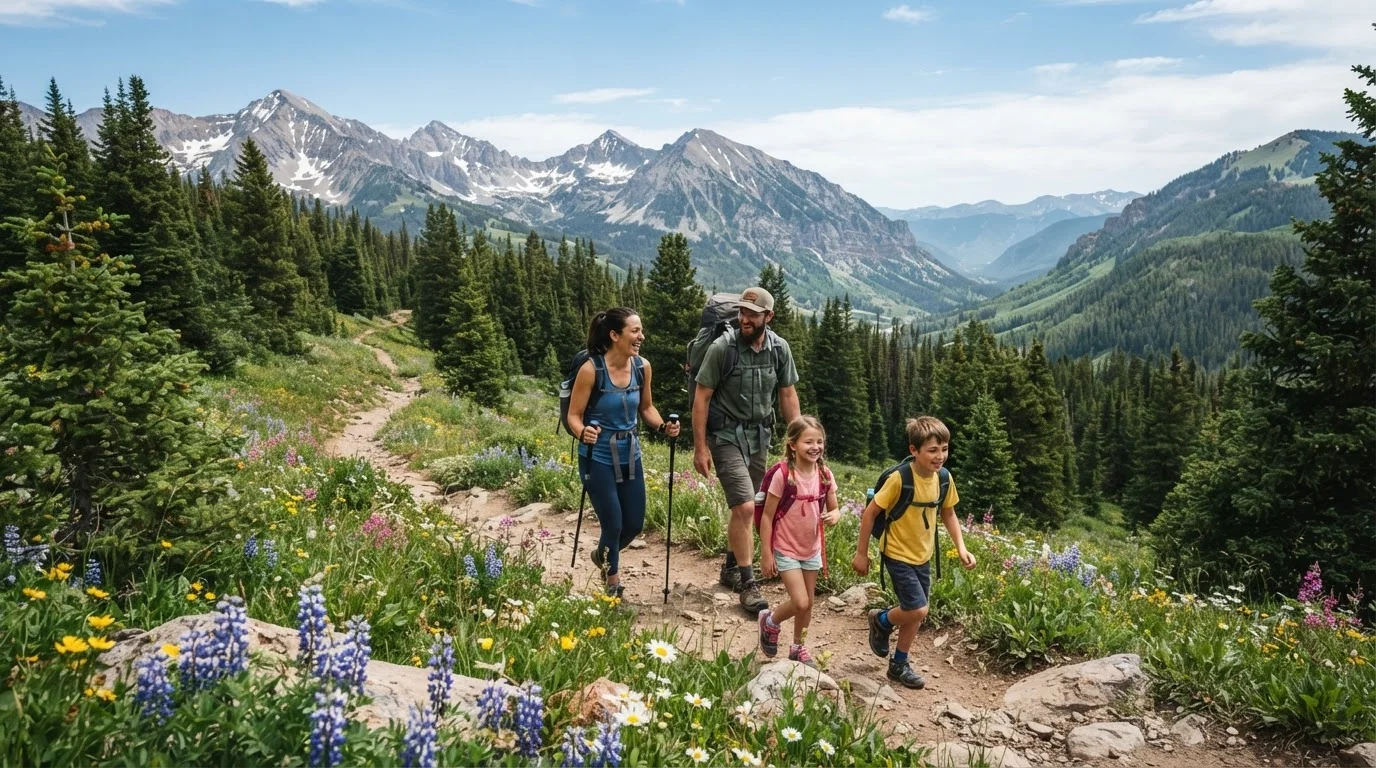
Summer is the high season for most non-ski mountain destinations, which means higher lodging demand but also the widest range of things to do. Expect hiking trails at multiple difficulty levels, ranger-led programs at national forests and parks, mountain biking, lake access, and afternoon thunderstorms that require flexible scheduling.
Practically speaking, families should plan for early morning activity starts - afternoon storms are common in Rocky Mountain and Sierra Nevada ranges, typically building between noon and 4 p.m. Most trail systems are accessible to school-age children, though altitude above 8,000 feet can cause fatigue or mild headache symptoms in children who arrived from sea level the same day. Building in a half-day of light activity on arrival is a realistic buffer, not wasted time.
Costs in summer tend to be more predictable than winter. Camping fees and national park passes represent genuine savings versus ski resort pricing, though popular destinations like Rocky Mountain or Grand Teton see accommodation book out months in advance for July and August. Families willing to visit in June or September often find comparable experiences with less competition for campsites and trailhead parking. For a broader comparison of outdoor destination types and their family value, the national parks vs. cities vs. beach towns breakdown is a useful reference.
| Summer Mountain Trip | Winter Mountain Trip | |
|---|---|---|
| Primary activities | Hiking, biking, wildlife, lakes | Skiing, snowboarding, tubing, sledding |
| Typical cost level | Moderate (higher at peak parks) | High (lift tickets, gear rental add up fast) |
| Suitability for toddlers | Generally good with planning | Limited; ski school starts around age 3-4 |
| Activity variety for non-skiers | Wide - trails, programs, scenery | Narrow - snowshoeing, tubing, town activities |
| Booking lead time needed | 3-6 months for peak July/August | 4-6 months for holiday and peak ski weeks |
| Driving complexity | Standard roads; some unpaved access | Chains or AWD often required; closures possible |
| Weather flexibility needed | Afternoon storm planning essential | Snow delays and closures require buffer days |
What Winter Mountain Trips Actually Look Like
Winter mountain travel for families largely means ski resort infrastructure - and the costs that come with it. Lift tickets, gear rental for multiple children, ski school enrollment, and resort-adjacent lodging combine to make winter mountain trips among the more expensive family vacation formats. That said, families who ski regularly often find the resort model efficient: lodging, food, and activity are concentrated in one place, reducing daily logistics stress.
For families with non-skiers or children under five, winter mountain towns offer a narrower experience. Snowshoeing, sledding, and tubing are genuinely fun for young kids, but they represent a few hours of daily activity rather than a full trip itinerary. Many resort towns have spa, dining, and shopping infrastructure aimed at adults - worth knowing before you assume a ski trip will keep a seven-year-old entertained for five days without ski school.
Ski Resort Costs Add Up Fast for Families
A multi-day ski trip for a family of four can reach costs that rival international travel once lift tickets, rentals, and ski school are factored in. Research whether destination mountains offer multi-day family passes, and compare lodging both on-mountain and in nearby towns - a short shuttle ride can represent meaningful savings. Never assume the resort's posted rack rates are the only option.
Driving conditions are a practical reality that many families underestimate. Mountain roads in winter often require chains or all-wheel-drive vehicles, and weather closures can affect both access and departure timing. Checking road condition alerts and building flexible departure schedules is not optional - it's basic winter mountain trip planning. Always verify current road and weather conditions through official state transportation department sources before travel.
Planning Factors That Apply to Both Seasons
Regardless of season, a few planning realities apply consistently to mountain family travel. Altitude adjustment is the most commonly overlooked. Children may show symptoms of mild altitude-related fatigue - headaches, reduced appetite, disrupted sleep - at elevations above 6,000-8,000 feet, particularly if traveling from low-elevation home cities. This is general information; consult a healthcare provider before travel if your child has any respiratory or cardiac conditions.
Booking windows matter significantly more than at beach or urban destinations. Popular mountain towns have constrained lodging inventory, and peak season availability frequently disappears three to six months in advance. Families who plan late pay a premium or accept less convenient accommodation. The Travel Planning Tips hub has practical guidance on building timelines that reduce last-minute stress.
Finally, consider what "mountain destination" actually means for your family's trip shape. A national forest campsite, a ski resort village, a historic mining town, and a national park gateway community are all technically mountain destinations - but they deliver very different experiences in terms of amenity level, cost structure, and daily activity options. Clarifying that before you search for lodging saves significant planning friction. The state-by-state outdoor family travel guide is a useful starting point for comparing U.S. mountain regions by terrain and seasonal access.
The content provided on our blog site traverses numerous categories, offering readers valuable and practical information. Readers can use the editorial team’s research and data to gain more insights into their topics of interest. However, they are requested not to treat the articles as conclusive. The website team cannot be held responsible for differences in data or inaccuracies found across other platforms. Please also note that the site might also miss out on various schemes and offers available that the readers may find more beneficial than the ones we cover.