

Why D.C. Works Exceptionally Well for Families
Washington, D.C. is one of the few U.S. cities where a family can spend four or five days sightseeing without paying a single museum admission fee. The Smithsonian Institution operates 19 museums and galleries, most of them concentrated along the National Mall - all free to the public. That structural advantage changes the math of a family trip considerably. See our budget family trip strategies for how to build on that foundation.
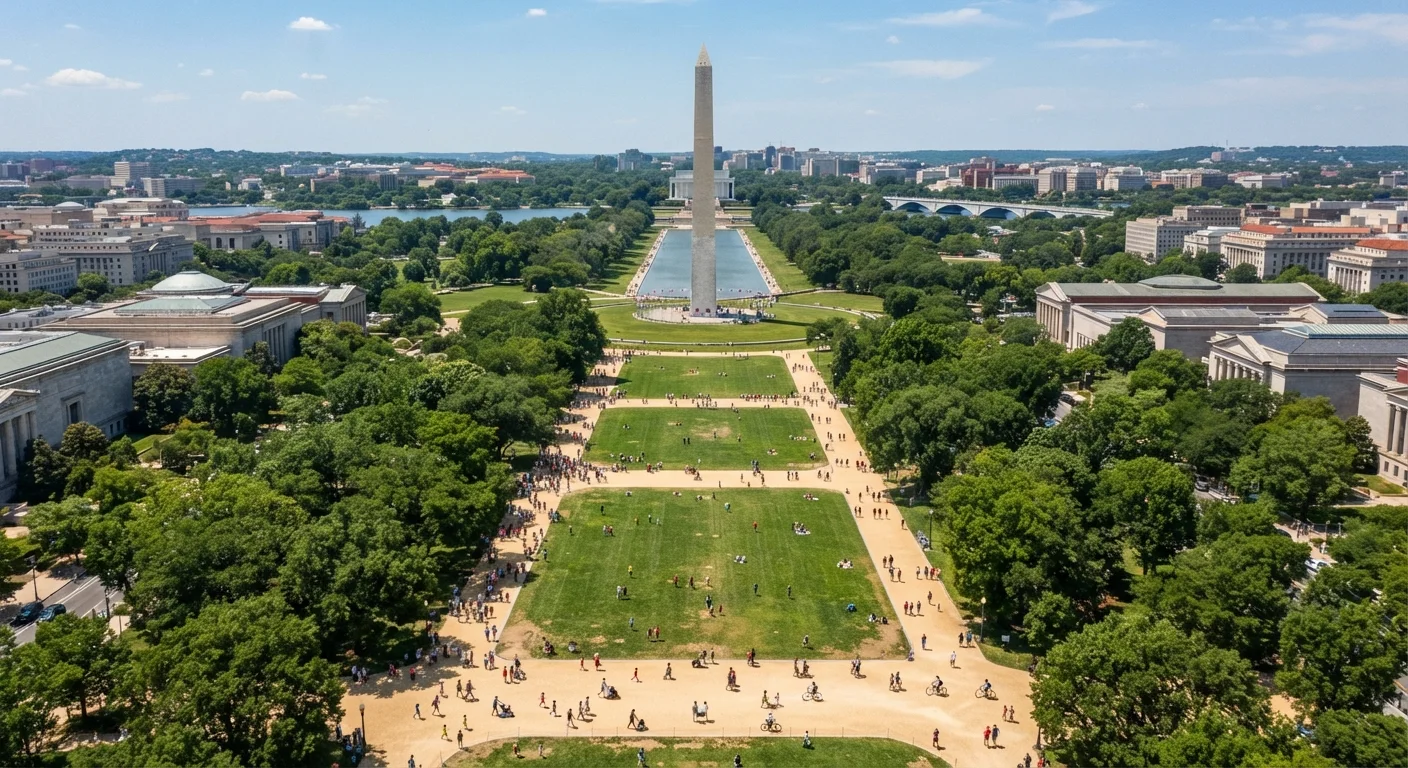
Beyond cost, the city's layout is genuinely walkable between major landmarks. The Mall stretches roughly two miles from the Lincoln Memorial to the U.S. Capitol, with monuments, museums, and green space spread along its length. That kind of density - where you can pivot from a natural history exhibit to an outdoor monument without getting in a car - is a real logistical asset with younger children.
For a broader framework on evaluating any urban destination for kids, see what makes a city genuinely kid-friendly.
Free Museums: What to Prioritize
With limited days and finite kid attention spans, prioritizing is essential. The National Museum of Natural History consistently resonates with younger children - the dinosaur hall and ocean exhibits tend to hold attention well. The National Air and Space Museum appeals to a wide age range; the full-scale spacecraft and interactive flight simulators are crowd favorites. Older children often engage strongly with the National Museum of American History, particularly the popular culture and innovation exhibits.
Note that some Smithsonian facilities require free timed-entry passes, which can be reserved in advance online. Availability does run out for peak dates. Check the Smithsonian's official website before your trip and secure passes as early as possible - especially for summer visits.
Reserve free timed-entry passes for high-demand Smithsonian museums the moment your trip dates are confirmed - even weeks out, popular summer slots fill quickly.
Timed-entry systems introduced across several Smithsonian facilities have made walk-up access unreliable during peak season, particularly for the Air and Space Museum and Natural History Museum.
Plan your outdoor monument time for early morning or evening - the light is better for photos, the heat is more manageable in summer, and crowds are noticeably thinner before 9 a.m.
Monument grounds have no admission gates or timed windows, so early access is completely open and one of the best ways to see iconic sites without competing for space.
The non-Smithsonian options worth knowing: the United States Holocaust Memorial Museum (recommended for ages 11 and up given its subject matter) and the National Gallery of Art, which has dedicated family programs and is free. Both sit adjacent to the Mall.
Monuments and Outdoor Attractions
Most monument grounds are managed by the National Park Service and are accessible at no cost, day or night. The Lincoln Memorial, Vietnam Veterans Memorial, Korean War Veterans Memorial, and Martin Luther King Jr. Memorial are all within comfortable walking distance of each other along the western end of the Mall. Rangers are typically on-site during daytime hours and can offer brief interpretive talks that work well for school-age children.
The Washington Monument requires a free timed-entry ticket for interior access - these are available online or at the monument's own kiosk on a limited same-day basis. Families who want guaranteed access should book ahead. The exterior grounds and reflecting pool are always open.
Let Young Kids Set the Pace Outdoors
For families with toddlers or preschoolers, the outdoor spaces - the Mall lawn, memorial plazas, and reflecting pool - are often more engaging than extended museum time. Pack snacks, set modest daily goals, and treat the open grounds as the attraction, not just a pathway between buildings. Unstructured outdoor time can be more memorable for young children than any exhibit.
For families with very young children, the outdoor grounds alone - the open lawn, reflecting pool, and memorial plazas - can occupy a meaningful chunk of the day without requiring museum stamina. Bring a picnic and allow unstructured time.
If your family also enjoys outdoor and nature-forward travel, compare the D.C. experience with our guide on national parks that work for young kids.
Getting Around the City With Kids
D.C.'s Metro system is stroller-accessible, with elevators at most major stations. The system connects efficiently to all the primary tourist areas. That said, elevators do go out of service with some regularity - check the WMATA website or app for outage alerts before setting out, particularly if you're traveling with a stroller or mobility equipment.
Rideshare services are widely available and often practical for off-peak travel or when the Metro route requires multiple transfers. Walking between Mall-area attractions is straightforward for families with children old enough to manage a half-mile or more at a stretch. Bike-share infrastructure exists and may suit older kids or adults traveling without young children.
Parking in central D.C. is expensive and supply is limited near major attractions. Most families with driving itineraries are better served by parking at a Metro-accessible suburban station and riding in.
Practical Logistics: Timing, Crowds, and Costs
Late March through mid-April draws significant crowds due to the National Cherry Blossom Festival. If cherry blossoms are not the primary goal, that window is worth avoiding unless you're booking well in advance and comfortable with higher accommodation rates and busier sites. Late September through early November tends to offer a better balance of weather, manageable crowds, and reasonable hotel pricing.
19
Free Smithsonian museums and galleries
The Smithsonian Institution operates 19 museums, galleries, and a zoo across Washington, D.C., all free to the public.
~2 miles
Length of the National Mall
The National Mall stretches roughly two miles from the Lincoln Memorial to the U.S. Capitol, making it one of the most walkable sightseeing corridors in any U.S. city.
24/7
Monument grounds access
Most National Mall monument grounds, managed by the National Park Service, are open to visitors around the clock at no charge.
Summer - particularly June through August - is the busiest period. School-holiday timing drives high demand, accommodation costs rise, and outdoor monument visits in D.C. heat and humidity can be taxing with young children. Morning starts (before 9 a.m.) make a significant practical difference in both crowd levels and temperature.
Accommodation costs vary considerably by neighborhood and booking lead time. Staying slightly outside the tourist core - in neighborhoods like Capitol Hill, Navy Yard, or Columbia Heights - can offer meaningfully lower rates with reasonable Metro access. Use the checklist in our family travel planning checklist to vet any option before booking.
Safety, Neighborhoods, and What to Watch For
The Mall and major monument areas are heavily visited and generally safe during daylight hours. As with any major city, situational awareness matters, and conditions vary by neighborhood. Areas immediately surrounding tourist destinations differ from residential or commercial neighborhoods a few blocks away. Research your specific accommodation location independently rather than assuming proximity to the Mall guarantees a particular character.
D.C. summers bring genuine heat and humidity - sun protection, hydration, and realistic daily mileage targets are practical necessities, not optional extras. The city is also subject to occasional severe afternoon thunderstorms in summer; building indoor museum time into afternoon schedules creates a natural weather buffer.
For families newer to urban travel with children, the Travel Planning Tips hub covers logistics frameworks that apply broadly across U.S. city destinations. If you're still early in the planning process, our first family vacation guide is a useful starting point before diving into destination-specific details.
Travel conditions, entry requirements, operating hours, and reservation policies can change. Always verify current information directly with official sources - including the Smithsonian Institution, National Park Service, and WMATA - before your trip.
The content provided on our blog site traverses numerous categories, offering readers valuable and practical information. Readers can use the editorial team’s research and data to gain more insights into their topics of interest. However, they are requested not to treat the articles as conclusive. The website team cannot be held responsible for differences in data or inaccuracies found across other platforms. Please also note that the site might also miss out on various schemes and offers available that the readers may find more beneficial than the ones we cover.