

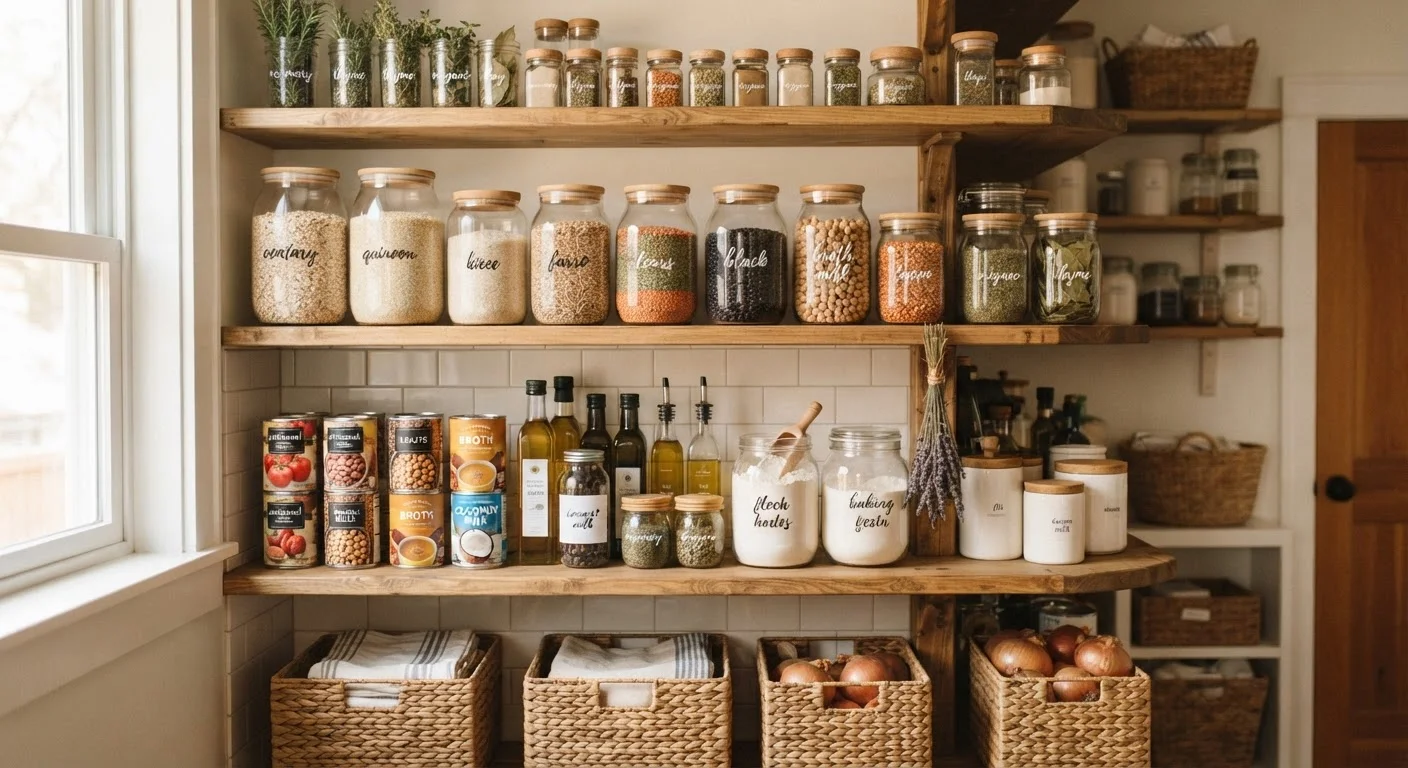
Why Your Pantry Is the Real Meal-Planning Tool
Most families don't struggle with healthy eating because of a lack of recipes - they struggle because the right ingredients aren't on hand when time runs short. A well-stocked pantry removes that barrier. When shelf-stable, nutrient-dense basics are always within reach, putting together a balanced meal becomes a matter of minutes rather than a full grocery run.
If you're not sure where your pantry currently stands, our family nutrition readiness checklist can help you assess gaps before restocking. The goal isn't a picture-perfect pantry - it's a functional one that supports real life. The staples below were chosen because they're versatile, affordable, and nutritionally meaningful across a wide range of family meals.
A Note on Sodium in Canned Goods
Many canned staples - beans, tomatoes, broth - come in regular and low-sodium versions. For families managing blood pressure or watching sodium intake, low-sodium or no-salt-added varieties are worth choosing when available. Rinsing canned beans under running water can also reduce their sodium content meaningfully. As always, consult a healthcare provider or registered dietitian for guidance specific to your family's health needs.
The Pantry Staples Worth Keeping in Stock
Canned legumes (beans, lentils, chickpeas)
Canned or dried beans, lentils, and chickpeas are among the most nutritionally efficient foods available. They provide plant-based protein, soluble fiber, iron, and folate - and they cost a fraction of most animal proteins. Rinse canned varieties to reduce sodium content. They work in soups, grain bowls, tacos, pasta dishes, and homemade dips, making them one of the most versatile items in any family pantry.
Canned legumes deliver plant-based protein, fiber, and iron at a fraction of most proteins' cost.
Whole grains (brown rice, oats, whole-wheat pasta, quinoa)
Whole grains provide complex carbohydrates, B vitamins, and dietary fiber that refined grains lack. Brown rice and whole-wheat pasta are filling base ingredients that pair with almost any protein or vegetable. Rolled oats are a reliable breakfast foundation. Quinoa offers a complete amino acid profile, making it particularly useful for meals where meat isn't the centerpiece. Cook grains in batches on weekends to cut weeknight prep time significantly.
Whole grains offer sustained energy and fiber that refined alternatives simply can't match.
Canned tomatoes (diced, crushed, paste)
A can of diced or crushed tomatoes is the backbone of dozens of quick family meals - from pasta sauces and chilis to shakshuka and braised dishes. Tomatoes are a source of lycopene (an antioxidant), vitamin C, and potassium. Tomato paste adds concentrated flavor in small amounts. Stock a few varieties to give yourself flexibility without cluttering the shelf.
Canned tomatoes anchor more family dinners than almost any other single pantry ingredient.
Olive oil or avocado oil
A quality cooking oil rich in monounsaturated fats is essential for preparing virtually every savory meal. Olive oil is well-studied in the context of heart health and is the standard recommended fat in Mediterranean-style eating patterns. Avocado oil has a higher smoke point, making it better for higher-heat cooking. Either option provides healthy fat that helps your family absorb fat-soluble vitamins (A, D, E, and K) from vegetables.
Healthy cooking oils do more than prevent sticking - they help your family absorb key vitamins.
Low-sodium broth or stock (chicken, vegetable, beef)
Carton or canned broth is a low-effort way to build flavor into soups, grains, and sauces without relying on heavy salt or fat. Choosing low-sodium versions gives you more control over the overall sodium content of meals - a consideration for many US families. Broth can also be used to cook grains instead of water, adding depth to otherwise simple sides. It keeps for months in the pantry before opening.
Low-sodium broth builds rich flavor into simple meals without the excess salt of many shortcuts.
Nuts and nut butters
Unsalted nuts and natural nut butters provide protein, healthy unsaturated fats, vitamin E, and magnesium. Peanut butter, almond butter, and whole nuts like walnuts or cashews are easy to work into breakfasts, snacks, sauces, and stir-fries. They're calorie-dense, so they serve families well when a meal needs to be more filling. Store opened nut butters in the refrigerator to extend freshness, and watch added-sugar content on commercial varieties.
Nuts and nut butters add satiating healthy fat and protein to meals and snacks with minimal prep.
Dried herbs and ground spices
A basic spice collection transforms simple ingredients into meals families actually want to eat. Garlic powder, cumin, smoked paprika, Italian seasoning, turmeric, and black pepper cover a wide range of cuisine styles and flavor profiles. Spices make it possible to cook the same core ingredients - beans, chicken, rice - in distinctly different ways throughout the week, preventing the monotony that often derails healthy eating habits over time.
A varied spice rack makes the same core staples feel like entirely different meals each night.
Start With What You'll Actually Use
Before purchasing new staples, take stock of what your family already eats regularly. Anchoring new pantry additions to familiar flavors and meals increases the chance they'll actually get used. Starting small - adding two or three items at a time - also prevents overbuying and reduces food waste. A gradual, practical approach is more sustainable than a complete overhaul.
Building the Habit Without Breaking the Budget
Stocking a healthier pantry doesn't require a single large shopping trip. Adding two or three staples per week, or swapping one item at a time, keeps costs manageable and minimizes waste. For more ways to make these ingredients work financially, see our guide to pantry staples that stretch a grocery budget further, and for complete meal-planning strategies, feeding a family on a tight budget without sacrificing nutrition covers the full picture. Even on the busiest nights, a pantry stocked with these basics puts a nutritious dinner within reach - and that consistency is what healthy family eating is really built on. For more on maintaining that consistency long-term, see keeping family meals nutritious as schedules get busier.
This article is for general informational and educational purposes only and is not a substitute for advice from a qualified healthcare professional or registered dietitian. Consult a healthcare provider before making significant changes to your family's diet, especially for children, pregnant individuals, or those managing a health condition.
The content provided on our blog site traverses numerous categories, offering readers valuable and practical information. Readers can use the editorial team’s research and data to gain more insights into their topics of interest. However, they are requested not to treat the articles as conclusive. The website team cannot be held responsible for differences in data or inaccuracies found across other platforms. Please also note that the site might also miss out on various schemes and offers available that the readers may find more beneficial than the ones we cover.