

Why Space Is Rarely the Real Barrier
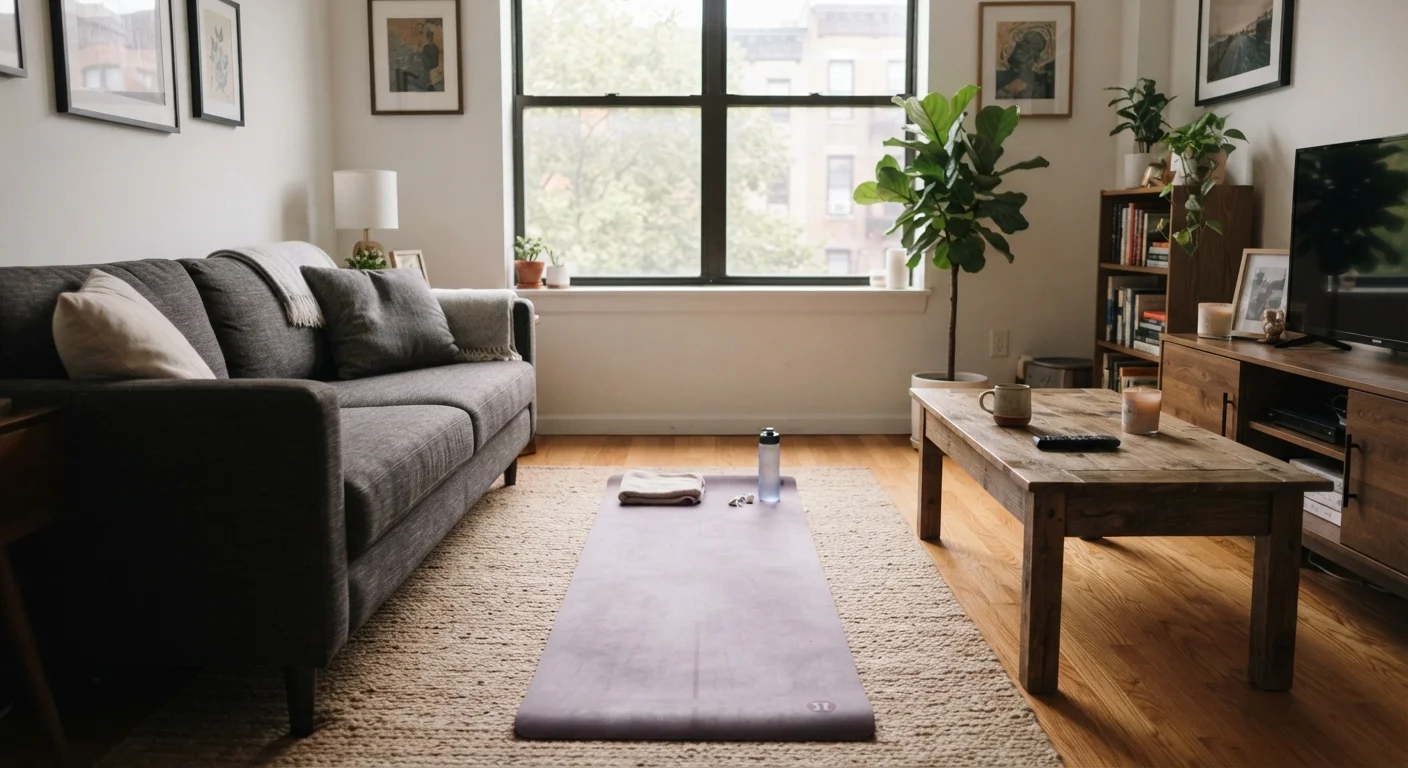
Most people overestimate how much room a workout actually needs. The belief that meaningful exercise requires a dedicated gym or a large open area stops many families before they even begin. In reality, a clear patch of floor roughly 6 feet by 4 feet - about the footprint of a standard yoga mat - is enough to perform dozens of effective movements, from squats and push-ups to core work and mobility drills.
The bigger obstacle is usually habit and expectation, not square footage. If you've been told workouts must look a certain way - wide-open space, rows of equipment, a full hour blocked out - it's worth revisiting those assumptions. Our guide to common exercise myths addresses many of these misconceptions directly. Letting go of the gym mental model is the first practical step toward making your home work for you.
Think Vertical, Not Horizontal
Many high-value exercises - squats, standing presses, calf raises, and balance work - use almost no horizontal floor space at all. Shifting your mental model from 'I need room to move around' to 'I need room to move in place' immediately unlocks many more options in a small home.
What You Actually Need Before You Start
Before moving furniture or planning a schedule, take a brief inventory of what you have and what you genuinely need.
What you will need
Exercise mat
Provides a non-slip, cushioned surface for floor exercises and clearly defines the workout zone.
Interval timer app
Keeps sessions structured without requiring you to count reps, reducing cognitive load during workouts.
Resistance band
Adds variable resistance to bodyweight movements without occupying any floor space when stored.
How to Make It Work: Step-by-Step
Follow these steps to turn your existing space into a reliable workout environment - no renovation required.
Identify your usable floor footprint
Walk through your home and look for any area where you can lie flat with arms extended - a hallway, a cleared living room corner, or the space at the foot of a bed. Measure it loosely; 6 by 4 feet is enough. Mark this zone mentally or with a mat so it becomes a consistent cue for exercise.
Create a quick-clear system for furniture
If your chosen spot has a coffee table or chairs in the way, practise moving them in under 60 seconds. The faster and easier this setup is, the less friction stands between you and starting. Slide lightweight furniture rather than lifting it, and return everything immediately after - this keeps the habit sustainable in a shared family home.
Build a bodyweight movement menu for your space
Choose exercises matched to your floor area. Small spaces suit vertical and stationary movements well: squats, lunges (in place), push-ups, planks, glute bridges, mountain climbers, and standing core work. For cardio in tight quarters, high knees, jumping jacks, and burpees all fit within a single mat. As your bodyweight training progresses, add variations - single-leg squats, decline push-ups - rather than more space.
Structure sessions around time, not length
Decide on a fixed duration - 10, 20, or 30 minutes - and commit to filling it with movement rather than aiming for a specific number of sets. This approach adapts naturally to a busy household. Three 10-minute sessions spread across a day deliver comparable physiological benefit to a single 30-minute block, according to broad exercise physiology principles. You can also explore how structured sessions compare with incidental daily movement for your family's lifestyle.
Add mobility work to fill any remaining time
If you have a few minutes left at the end of a session, use them for stretching and mobility - hip flexor stretches, thoracic rotations, and calf lengthening. These movements need almost no space, counteract the effects of prolonged sitting, and support long-term joint health. Our guide to stretching and mobility for families covers this often-neglected element in more detail.
Watch Ceiling Height for Jumping Movements
In apartments or rooms with low ceilings, jumping exercises like burpees or jump squats can pose a real hazard. Check overhead clearance before adding any vertical movement. If ceiling height is limited, substitute step-jacks, fast feet in place, or similar low-ceiling alternatives to keep the cardio intensity without the risk.
Keeping It Going Over Time
Setting up the space is straightforward; maintaining the habit is where most families struggle. A few principles make the difference. First, treat workout time like any other household appointment - it gets a slot on the calendar, even if that slot is only 15 minutes. Second, involve the whole family where possible. When children or partners join in, even casually, the routine becomes socially reinforced rather than a solo obligation. Our article on building a family fitness routine that sticks goes deeper on this approach.
Third, expect disruption and plan for it. School holidays, illness, and schedule changes will interrupt any routine. What matters is returning quickly rather than restarting from zero. For practical tools when life gets in the way, see our piece on keeping exercise consistent during chaotic family periods. Finally, if progress stalls, vary the exercises or increase reps before assuming you need more space or equipment - understanding why home workouts plateau can help you adjust.
This article is for general informational purposes only and does not constitute medical or fitness advice. Consult a qualified healthcare or fitness professional before starting a new exercise program, particularly if you have an existing health condition or injury.
The content provided on our blog site traverses numerous categories, offering readers valuable and practical information. Readers can use the editorial team’s research and data to gain more insights into their topics of interest. However, they are requested not to treat the articles as conclusive. The website team cannot be held responsible for differences in data or inaccuracies found across other platforms. Please also note that the site might also miss out on various schemes and offers available that the readers may find more beneficial than the ones we cover.