

Why These Three Things Are Rarely Separate
Most families think about screen time, sleep, and stress as three separate concerns to manage - a parenting issue, a health habit, and an emotional problem, respectively. In practice, they form a tight triangle where each side affects the other two.
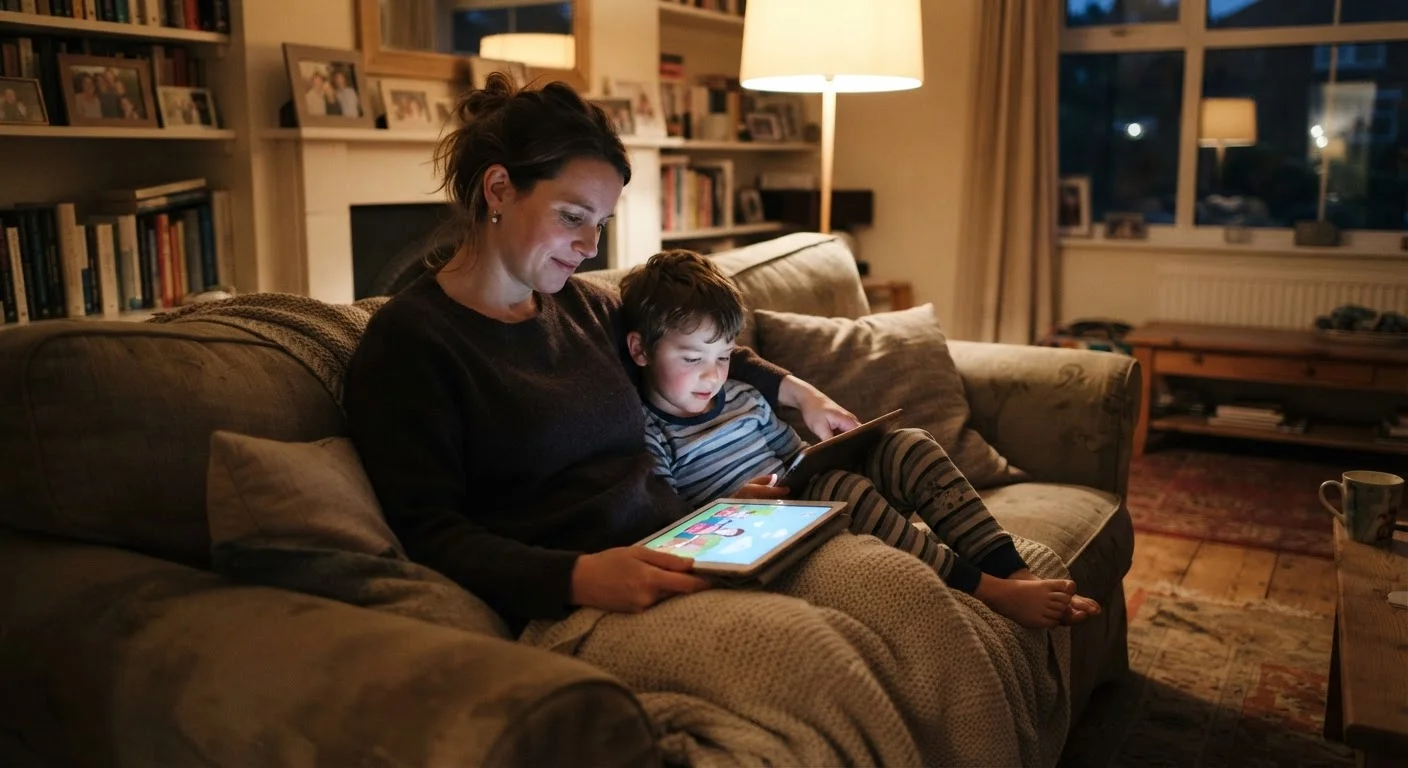
Evening device use is the most common entry point. When family members - children and adults - spend the hour before bed scrolling, streaming, or gaming, the brain receives two conflicting signals: the blue light from the screen tells the body it is still daytime, while exhaustion signals it is time to rest. The result is often a later, lighter, and more fragmented sleep than the body needs.
What happens the following day matters just as much. Sleep deprivation - even the mild, chronic kind that accumulates over busy weeks - raises cortisol, the body's primary stress hormone. A family running on insufficient sleep is, biologically, a family primed for shorter fuses, lower patience, and reduced capacity for problem-solving. Arguments feel bigger, tasks feel heavier, and the emotional atmosphere in the home shifts in ways that are hard to trace back to their origin.
That heightened stress then pushes people back toward screens. Scrolling feels soothing; it provides distraction and a sense of agency in an otherwise overwhelming moment. And so the loop closes and begins again. Understanding this pattern is not about assigning blame - it is about recognizing that a structural cycle is operating beneath the surface of daily family life.
The Physiology Behind the Pattern
The body's sleep-wake rhythm - known as the circadian rhythm - is largely governed by light. Melatonin, the hormone that signals the body to prepare for sleep, begins rising in the early evening under normal lighting conditions. Exposure to the blue-wavelength light emitted by phones, tablets, and televisions can suppress that rise and push the sleep window later.
For children, whose developing brains are particularly sensitive to light cues and who typically need more sleep than adults, this effect can be especially disruptive. For parents managing full schedules, the cumulative sleep debt from repeated late nights compounds quickly.
68%
Teens who keep a device in their bedroom at night
According to Common Sense Media research on adolescent media habits, the majority of teenagers report sleeping with a phone or device accessible in their room.
1-2 hrs
Typical melatonin suppression window from blue light
Studies published in sleep medicine journals suggest blue-wavelength light exposure in the evening can delay melatonin onset by one to two hours compared with dim light conditions.
3 in 10
US adults reporting insufficient sleep regularly
The CDC has reported that roughly 1 in 3 US adults do not get the recommended minimum of 7 hours of sleep per night on a consistent basis.
Cortisol and melatonin operate in opposition: when stress is high, cortisol suppresses melatonin further, making restful sleep even harder to achieve. This is why families going through a stressful period - financial pressure, a health challenge, a difficult school year - often find their sleep deteriorating at exactly the time they most need it. The physiology and the circumstance reinforce each other.
It is also worth noting that not all screen use carries equal risk. Passive, low-stimulation viewing differs from social media engagement or competitive gaming in terms of the arousal and cortisol response it produces. The research on screen content and children's development reflects this nuance - context and content type matter, not just duration.
Breaking the Cycle as a Household
Because the screen-sleep-stress cycle operates at a household level, individual fixes rarely hold. A child who follows a screen curfew while parents scroll in the next room receives a mixed signal. Sustainable change tends to be structural and shared.
Start With One Shared Change
Rather than overhauling your household's entire screen routine at once, choose one structural shift the whole family agrees to - such as leaving phones outside bedrooms at night. Consistent, modest changes practiced together tend to be far more sustainable than ambitious rules that apply only to children. Building a routine that supports the family as a unit is also a practical way to approach building a lasting stress-relief habit.
A few evidence-informed approaches that families have found practical:
- Shared wind-down agreements: Setting a household norm - rather than a rule directed at children alone - around screen use in the final hour before bed reduces friction and models the behavior adults want to see.
- Moving devices out of bedrooms: Keeping phones and tablets outside sleeping spaces removes the temptation for late-night checking and creates a cleaner sleep environment for everyone.
- Recognizing stress as a trigger: When family tension rises, acknowledging it explicitly - rather than retreating to individual screens - opens space for connection rather than parallel disengagement.
- Protecting rest as a household value: Rest serves as an active wellness tool, not a luxury. Families that treat sleep and downtime as non-negotiable tend to manage stress more effectively over time.
None of these changes require a strict regimen or a perfect household. Small, consistent shifts accumulate into a different baseline. If your family is noticing persistent signs of exhaustion, emotional overwhelm, or escalating conflict, it may be worth exploring whether stress has moved beyond normal ranges - and speaking with a healthcare provider when symptoms persist or interfere with daily functioning.
This article is for general informational purposes only and is not a substitute for professional medical advice, diagnosis, or treatment. Always consult a qualified healthcare provider with questions about your family's health, sleep, or mental wellness.
Frequently Asked Questions
Research consistently links evening screen use in children to later bedtimes, shorter sleep duration, and worse sleep quality. The effect is strongest when devices are used in the hour before bed or kept in the bedroom. The American Academy of Pediatrics recommends screen-free time before sleep as part of healthy sleep hygiene.
Yes. Elevated cortisol from stress can make it harder to fall and stay asleep regardless of screen habits. When stress and screen use occur together, the effects on sleep quality can compound. Addressing both factors together tends to be more effective than tackling either in isolation.
Health organizations generally suggest avoiding screens for at least 30 to 60 minutes before bed, though consistency matters more than the exact window. A shared family agreement - modeled by adults as well as expected of children - is more likely to stick than rules applied only to kids.
If a family member experiences persistent sleep problems, chronic irritability, difficulty functioning at school or work, or signs of burnout, consulting a qualified healthcare provider is the right step. These symptoms can have multiple causes that warrant professional evaluation rather than self-guided management alone.
Not necessarily. Passive, calming content differs from fast-paced or emotionally stimulating material in terms of arousal level. However, the blue light effect and the cognitive engagement of most devices still create a physiological barrier to sleep onset regardless of content type.
The content provided on our blog site traverses numerous categories, offering readers valuable and practical information. Readers can use the editorial team’s research and data to gain more insights into their topics of interest. However, they are requested not to treat the articles as conclusive. The website team cannot be held responsible for differences in data or inaccuracies found across other platforms. Please also note that the site might also miss out on various schemes and offers available that the readers may find more beneficial than the ones we cover.