

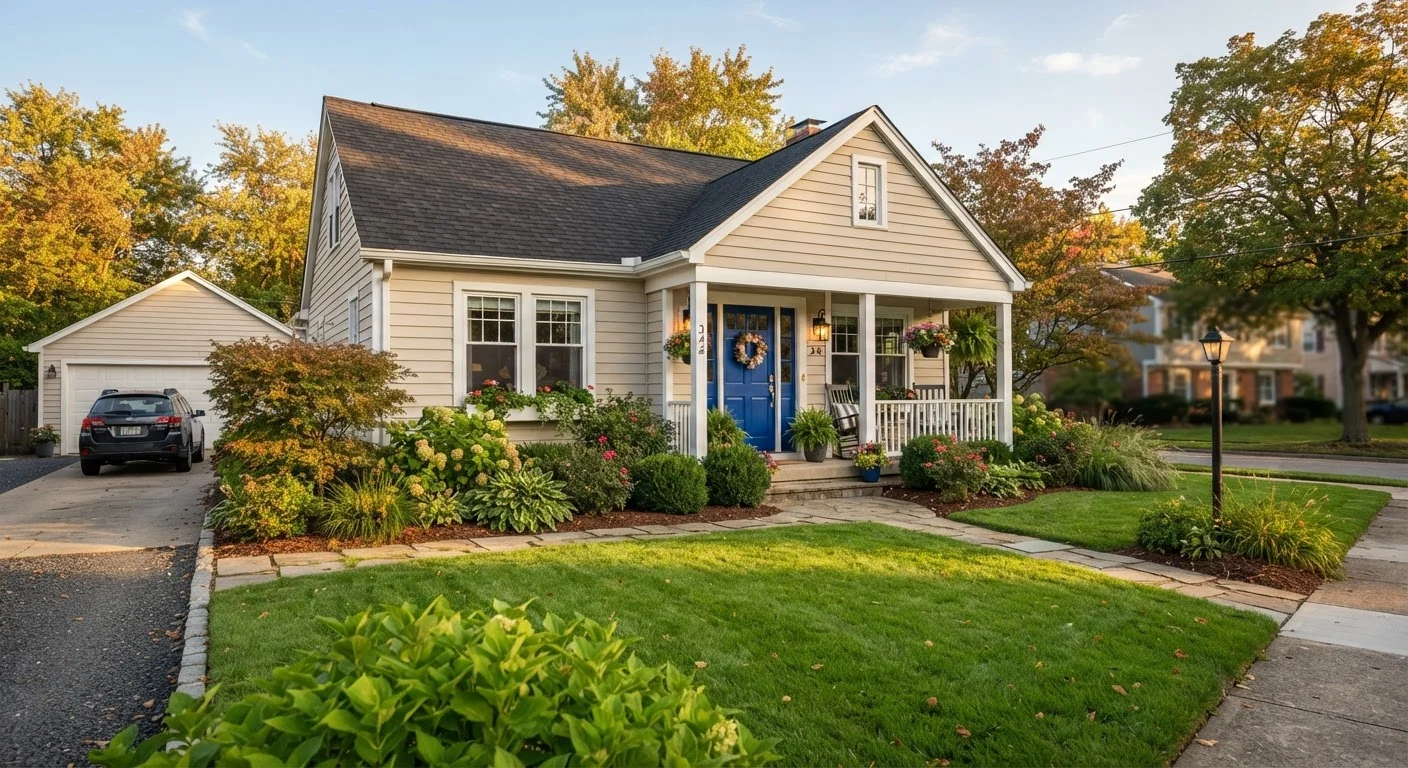
Why Exteriors Shape Value Before the Door Opens
Research in environmental psychology consistently shows that people form strong impressions of a space within seconds of seeing it. For homes, that moment happens at the curb. The exterior condition telegraphs whether a home has been cared for - and that signal echoes through every subsequent judgment a buyer, appraiser, or neighbor makes.
This matters financially. Appraisers formally account for exterior condition in their assessments, and buyers - consciously or not - adjust their perceived willingness to pay based on what they see outside. A home with peeling paint, cracked walkways, and overgrown shrubs creates doubt. A home with a clean facade, healthy landscaping, and a well-maintained entry creates confidence.
That confidence isn't just aesthetic. It implies that the interior and systems are likely maintained too - a halo effect that works in a seller's favor. For families investing in exterior improvements, understanding which projects reinforce that signal most effectively is essential before spending a dollar.
94%
Buyers influenced by first exterior impression
According to the National Association of Realtors, the vast majority of buyers report that a home's exterior appearance significantly influences their decision to schedule a showing.
~100%
Typical cost recoup: garage door replacement
Remodeling magazine's Cost vs. Value reports have repeatedly ranked garage door replacement among the highest-return exterior projects, often recovering close to or exceeding project cost at resale in many markets.
5-15%
Estimated value lift from mature landscaping
Studies from the American Society of Landscape Architects suggest well-executed landscaping can add an estimated 5-15% to perceived home value, though actual results depend heavily on local market conditions.
Landscaping: The Foundation of First Impressions
Lawn condition and planting design are often the first things eyes land on from the street. A neatly edged, healthy lawn with defined beds reads as orderly and cared-for. Overgrown or patchy landscaping does the opposite - even if the home itself is in excellent shape.
Effective landscaping doesn't mean expensive landscaping. The goal is cleanliness and proportion: plants scaled to the home's height, beds clearly defined, and materials consistent with the neighborhood's character. For families interested in planting strategies that stay manageable over time, the perennials vs. annuals guide breaks down the cost and maintenance tradeoffs of each approach.
High-maintenance or highly specialized plantings - elaborate topiaries, water features, or invasive species that require constant management - can actually deter buyers who don't want to inherit the upkeep. The sweet spot is low-maintenance, regionally appropriate planting that signals investment without imposing obligation.
Entry, Siding, and Paint: Where Dollars Work Hardest
The front entry is a focal point that draws the eye immediately. A clean, freshly painted door in a considered color - one that complements the home's exterior palette without being jarring - makes an outsized impression. Hardware matters too: worn or mismatched handles, locks, and house numbers undercut an otherwise tidy exterior. Replacing these is low cost and high visibility.
Siding condition is equally influential. Faded, cracked, or dirty siding communicates age and potential moisture problems even when none exist. Power washing is often the first step and costs relatively little. Where siding is genuinely deteriorating, replacement becomes a maintenance issue as much as an aesthetic one - and deferred maintenance tends to compound in cost over time. For structural or hazardous exterior work, always consult a licensed contractor and verify whether permits are required in your jurisdiction.
Exterior paint - where applicable - is among the better-documented value-to-cost improvements. The caveat is color choice: neutral, regionally appropriate palettes perform better than highly personal ones. This principle also applies indoors; for a parallel look at surface prep and finish durability, see the interior paint longevity guide.
Start With Condition Before Cosmetics
Before investing in aesthetic upgrades like new planters or decorative shutters, walk your exterior and look for condition issues: soft or cracked siding, peeling caulk around windows, loose gutters, or stained concrete. Buyers and appraisers interpret deferred maintenance as a risk signal that cosmetic work alone won't erase. Fixing what's broken first gives every aesthetic improvement a cleaner foundation to stand on.
What Doesn't Hold Up: Over-Improving and Mismatched Upgrades
Not every exterior investment pays off. One of the most common mistakes is over-improving relative to neighborhood norms. If surrounding homes sell in the $300,000-$350,000 range, a $40,000 custom stone facade and elaborate outdoor lighting installation is unlikely to recover its cost - buyers in that price range have a ceiling on what they'll pay regardless of individual features.
Highly personalized upgrades create a similar trap. Bold architectural details, unconventional color combinations, or specialty materials that appeal narrowly can reduce the pool of interested buyers even as they increase the cost of the home. The renovation myths article addresses several of these spending traps in broader context.
For families considering financing exterior improvements, it's worth understanding the full picture before committing. The home improvement financing guide walks through how different financing paths work and what to weigh carefully - general financial information, not personalized advice.
The practical rule: match the investment to the neighborhood's price tier, focus on condition over customization, and prioritize projects that remove negative signals before adding premium ones. A buyer who sees a clean, maintained exterior stops worrying - and that's the outcome worth engineering.
Frequently Asked Questions
Industry cost-vs-value studies consistently rank garage door replacement, entry door replacement, and modest landscaping improvements among the higher-return exterior projects. Fresh exterior paint and cleaned or replaced siding also tend to perform well. Returns vary significantly by region and market conditions, so treat published figures as general guidance rather than guarantees.
Yes, meaningfully. A well-maintained lawn and thoughtful planting create positive first impressions that can influence both appraisals and buyer offers. The effect is most pronounced when landscaping is consistent with neighborhood standards. Overly elaborate or high-maintenance designs can actually discourage buyers concerned about upkeep costs.
Avoid highly personalized upgrades - unusual color choices, niche architectural features, or extensive hardscaping that doesn't match neighborhood norms. These can polarize buyers rather than attract them. Also avoid starting large projects you can't finish before listing, since incomplete work typically hurts perceived value more than doing nothing.
It depends on the scope and your local jurisdiction. Structural changes, fencing above certain heights, decks, and work that affects drainage often require permits. Cosmetic work like painting usually does not. Always check with your local building department before beginning a project - unpermitted work can complicate appraisals and home sales.
Curb appeal matters in both markets but plays a larger role when buyers have more choices. In a competitive buyer's market, homes with poor exteriors may be passed over in online searches before a showing is ever scheduled. In a strong seller's market, the effect is more muted - but it still influences offer prices and inspection negotiations.
Absolutely. Some of the highest-impact improvements cost very little: power washing driveways and siding, painting or replacing house numbers, refreshing mulch beds, trimming overgrown shrubs, and repainting or replacing a front door handle. These small-scale updates address the most immediate visual signals buyers and appraisers notice.
The content provided on our blog site traverses numerous categories, offering readers valuable and practical information. Readers can use the editorial team’s research and data to gain more insights into their topics of interest. However, they are requested not to treat the articles as conclusive. The website team cannot be held responsible for differences in data or inaccuracies found across other platforms. Please also note that the site might also miss out on various schemes and offers available that the readers may find more beneficial than the ones we cover.