

Why Bathrooms Are Especially Prone to Budget Overruns
Bathrooms pack more complexity into a small footprint than almost any other room in the house. Plumbing, electrical, ventilation, tile, waterproofing, and cabinetry all intersect in a space that may be only 50 square feet. That density of systems means that when one thing goes wrong - or reveals something unexpected - it rarely stays isolated.
Add the emotional pull of design decisions, the reality of aged infrastructure behind older walls, and the tendency for families to expand the project once it's already underway, and it becomes clear why bathroom renovations so consistently exceed their original budgets. Understanding the specific patterns that drive overruns is the first step toward avoiding them. For a broader look at managing renovation costs across the home, see our renovation myths that cost homeowners more.
Skipping a professional pre-project assessment of existing plumbing and walls.
Why it happens: Homeowners focus on the visible transformation - new tile, fixtures, vanity - and underestimate what may be lurking behind existing surfaces.
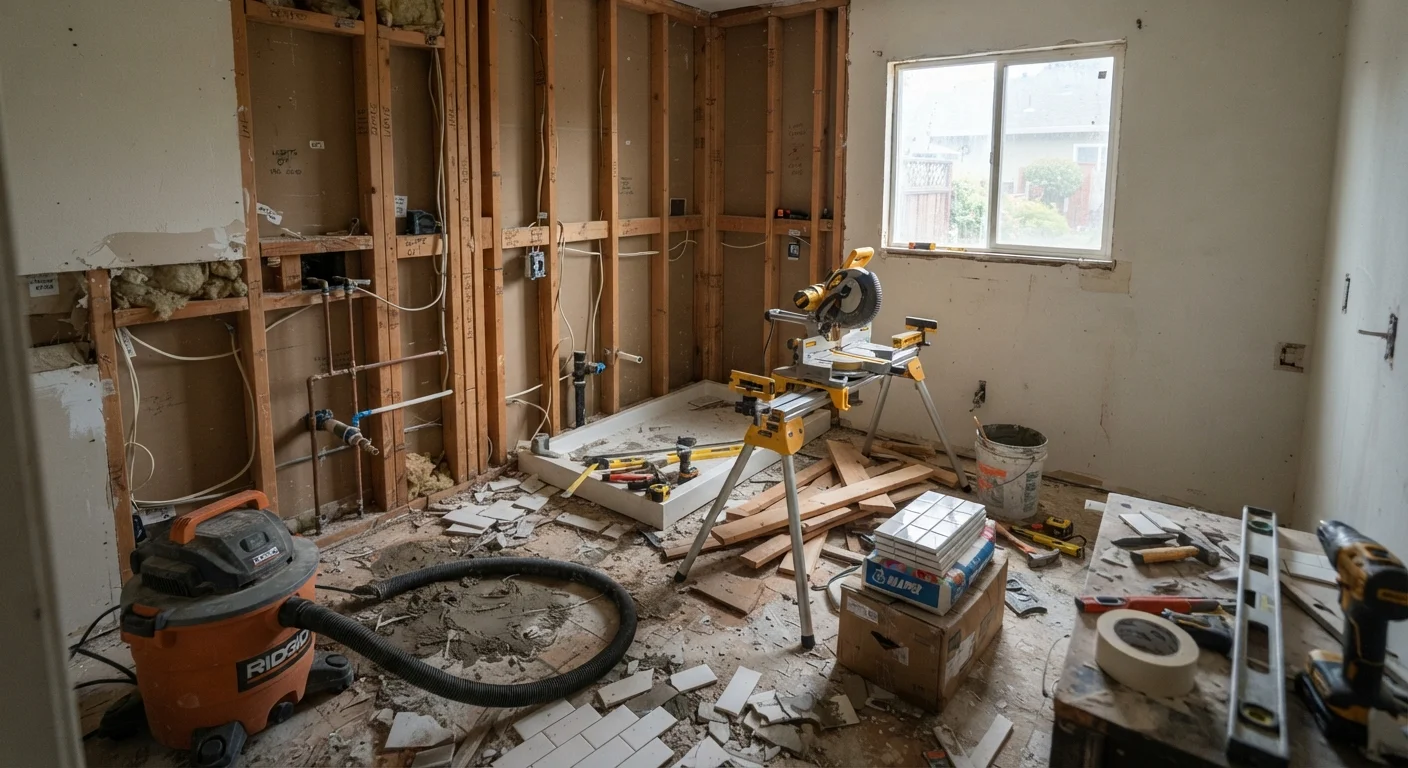
Not accounting for hidden moisture damage or mold behind walls and under flooring.
Why it happens: Moisture damage in bathrooms is often invisible until demolition begins, so it rarely appears in initial contractor estimates.
Allowing scope creep by adding upgrades or changes once the project is underway.
Why it happens: Once walls are open and the space is disrupted, it feels logical - even economical - to address 'while we're at it' improvements. Each change seems small individually but accumulates quickly.
Ignoring permit requirements for plumbing, electrical, or ventilation changes.
Why it happens: Permits feel like bureaucratic delays and added cost, leading some homeowners to skip them or hire contractors who offer to work without them.
Getting only one contractor estimate before committing to a budget.
Why it happens: Homeowners may feel that multiple quotes are time-consuming or awkward, especially if they've already built rapport with one contractor.
How to Build a More Realistic Budget from the Start
Most budget failures are rooted in planning gaps that occur before a single tile is pulled. A realistic bathroom budget requires three things: an honest scope, a professional pre-assessment, and a meaningful contingency. Skipping any one of these is where projects unravel.
Changing Decisions Mid-Project Is Expensive
Swapping tile selections, moving a fixture location, or upgrading a vanity after work has begun typically costs two to three times what the same decision would have cost during planning. Contractor time is billed whether crews are working or waiting for new materials. Finalize all selections - tile, fixtures, hardware, and lighting - before demolition starts.
Before finalizing your budget, walk through a structured renovation planning checklist to catch overlooked steps. Establish your full list of planned changes in writing before soliciting contractor quotes - vague scopes produce vague (and misleading) estimates. Build in 15-20% of the total project cost as a contingency reserve specifically for structural surprises and code-required work. If you don't use it, you're ahead. If you need it, you won't face a crisis.
Keeping bathroom projects financially predictable also connects to broader household financial habits. Managing home maintenance proactively - rather than reactively - is one of the most reliable ways families avoid large, sudden expenses. Our overview of why deferred maintenance compounds costs explains how small delays become large bills. For practical budgeting frameworks, the family budgeting hub offers strategies that apply directly to renovation planning.
This article provides general home improvement information for educational purposes. Costs, code requirements, and structural conditions vary significantly by location and property. Always consult licensed, qualified contractors and your local building authority before beginning renovation work.
The content provided on our blog site traverses numerous categories, offering readers valuable and practical information. Readers can use the editorial team’s research and data to gain more insights into their topics of interest. However, they are requested not to treat the articles as conclusive. The website team cannot be held responsible for differences in data or inaccuracies found across other platforms. Please also note that the site might also miss out on various schemes and offers available that the readers may find more beneficial than the ones we cover.