

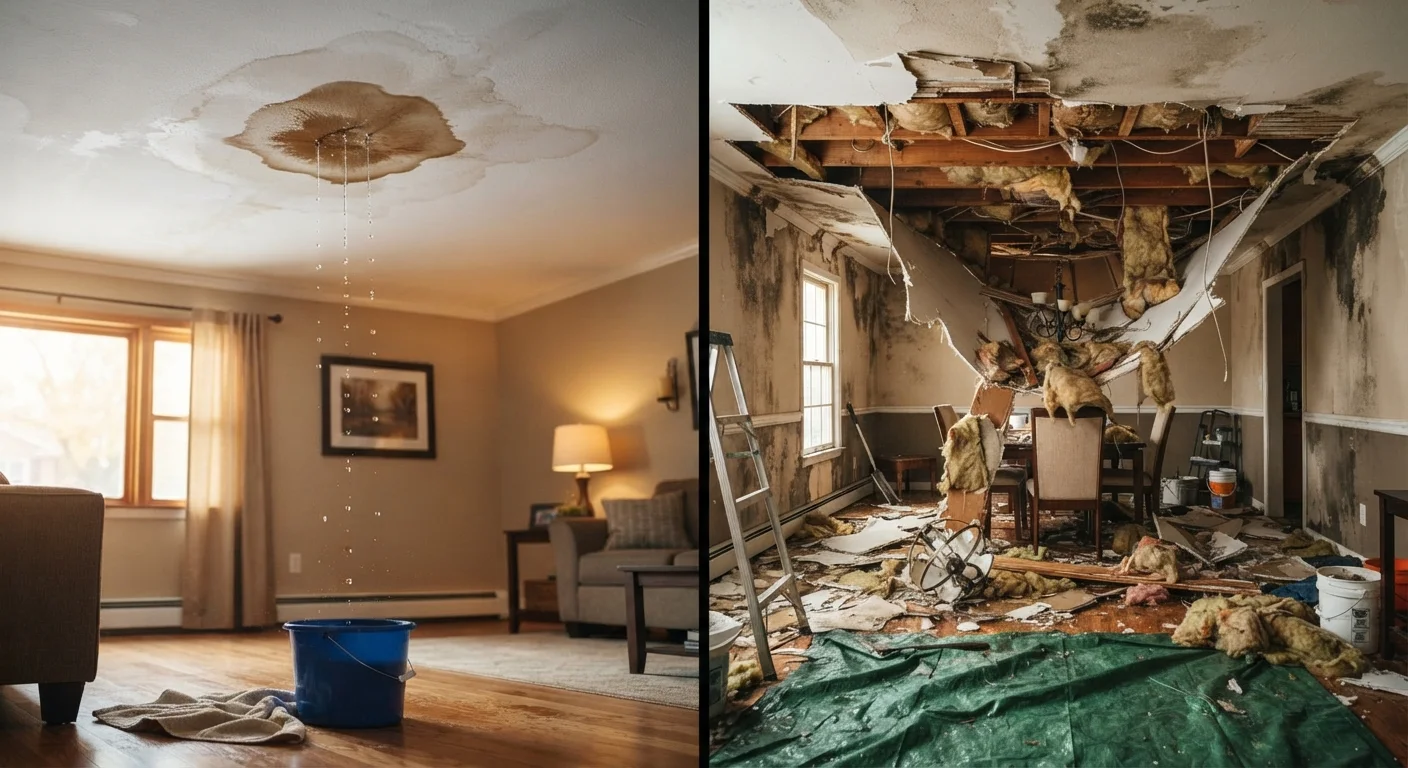
The Hidden Cost of "I'll Deal With It Later"
Every homeowner has mentally filed away a task under "I'll get to it eventually" - a dripping faucet, a hairline crack in the driveway, a gutter sagging at one end. These items feel minor because, individually, they are minor. The problem is what happens while you're not dealing with them.
Deferred maintenance follows a compounding logic similar to debt. A small issue ignored for one season becomes a moderate problem the next, and a significant repair bill the season after that. The original fix was cheap and quick. The remediation is neither. Understanding this pattern is the first step toward breaking it.
When to Call a Licensed Professional
Some maintenance tasks should never be DIY projects: anything involving the electrical panel, gas lines, structural members, or roofing at significant height carries real safety risk and often requires permits and inspections under local building codes. When in doubt, get a professional assessment - the cost is almost always far less than fixing a DIY mistake or an unpermitted repair flagged at sale.
This dynamic plays out across all types of assets, not just homes. Our related look at vehicle maintenance tasks that prevent expensive repairs shows exactly the same compounding effect in a different context.
How Small Problems Escalate: The Water Damage Example
Water is the single most destructive force inside a home, and nearly every major water-damage incident traces back to something small. A cracked roof shingle allows moisture into the underlayment. Left alone, that moisture reaches the roof decking, then the attic insulation, then the ceiling joists. What began as a $150-$300 shingle replacement can become a $10,000-$30,000 structural remediation involving mold abatement, framing repair, and drywall replacement.
The same escalation pattern applies to:
- Clogged gutters - water overflows, saturates the fascia board, seeps behind siding, and eventually penetrates the foundation.
- Failed caulking around windows and doors - air infiltration raises energy bills immediately, but water infiltration over time rots the framing.
- Ignored HVAC filters - a $10 filter skipped for months forces the unit to overwork, shortening its lifespan and leading to a $5,000-$12,000 replacement years earlier than necessary.
1-2%
Of home value recommended for annual maintenance
This guideline is widely cited by housing and financial planning professionals as a baseline for maintenance budgeting.
~14,000
US homes damaged by water or freezing each day
According to data from the Insurance Information Institute, water damage is among the most frequent and costly home insurance claims in the US.
10x
Estimated cost multiplier for ignored water leaks
Home restoration professionals commonly observe that water damage remediation can cost ten times or more what the original source repair would have required.
The Financial Logic of Preventive Upkeep
Routine maintenance costs are predictable. Emergency repair costs are not - and they almost always arrive at the worst time. Thinking of maintenance as a form of household risk management, rather than a chore, reframes the decision clearly: you are paying a small, known amount now to avoid a large, unpredictable expense later.
One practical approach is the 1-2% rule: setting aside roughly 1-2% of your home's value each year specifically for maintenance and repairs. On a $300,000 home, that's $3,000-$6,000 annually - a figure that sounds significant until you consider that a single roof replacement, HVAC system failure, or foundation crack can each exceed it independently.
For families already managing tight budgets, even a modest maintenance fund changes the math. Our Saving & Debt hub offers practical frameworks for building that kind of targeted reserve without derailing other financial goals. This is general educational guidance - for advice tailored to your situation, consult a licensed financial professional.
Building a Maintenance Habit That Sticks
The most effective maintenance programs are built on consistency, not heroics. A seasonal checklist - one reviewed each spring, summer, fall, and winter - catches the majority of issues before they escalate. Key items to audit each season include:
- Spring: Inspect roof and gutters post-winter; check exterior caulking; service air conditioning before peak heat.
- Summer: Check for pest entry points; test smoke and carbon monoxide detectors; inspect decks and outdoor structures.
- Fall: Clean gutters after leaf drop; inspect heating system; seal gaps around pipes and utility penetrations.
- Winter: Monitor attic insulation and ventilation to prevent ice dams; keep an eye on pipes in unheated spaces.
Most of these tasks require an hour or two and basic tools. Those that don't - like electrical, structural, or roofing work at height - are worth delegating to a licensed professional. Knowing where the DIY line is saves both money and safety risks. The Home Improvement hub covers a wide range of project categories to help you distinguish between the two.
Start Small With a Seasonal Walkthrough
You don't need a contractor to catch most developing problems early. A simple 30-minute exterior and interior walkthrough each season - looking for staining, cracks, gaps, and drips - identifies the majority of issues when they're still inexpensive to fix. Take dated photos so you can track changes over time.
What Deferred Maintenance Says to Buyers - and Insurers
Beyond the direct repair costs, deferred maintenance carries secondary financial consequences that homeowners often underestimate. When it's time to sell, a home with visible signs of neglect - peeling paint, stained ceilings, aging mechanical systems - typically appraises below similar, well-maintained properties. Buyers factor remediation costs into their offers, and inspectors surface problems that become negotiating leverage.
Homeowners insurance presents another dimension. Many policies exclude or limit coverage for damage that results from a known, ongoing maintenance issue rather than a sudden event. Keeping dated records of completed maintenance - photos, receipts, service logs - protects your claim standing if you ever need to file.
The bottom line: timely upkeep is not just about avoiding repair bills. It preserves the value of what is, for most families, their single largest financial asset. Keeping repair costs predictable on a family budget explores complementary strategies for smoothing out the financial unpredictability that maintenance deferred - in any context - tends to create.
Frequently Asked Questions
There is no universal figure, but industry professionals commonly observe that neglected problems cost several times more to fix than they would have originally. A $200 roof patch, for instance, can escalate into a $10,000+ structural repair if water infiltration is allowed to persist for years.
Gutter cleaning, caulking around windows and doors, HVAC filter replacement, and roof inspection top the list. These tasks are easy to overlook because they don't feel urgent - until the damage they prevent becomes visible and costly.
A widely cited guideline suggests setting aside 1-2% of your home's purchase price per year for maintenance. Older homes or those in harsh climates may warrant the higher end of that range. This is general guidance - consult a financial adviser for personalized budgeting advice.
Not necessarily. Financial hardship, health issues, or simply not knowing a problem exists are all common factors. The goal of understanding deferred maintenance is not to assign blame, but to help homeowners recognize early warning signs and act before costs escalate.
Yes, in many cases. Insurers may deny or reduce claims when damage results from a known maintenance issue that was neglected over time, rather than a sudden, covered event. Review your policy carefully and keep records of upkeep work completed.
A seasonal checklist - reviewed each spring, summer, fall, and winter - is one of the most practical tools. Pairing that with a small dedicated savings fund means you're financially and operationally ready when a task comes due.
The content provided on our blog site traverses numerous categories, offering readers valuable and practical information. Readers can use the editorial team’s research and data to gain more insights into their topics of interest. However, they are requested not to treat the articles as conclusive. The website team cannot be held responsible for differences in data or inaccuracies found across other platforms. Please also note that the site might also miss out on various schemes and offers available that the readers may find more beneficial than the ones we cover.