

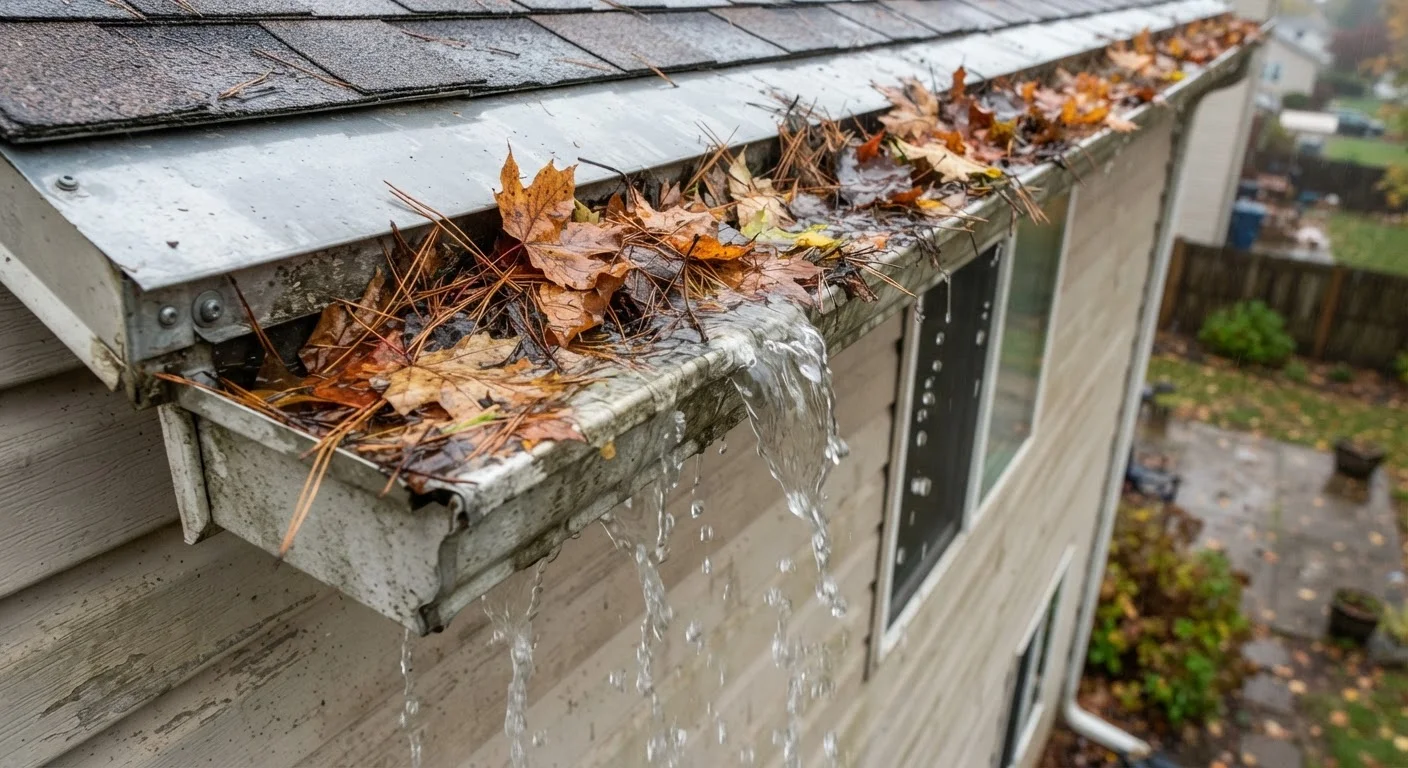
How Debris Accumulates in Gutters
Gutters are designed to catch rainwater running off your roof and channel it through downspouts away from your home. What makes them vulnerable is precisely what makes them effective: they sit open, just below roof level, catching everything the wind and weather deliver.
The most common culprits are deciduous leaves, which compact into dense, moisture-retaining mats; pine needles, which interlock and resist flushing even in heavy rain; roof granules, tiny mineral particles shed by asphalt shingles throughout their lifespan that settle into a fine sediment; and seed pods, twigs, and pollen, which wash in from overhanging trees.
The blockage process is gradual. Debris settles in the lowest points of the gutter - usually near downspout openings - and begins to trap moisture. That moist mat draws more organic material and eventually seeds, which can actually sprout into small plants if left long enough. Once a partial dam forms near the downspout, even moderate rainfall causes water to back up across the entire gutter run.
Time Your Cleaning Right
Wait until deciduous trees have fully dropped their leaves before doing your fall cleaning - cleaning too early means a second round of leaf fall will refill the gutters within weeks. In most of the continental US, late November to early December is the right window for the fall clean. Spring cleaning is best done after tree pollination and seed release wind down, typically late May.
Gutters on homes with overhanging trees accumulate debris significantly faster than those on open lots. If your roof has mature trees within 10-15 feet, plan for more frequent inspection - not less.
What Overflowing Gutters Do to Your Foundation
When a gutter can't drain properly, water spills over the front edge and falls in a concentrated stream directly alongside the house - often right where the foundation meets the soil. This is where the real damage begins.
Soil saturation is the first consequence. Clay-heavy soils expand when wet and contract when they dry, a cycle that creates uneven pressure on foundation walls over many seasons. Sandy soils erode and wash away, undermining the ground that supports the structure above it.
Hydrostatic pressure - the weight and force of water-saturated soil pushing against a below-grade foundation - is one of the leading causes of basement wall cracks and water intrusion. A poured concrete or concrete block foundation that might otherwise last generations can be compromised within a few years of chronic water exposure at its base.
Above grade, the overflow also saturates wood fascia boards (the horizontal boards the gutter mounts to), soffit panels, and exterior siding. This persistent moisture invites rot and mold, and creates entry points for insects. Understanding these connected vulnerabilities is why gutter maintenance sits alongside plumbing basics every homeowner should know as a core preventive skill.
~$10,000
Average cost of foundation crack repair
Estimates from home repair industry sources suggest moderate foundation crack repairs commonly range from several thousand to over $10,000 depending on severity and method.
2×/year
Minimum recommended gutter cleaning frequency
Most home maintenance guidelines, including those from building industry organizations, recommend cleaning gutters at least twice annually for average tree exposure.
4-6 ft
Recommended downspout discharge distance
Standard drainage guidance suggests extending downspout discharge at least 4 to 6 feet from the foundation to prevent soil saturation at the base of the home.
Staying Ahead of Blockages: Practical Maintenance Steps
Preventing gutter blockages doesn't require special skills or expensive equipment - it requires consistency. Here's a practical framework:
- Clean gutters at minimum twice a year. Schedule one cleaning in late spring (after tree pollination ends) and one in late fall (after the final leaf drop). Homes with heavy tree coverage may need three or four cleanings annually.
- Inspect downspouts separately. A gutter can appear debris-free on the surface while a downspout is partially blocked lower down. Run a garden hose from the top of each downspout and watch for backed-up water - that signals a clog that may need a plumber's snake or downspout flushing tool to clear.
- Check the slope. Gutters should pitch approximately ¼ inch per 10 feet of run toward the downspout. A section that has sagged or pulled away from the fascia will pool water even when clear of debris. Rehang sagging sections using replacement gutter spikes or hidden hanger brackets.
- Extend your downspouts. Make sure each downspout discharges at least 4-6 feet from the foundation using a splash block or flexible extension. This single step dramatically reduces the volume of water reaching vulnerable foundation soil.
- Walk the perimeter after heavy rain. A visual check - looking for water streaming over gutter edges or pooling near the house - is the fastest early-warning system available.
When to Call a Professional
Gutter work on multi-story homes, steeply pitched rooflines, or homes with fragile roofing materials (such as slate or clay tile) carries meaningful fall and damage risk. In these situations, hiring a licensed gutter cleaning or exterior maintenance professional is a reasonable safety and cost decision - not an avoidable expense. Always use a stabilizer or standoff when using a ladder near gutters, and never lean a ladder directly against the gutter itself.
Frequently Asked Questions
Most homes benefit from cleaning gutters at least twice a year - typically in late spring after tree pollination and in late fall after leaves have dropped. Homes surrounded by pine trees may need cleaning three to four times annually because pine needles shed year-round and compact quickly into dense blockages.
Yes. When gutters overflow, water saturates the soil directly against the foundation. Over time, this repeated saturation causes hydrostatic pressure - the force of water-laden soil pushing against concrete or masonry - which can lead to cracks, shifting, and basement water intrusion. Foundation repairs are among the most expensive home fixes, often ranging into tens of thousands of dollars.
Watch for water stains or streaks on siding below the gutter line, soil erosion or bare patches alongside the house, pooling water near the foundation after rain, and moisture or efflorescence (white mineral deposits) on basement walls. Sagging gutter sections are also a sign of heavy debris buildup.
Gutter guards can meaningfully reduce the frequency of cleaning, but they do not eliminate maintenance entirely. Fine debris like roof granules and small seeds can still accumulate on or beneath guards. They are generally worth considering for homes with heavy tree coverage, but they work best as a supplement to - not a replacement for - periodic inspection.
For single-story homes with easy ladder access, many homeowners safely handle gutter cleaning themselves using a stable extension ladder, gloves, and a gutter scoop or garden hose. Multi-story homes, steep rooflines, or gutters with heavy compacted debris often warrant hiring a professional to reduce fall risk.
Most building and drainage guidelines suggest extending downspout discharge at least 4 to 6 feet away from the foundation. Splash blocks or flexible downspout extensions help achieve this minimum. Where grading allows, directing flow toward a lawn or garden bed is preferable to letting water pool near the house.
The content provided on our blog site traverses numerous categories, offering readers valuable and practical information. Readers can use the editorial team’s research and data to gain more insights into their topics of interest. However, they are requested not to treat the articles as conclusive. The website team cannot be held responsible for differences in data or inaccuracies found across other platforms. Please also note that the site might also miss out on various schemes and offers available that the readers may find more beneficial than the ones we cover.