

The Plumbing Knowledge Gap Most Homeowners Have
Most households only think about plumbing when something goes wrong - a pipe bursts, a toilet won't stop running, or a cabinet reveals a slow drip that's been quietly soaking the subfloor for months. At that point, stress drives decisions, and rushed decisions cost more money. Building a baseline of plumbing knowledge before a crisis is one of the simplest ways to protect your home and your budget.
This reference covers the concepts, terms, and locations every homeowner - renter-turned-owner or seasoned occupant alike - should be familiar with. It won't replace a licensed plumber for serious work, but it will help you respond faster, describe problems accurately, and know when a situation requires professional intervention. For a broader introduction to home systems, see our First-Time Homeowner's Orientation to Maintaining a House.
| Main shut-off location | Near foundation entry point, utility room, or at the water meter |
| Normal residential water pressure | 40-80 PSI (General plumbing industry standard) |
| Most common toilet repair | Flapper valve replacement |
| Recommended pipe inspection interval | Annually, or after any freezing weather |
| When to call a licensed plumber | Sewage odors, burst pipes, gas line concerns, or work requiring permits |
| Permits often required for | New pipe runs, water heater replacement, drain line alterations (Varies by local jurisdiction - verify with your municipality) |
Know Your Shut-Offs: The First Line of Defense
Water damage escalates by the minute. The single most important piece of plumbing knowledge is knowing where to cut the water supply - and being able to do it without hunting around in a panic.
Main Shut-Off Valve
This valve controls all water entering your home. It's typically located where the main supply line enters the house - near the foundation in a basement or crawl space, in a utility room, or outside near the water meter. Turn it clockwise to close (stop water flow). Locate it now, and make sure every adult in your household knows where it is.
Individual Fixture Shut-Offs
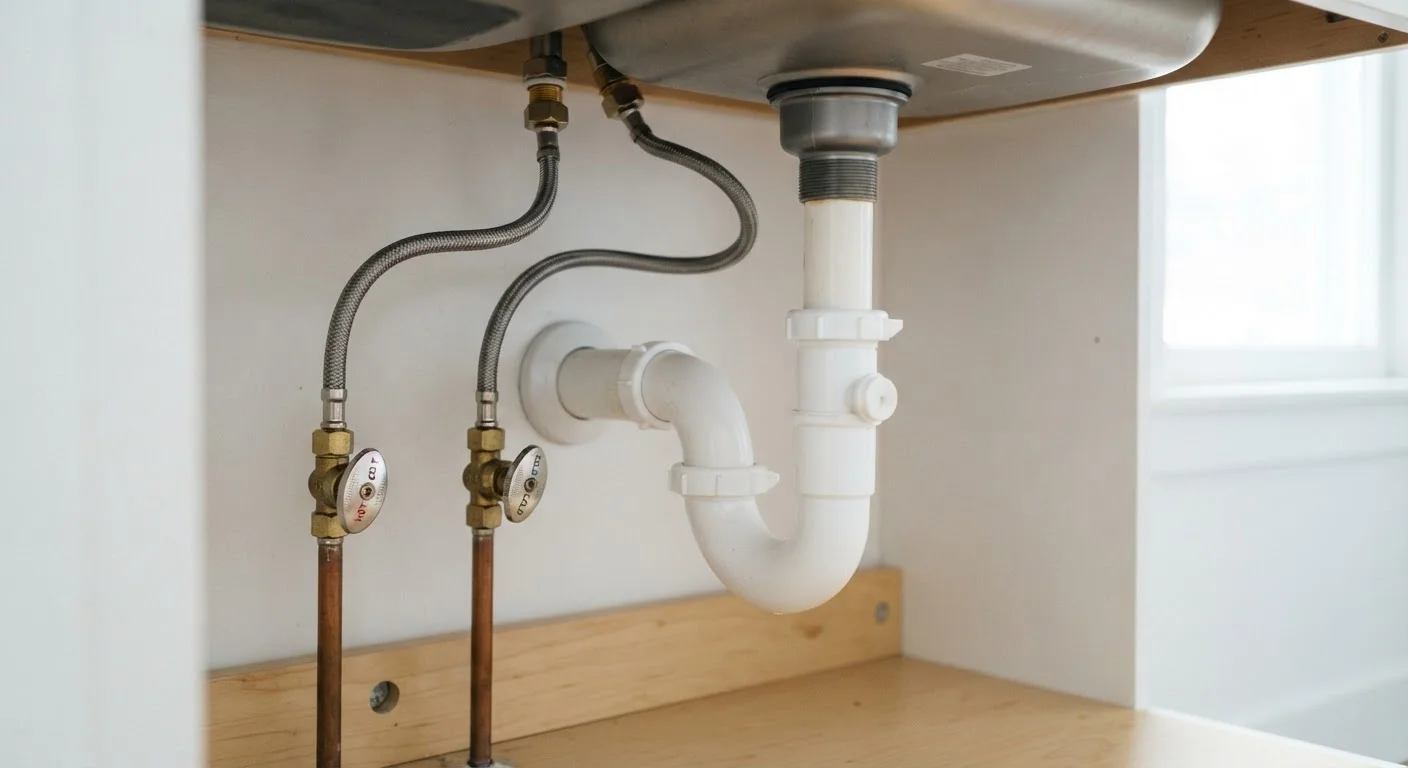
Most toilets, sinks, dishwashers, and washing machines have their own local shut-off valves on the supply lines feeding them. These let you isolate one fixture without cutting water to the whole house. They're typically oval-handled valves behind the toilet or under the sink cabinet. Test each one occasionally - valves that sit unused for years can seize or leak when finally turned.
Water Heater Shut-Off
Your water heater has both a cold-water supply valve (which you can close to stop filling it) and, if gas-powered, a gas supply valve. Know where both are. If the tank ever leaks or makes loud popping sounds, shutting supply while you call a plumber prevents further damage.
When to Call a Licensed Plumber
Some plumbing work - including alterations to gas lines, main drain lines, water heater installation, and anything requiring a permit - must be performed by a licensed professional. Regulations vary by state and municipality, so verify local requirements before starting any project beyond basic fixture repairs. Unpermitted work can create issues with home insurance and resale.
Spotting Problems Early: What to Look and Listen For
Many costly plumbing failures begin as minor, detectable issues. Developing a habit of periodic checking can catch problems before they become expensive repairs - something that directly supports keeping repair costs predictable on a family budget.
- Slow drains: A drain that empties sluggishly usually signals a partial blockage in the P-trap or further in the drain line. Addressing it early prevents a complete clog.
- Running toilets: A toilet that runs continuously after flushing typically means the flapper valve inside the tank is worn or misaligned. This wastes a significant volume of water and inflates utility bills.
- Damp cabinet interiors: Check under sinks monthly. Staining, soft wood, or a musty smell signals a slow leak from supply lines or drain connections - often a simple fix when caught early.
- Reduced water pressure: A sudden drop in pressure at one fixture suggests a localized issue (mineral buildup, a partially closed valve). Pressure loss throughout the house warrants a call to a plumber.
- Water meter movement with no use: Turn off all fixtures and appliances, then check whether the meter dial is still moving. Movement indicates a hidden leak somewhere in your system.
Water damage can also enter from outside - clogged gutters are a common culprit. See how blockages form and what they do to your foundation for related context.
Essential Plumbing Terms Defined
When you call a plumber or read an inspection report, you'll encounter terminology that shapes what gets repaired and what it costs. Understanding these terms helps you ask better questions and evaluate proposals more clearly.
P-trap
The curved, U-shaped pipe section beneath sinks and other drains that holds a small amount of water at all times. This water barrier prevents sewer gases from rising up through the drain into living spaces.
Supply line
The flexible or rigid pipe connecting a shut-off valve to a fixture such as a faucet or toilet. Supply lines carry pressurized water and should be inspected periodically for cracks, corrosion, or moisture.
Drain-waste-vent (DWV) system
The network of pipes that carries wastewater away from fixtures and vents sewer gases safely out through the roof. Slow drains or gurgling sounds often indicate a DWV blockage or venting problem.
Water pressure (PSI)
The force at which water moves through your home's pipes, measured in pounds per square inch. Most homes operate between 40 and 80 PSI; pressure above 80 PSI can stress pipes and fixtures over time.
Flapper valve
A rubber seal inside the toilet tank that lifts when you flush to release water into the bowl, then closes to allow the tank to refill. A worn flapper is one of the most common causes of a continuously running toilet.
Shut-off valve
A valve on a water supply line that can be turned to stop water flow to a specific fixture or to the entire house. Knowing valve locations and testing them periodically is a basic homeowner preparedness step.
Water hammer
A banging or thudding sound in pipes caused by a sudden change in water flow, typically when a valve closes quickly. Persistent water hammer can stress pipe joints and may require a pressure-reducing valve or arrestor.
Backflow
The unwanted reversal of water flow, which can allow contaminated water to re-enter the clean supply. Backflow preventers are devices or configurations installed to stop this from occurring.
For bathroom-specific maintenance context - including moisture signals behind tile - see our guide on grout, sealant, and tile bathroom maintenance. And if a plumbing repair turns into a larger project, understanding home improvement financing options can help you evaluate your payment paths without guesswork.
The content provided on our blog site traverses numerous categories, offering readers valuable and practical information. Readers can use the editorial team’s research and data to gain more insights into their topics of interest. However, they are requested not to treat the articles as conclusive. The website team cannot be held responsible for differences in data or inaccuracies found across other platforms. Please also note that the site might also miss out on various schemes and offers available that the readers may find more beneficial than the ones we cover.