

Learning Is Already Happening - You Just Need to See It
Between school drop-off, dinner prep, errands, and bedtime, family life moves fast. What's easy to miss is that many of the activities filling those hours already contain the raw material of genuine academic development. Children don't need more formal study time as much as they need adults who know how to make ordinary moments count.
The routines below aren't add-ons to your schedule - they're already part of it. The difference is a small shift in how you approach them. For families thinking more broadly about how their home environment supports learning, the home learning environment checklist is a useful companion resource.
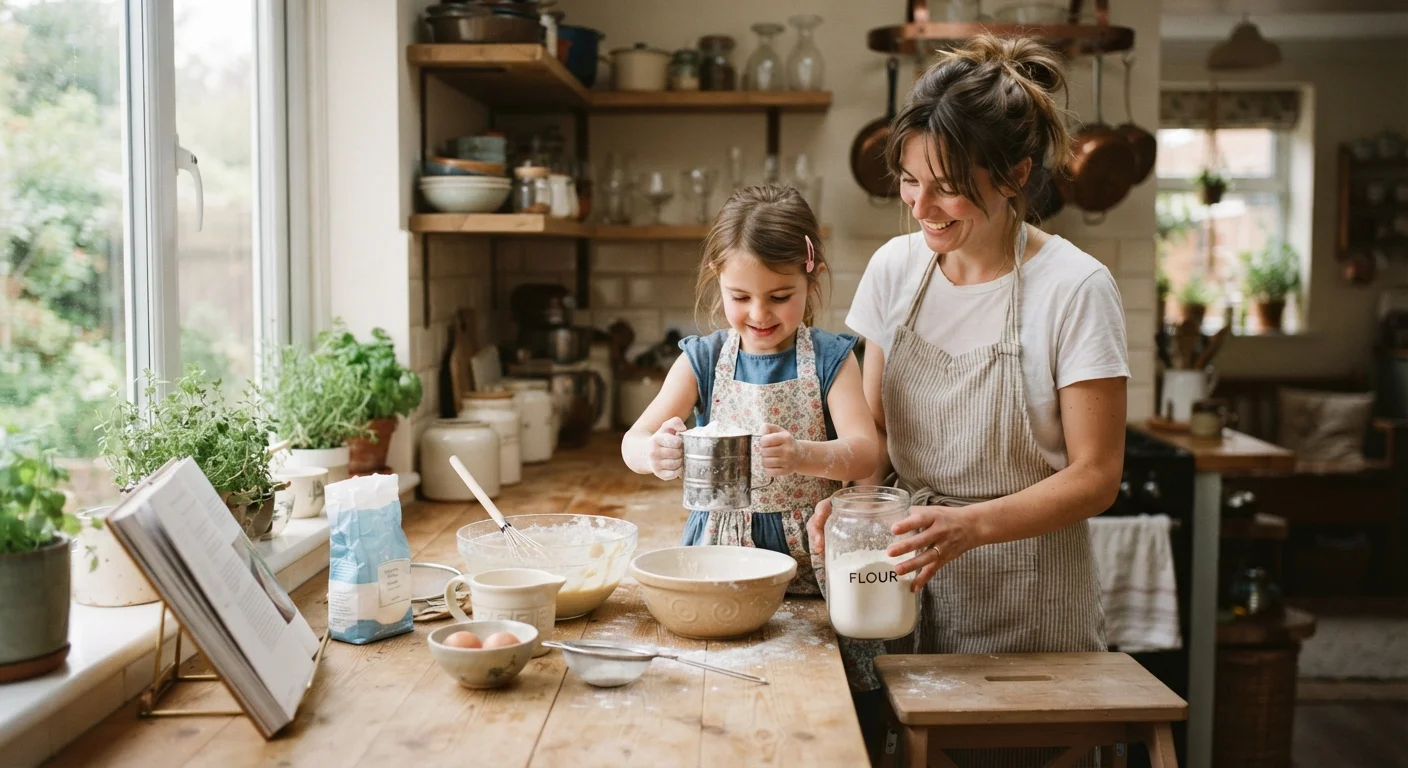
Cooking and Baking Reinforce Math Concepts
Following a recipe is one of the most practical math exercises a child can do. Measuring half a cup of flour, doubling a batch, or dividing a pan of brownies into equal portions all call on fractions, multiplication, and estimation - skills that appear directly on standardized assessments. Because the outcome is tangible and delicious, children engage with the numbers willingly rather than reluctantly.
Invite your child to read the recipe aloud, let them handle the measuring tools, and ask questions like, "If we need three-quarters of a cup but we only have a one-quarter measure, how many scoops is that?" The low stakes make it safe to guess wrong and try again.
Measuring and doubling recipes is hands-on fractions practice with zero worksheet required.
Grocery Shopping Builds Number Sense and Planning
A trip to the grocery store is a live exercise in budgeting, estimation, and comparison - skills that span math and early financial literacy. Ask your child to predict whether two items will cost more or less than a set amount, or have them round prices to the nearest dollar and keep a running estimate in their head.
Older children can help write the list by category, which introduces organizational thinking. Even choosing between two differently sized packages - "which is the better value per ounce?" - builds proportional reasoning. For more on weaving money awareness into the everyday, see everyday money habits worth starting early.
Estimating grocery totals builds number sense and real-world budgeting awareness simultaneously.
Bedtime Conversations Expand Vocabulary and Comprehension
The ten or fifteen minutes before a child falls asleep are surprisingly powerful for language development. When parents ask open-ended questions about the day - not just "How was school?" but "What's something that surprised you today?" - children practice retrieving and organizing information, which strengthens memory consolidation.
You can also use this time to preview or review vocabulary. If your child encountered an unfamiliar word during the day, talk through what it might mean from context before looking it up together. This metacognitive habit - thinking about how to figure something out - is one of the strongest predictors of reading comprehension. For conversation techniques that actually get answers, explore talking to your child about what they learned today.
Open-ended bedtime questions develop the retrieval and language skills that underpin reading comprehension.
Reading Aloud Together Sustains Literacy at Every Age
Many families stop reading aloud once children become independent readers, but research consistently suggests the practice continues to support comprehension, vocabulary, and even listening stamina well into the middle school years. Sharing a chapter book at dinner or before bed exposes children to more complex sentence structures and richer vocabulary than most children encounter in independent reading.
It also models fluency - the rhythm and pacing that makes text meaningful - which is a skill children absorb by ear before they replicate it on the page. If you're not sure where to start or how to build a consistent habit, building a home reading habit from scratch offers a practical starting framework.
Reading aloud past kindergarten continues to grow vocabulary and comprehension in measurable ways.
Outdoor Observations Strengthen Scientific Thinking
A walk around the block can easily become a low-key science lesson when parents prompt observation rather than just movement. Asking "Why do you think the puddles are bigger on this side of the street?" or "What does that cloud shape tell us about the weather?" invites hypothesis formation - the foundation of scientific inquiry.
Children who practice noticing, questioning, and explaining what they see develop the habits of mind that make formal science instruction click more readily. No equipment is required; curiosity and a few good questions are the only tools needed. For a broader look at how structured and open-ended time at home each contribute, see structured vs. unstructured learning time at home.
Asking 'why' on a neighborhood walk plants the observational habits that formal science builds on.
Household Responsibilities Develop Executive Function
Age-appropriate chores - setting the table, sorting laundry, organizing a backpack - build executive function skills like planning, sequencing, and task initiation. These capacities are closely linked to academic performance, particularly in reading and mathematics, because they govern a child's ability to start work, sustain attention, and shift strategies when something isn't working.
The key is framing responsibilities as real contributions rather than punishments. When children understand that their role in the household genuinely matters, they practice responsibility with greater buy-in - and that sense of self-efficacy transfers directly to how they approach challenging schoolwork.
Regular chores build the executive function skills that are essential for sustained academic effort.
Small Shifts, Lasting Results
None of these routines require purchasing anything, reorganizing your week, or becoming a curriculum expert. They require noticing that the learning is already there - and leaning into it with a question or two. Over time, children who grow up in households where curiosity is woven into everyday life tend to approach school challenges with more confidence and flexibility.
Learning Happens in the Margins
You don't need to turn every moment into a formal lesson - that can actually undercut the naturalness that makes these routines work. The goal is to stay curious alongside your child and ask an extra question when the opportunity arises. Over weeks and months, those small moments accumulate into substantial skill-building without any extra scheduling or materials.
Make It a Habit, Not a Curriculum
Choose one or two routines that already happen daily and experiment with adding a single question or small task. Once that feels natural, add another. Trying to transform every household activity at once is likely to feel forced for both you and your child. Consistency over a few routines beats occasional intensity across many.
For families with children at different ages and stages, the strategies that work best will shift - a family roadmap for learning at home can help you adapt your approach as your children grow.
The content provided on our blog site traverses numerous categories, offering readers valuable and practical information. Readers can use the editorial team’s research and data to gain more insights into their topics of interest. However, they are requested not to treat the articles as conclusive. The website team cannot be held responsible for differences in data or inaccuracies found across other platforms. Please also note that the site might also miss out on various schemes and offers available that the readers may find more beneficial than the ones we cover.