

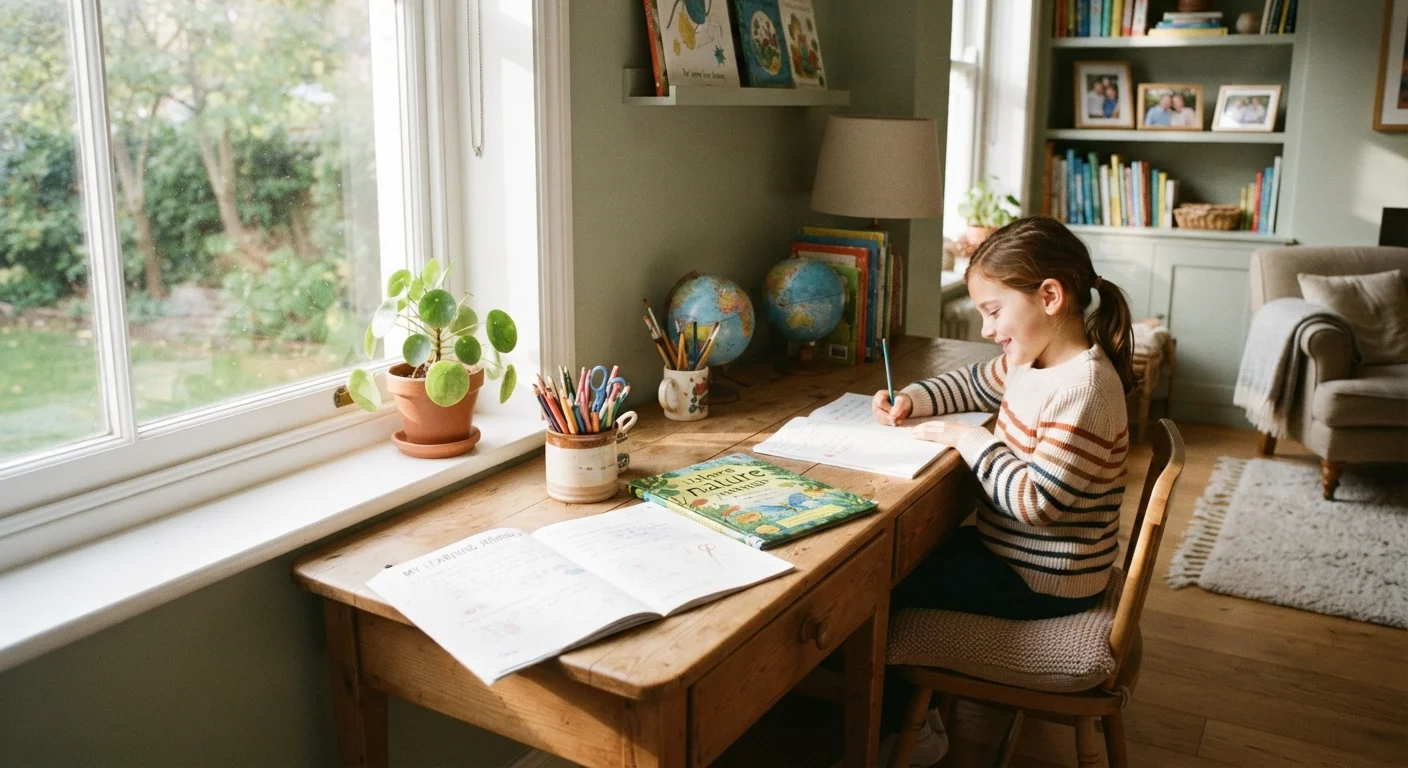
Summary
22 items · 20-40 minutes
Why a Home Learning Audit Matters
Most families already support learning at home - through bedtime reading, dinner table conversations, and homework reminders. But it's easy to miss gaps that quietly limit a child's confidence or focus. This checklist helps you step back and look at the full picture: your home's physical setup, daily rhythms, emotional climate, and the habits you model as a parent.
As research on home learning shows, children absorb knowledge through the texture of everyday family life - not just during dedicated study sessions. This audit covers all of it.
Work through each group at your own pace. Not every item will apply to every family or age group, and perfection isn't the goal. Think of this as a honest starting point, not a report card.
Weekly planner or wall calendar
Helps children see their weekly schedule at a glance, reducing anxiety and supporting independent time management.
Reading log or journal
Tracks daily reading habits and helps children reflect on what they've read, building comprehension over time.
Timer (physical or app-based)
Supports focused work intervals and helps children develop a sense of productive time without constant parental prompting.
School communication folder
A dedicated folder for notes, newsletters, and graded work keeps home-school communication organised and easy to reference.
The Full Checklist
Use these groups to assess where your home environment is already strong and where small adjustments could make a real difference. The checklist is organised from foundational conditions to finer-tuning habits.
Physical Space
Daily Routines
Emotional Climate
Homework and Independent Work Habits
School and Teacher Connection
If you notice several gaps in one group, that's a natural starting point. Setting up a home learning space that actually gets used offers practical, low-cost ideas for the physical environment specifically.
Avoid Turning the Checklist Into Pressure
This audit is meant to surface opportunities, not create a new source of parental guilt. If your household is managing a lot right now - work pressures, health challenges, or financial stress - it's completely reasonable to focus on just one or two foundational items. A calm, connected parent matters more to a child's learning than a perfectly organised desk. If financial pressure is affecting your family's capacity to invest in learning resources, general guidance on family budgeting strategies may help you prioritise.
Turning Checklist Insights Into Action
Once you've completed the audit, resist the urge to overhaul everything at once. Research on habit formation consistently suggests that smaller, sustained changes outperform ambitious sweeping ones. Pick one or two areas from your checklist gaps and work on those for a few weeks before revisiting.
It's also worth remembering that structured and unstructured time both serve children well. An effective home learning environment makes room for both - scheduled focus time and open-ended exploration. If you're unsure whether your child is actually thriving with the setup you have, watch for common early warning signs and act before frustration becomes entrenched.
Finally, as children grow, what an effective home learning environment looks like changes too. This family roadmap covers every stage from toddlers to teens, so you can adapt your approach as your child's needs evolve.
This article is for general informational and educational purposes only. For concerns about a child's learning, development, or wellbeing, consult a qualified educator, school counsellor, or relevant healthcare professional.
The content provided on our blog site traverses numerous categories, offering readers valuable and practical information. Readers can use the editorial team’s research and data to gain more insights into their topics of interest. However, they are requested not to treat the articles as conclusive. The website team cannot be held responsible for differences in data or inaccuracies found across other platforms. Please also note that the site might also miss out on various schemes and offers available that the readers may find more beneficial than the ones we cover.