

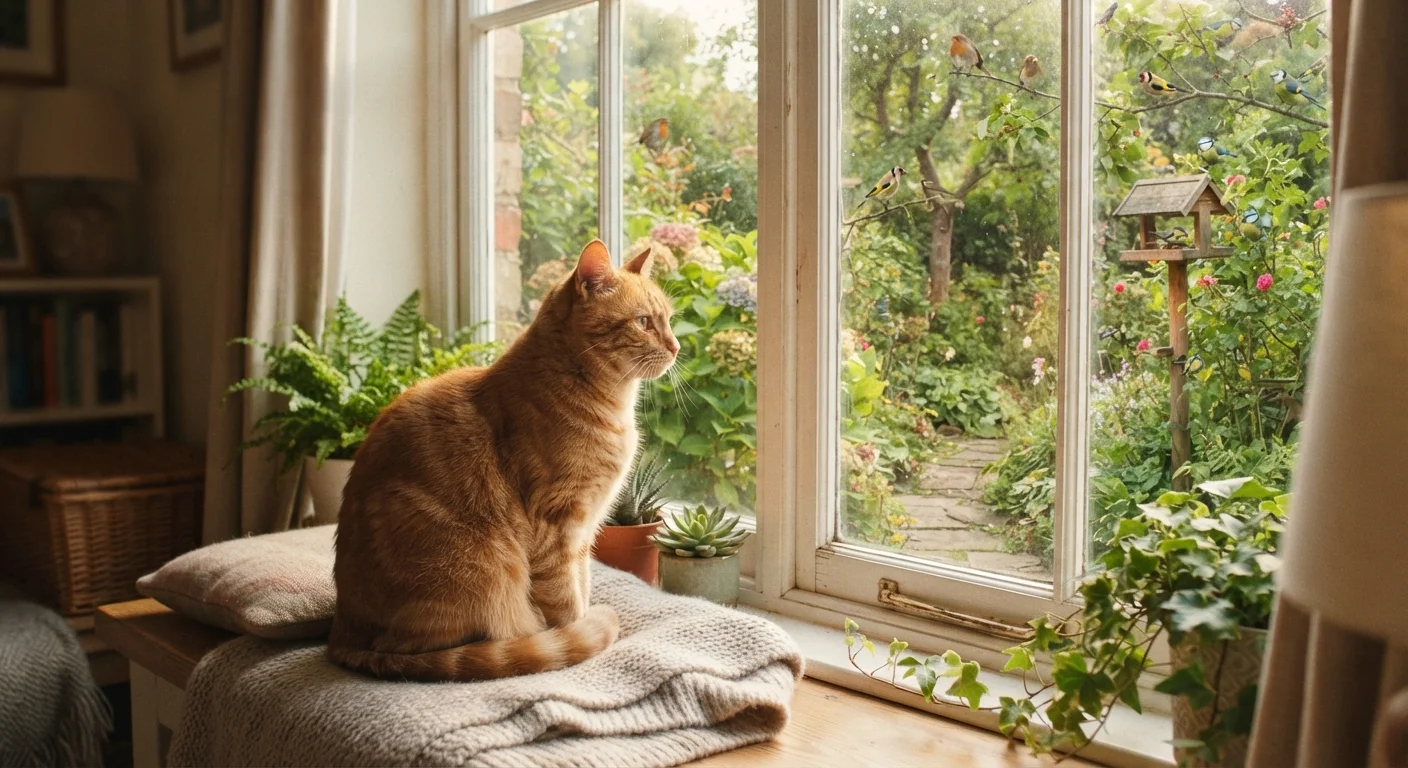
Option A
Indoor Living
The controlled, lower-risk environment.
Best for: Cats in urban or suburban settings where traffic, predators, and disease exposure are significant concerns.
Option B
Outdoor Access
The enriched, higher-stimulation lifestyle.
Best for: Cats in rural or low-traffic areas where families can manage risk and prioritize behavioral enrichment.
The Safety Gap: What the Evidence Shows
One of the most consistent findings in veterinary research is that indoor cats tend to live substantially longer than cats with outdoor access. Estimates vary, but indoor cats commonly live into their mid-to-late teens, while free-roaming outdoor cats often have significantly shorter average lifespans. The gap is largely explained by the hazards outdoor cats routinely encounter: vehicle collisions, attacks by dogs or wildlife, exposure to toxins and pesticides, and a much higher risk of contracting infectious diseases like feline leukemia virus (FeLV) or feline immunodeficiency virus (FIV).
Outdoor cats are also far more likely to pick up parasites - fleas, ticks, intestinal worms, and ear mites - which can then enter the home environment and affect children and other pets. If your family is already thinking through how animals interact with young kids, the evidence-based guide on pets and young children covers some of these shared-environment risks in more detail.
| Criterion | Indoor Living | Outdoor Access |
|---|---|---|
| Average lifespan | 12-18+ years (typical range) | Substantially shorter on average |
| Injury risk | Low | High (traffic, predators, fights) |
| Infectious disease exposure | Low | High (FeLV, FIV, rabies, etc.) |
| Parasite burden | Low with basic prevention | High; ongoing prevention essential |
| Natural stimulation | Requires active enrichment | High from environment |
| Behavioral risk from boredom | Moderate without enrichment | Lower |
| Vet cost over lifetime | Generally lower | Generally higher |
| Wildlife impact | None | Can affect local bird populations |
The Wellbeing Tradeoff: Enrichment vs. Stimulation
Safety statistics alone don't tell the whole story. Cats are natural hunters with strong instincts for exploration, territory, and prey behavior. Cats kept exclusively indoors can develop behavioral problems - including anxiety, over-grooming, and aggression - if their environment doesn't meet these needs. The good news is that enrichment is achievable indoors: puzzle feeders, climbing towers, window perches, wand toys, and regular interactive play sessions all help replicate the mental engagement outdoor exploration provides.
Outdoor cats, by contrast, get substantial natural enrichment through hunting opportunities, varied terrain, and sensory novelty. However, this stimulation comes bundled with exposure to stressors - territorial conflicts with other cats, unpredictable weather, and the physical demands of outdoor life - that take their own toll on long-term health.
12-18 yrs
Typical indoor cat lifespan
Veterinary consensus broadly places indoor-only cats in this range, though individual variation is significant.
~2-5 yrs
Estimated feral/outdoor-only cat lifespan
Studies on unowned outdoor cats suggest dramatically reduced lifespans compared to indoor pets, largely due to hazard exposure.
~1 in 3
Indoor cats showing behavioral issues
Some veterinary behavioral surveys suggest a significant proportion of indoor cats show signs of stress without adequate enrichment.
Families weighing this tradeoff should think honestly about their specific cat's temperament. A high-energy, curious cat may struggle more in a sparse indoor environment than a calm, low-drive cat would. The answer isn't always binary: a securely enclosed outdoor space (often called a "catio") or supervised leash time can offer meaningful stimulation without full free-roaming risk.
Veterinary Care: Non-Negotiable Regardless of Lifestyle
Whether your cat lives entirely indoors or has outdoor access, routine veterinary care is the foundation of long-term health. Indoor cats are not immune to illness - they still need core vaccinations, annual checkups, dental care, and parasite prevention. Outdoor cats typically require a more robust prevention protocol, including vaccines for diseases like rabies and FeLV, regular flea and tick treatments, and fecal parasite screenings.
Veterinary costs are a real consideration for families, and outdoor cats generally accumulate higher care expenses over time due to more frequent injury treatment and illness. If you're thinking through the full financial picture of pet ownership, our guide to hidden pet ownership costs offers a useful framework.
It's also worth noting that if you're considering adding a cat to a household that already has other animals, the health implications of outdoor exposure become more complex. Our article on bringing a second pet home covers quarantine and shared parasite risks that particularly apply to cats with outdoor exposure.
This article is for general informational purposes only and is not a substitute for professional veterinary advice. Always consult a licensed veterinarian for guidance specific to your cat's health and circumstances.
The content provided on our blog site traverses numerous categories, offering readers valuable and practical information. Readers can use the editorial team’s research and data to gain more insights into their topics of interest. However, they are requested not to treat the articles as conclusive. The website team cannot be held responsible for differences in data or inaccuracies found across other platforms. Please also note that the site might also miss out on various schemes and offers available that the readers may find more beneficial than the ones we cover.