

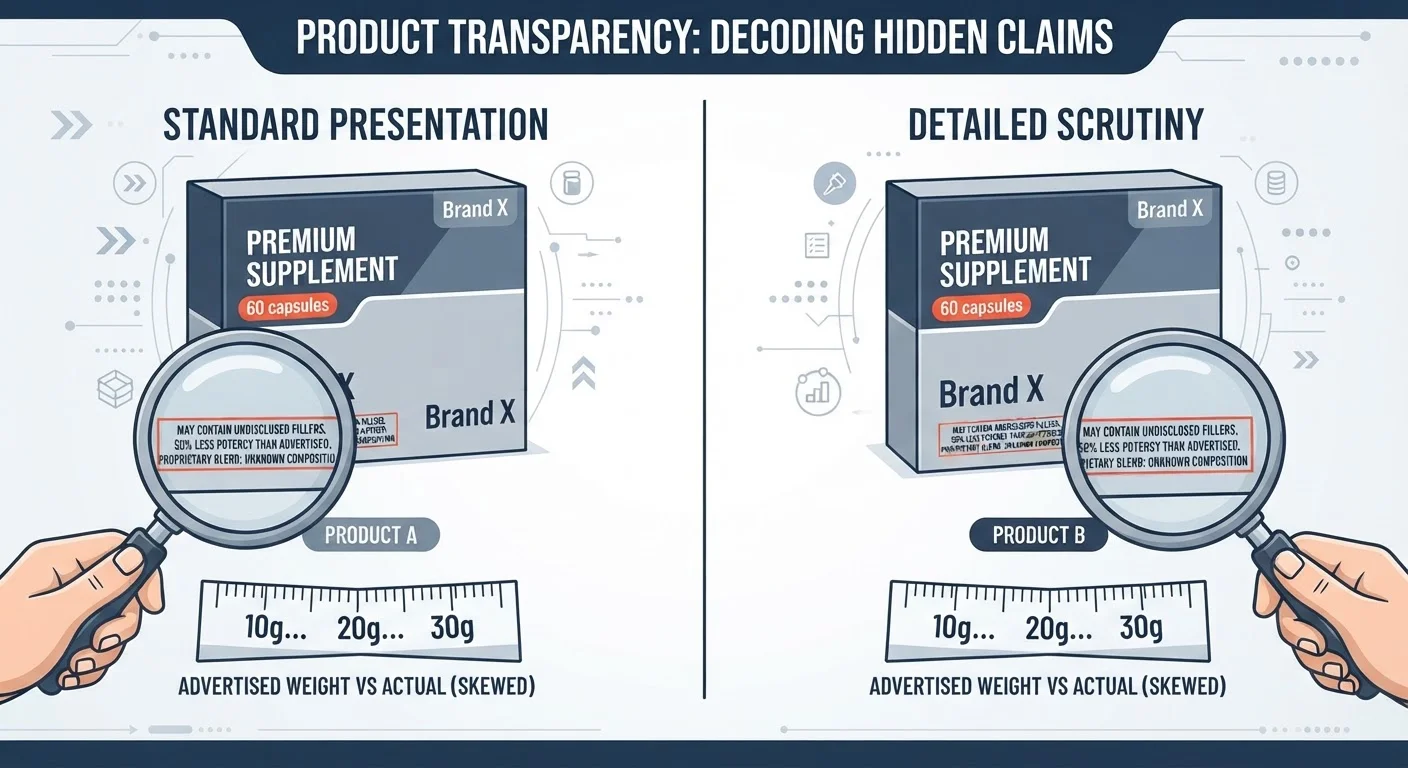
Why Most Comparisons Are Structured to Win, Not Inform
When a company publishes a side-by-side comparison, it is not conducting neutral research. It is making a marketing argument. The criteria selected, the competitor chosen as a reference point, and even the order items appear on the chart are deliberate choices designed to make one outcome look inevitable.
This isn't always deceptive in an illegal sense - it's simply how competitive positioning works. But it means that accepting a branded comparison at face value is equivalent to letting the defendant pick the judge. Relying on these shortcuts is one of the most consistent ways shoppers end up with purchases they later regret.
The first step toward a fair comparison is recognizing that every comparison has a designer - and asking whether that designer's interests align with yours.
Anchoring Bias Can Skew Your Baseline
Even before you reach a comparison chart, the first price or specification you see shapes how you evaluate everything else - a phenomenon called anchoring bias. Understanding how anchoring distorts your sense of value is a useful complement to learning how comparisons themselves are structured. Being aware that your reference point may have been deliberately set by a seller helps you reset it to a neutral baseline before evaluating options.
The Three Variables Marketers Most Often Manipulate
Understanding where bias enters a comparison helps you neutralize it. Three variables are manipulated more than any others:
- Criteria selection: The features measured are chosen because the sponsoring product leads on them. Equally important features where the product underperforms are simply absent from the chart.
- Reference product selection: The competitor chosen for comparison is often one that performs poorly on the selected metrics - not the strongest alternative a buyer would realistically consider.
- Measurement standardization: Identical labels can conceal incompatible methods. Two products both rated for "500 hours of use" may have reached that figure under entirely different testing loads. Without knowing the standard, the numbers cannot be meaningfully compared.
Asking structured questions before you compare anything is a reliable way to surface which of these manipulations might be at work in a particular comparison you're evaluating.
~60%
Consumers who rely primarily on brand comparison charts
Research by consumer behavior academics has consistently found that a majority of shoppers consult seller-provided comparison tools as a primary decision input, despite their inherent bias toward the sponsoring brand.
3-5x
Range of variation in same-label metrics across products
Consumer testing organizations have documented that identically labeled specifications - such as battery life or water resistance ratings - can differ by a factor of three to five depending on the testing standard applied.
Building a Comparison Framework Anchored in Your Needs
A buyer-centered comparison starts differently than a seller-centered one. Instead of beginning with a spec sheet, begin with a use-case list: what does this purchase need to do, for whom, how often, and under what conditions?
Once you have that list, rank each need by importance to your actual household. These ranked needs become your comparison criteria. You are now measuring products against your requirements - not against each other's marketing claims.
From there, source data for each criterion from a consistent, ideally independent channel for all options being compared. Independent testing organizations have real value here, though they have methodological limits worth understanding before you rely on them fully.
For big purchases, structured decision frameworks can formalize this process further. Structured frameworks help households weigh large purchases using logic rather than marketing pressure, which is especially useful when multiple family members have different priorities.
Build Your Criteria List Before Opening Any Comparison Chart
Write down the three to five things the purchase must do well for your household before looking at any seller-provided materials. This anchors your evaluation to your needs rather than the seller's chosen frame. Once you have your list, use it as a filter - any comparison chart that doesn't address your top criteria is incomplete by definition, regardless of how thorough it looks.
When the Problem Is the Comparison Set Itself
Even a methodologically clean comparison can lead you astray if you're comparing the wrong things. Sellers benefit when you compare only within their product category, because you never ask whether the category itself is the right answer to your need.
A family evaluating storage solutions, for example, might compare two competing units feature-by-feature - and miss the fact that a different approach entirely would serve them better for less cost. Widening your comparison set deliberately is a discipline that takes practice but consistently produces better outcomes.
Similarly, a longer feature list is not inherently a sign of better value. Feature creep inflates cost and complicates comparisons without adding meaningful utility for most buyers. When evaluating spec sheets, filter ruthlessly: does this feature address a need on your ranked list? If not, it should carry no weight in your decision.
For a complete, step-by-step process that brings all of these principles together, building an objective comparison from scratch gives you a practical walkthrough applicable to any category.
This article provides general consumer education and is not a substitute for professional financial advice. Readers should consult a qualified financial adviser for decisions specific to their own circumstances.
Frequently Asked Questions
Check who funded or produced the comparison - brand-sponsored comparisons almost always select favorable criteria. Look for omitted metrics, cherry-picked competitors, and whether the testing conditions match your real-world use. An unbiased comparison discloses its methodology clearly.
A controlled comparison holds all variables constant except the one being evaluated. For example, comparing battery life of two devices at the same screen brightness and workload, rather than using each manufacturer's own lab conditions. This ensures the difference measured is real and relevant to you.
Often not entirely. Retailers typically create charts that show their own products favorably by selecting metrics where they lead. Use these charts as a starting point, then verify each metric independently or through neutral testing sources.
Start by listing what you actually need the product to do, ranked by importance. Assign those needs as your comparison criteria - not the spec sheet the seller provides. Then find data for each option on each criterion from a consistent source.
Different measurement standards, testing conditions, or definitions make metrics incomparable. 'Water resistance' rated under brief splash conditions is not the same as sustained submersion. Always confirm that the same standard was used to generate numbers you're comparing.
Star ratings aggregate many individual experiences and can reflect satisfaction rather than objective performance. They can also be distorted by review incentives or a skewed reviewer base. Use them as one weak signal among several, not as a primary comparison tool.
The content provided on our blog site traverses numerous categories, offering readers valuable and practical information. Readers can use the editorial team’s research and data to gain more insights into their topics of interest. However, they are requested not to treat the articles as conclusive. The website team cannot be held responsible for differences in data or inaccuracies found across other platforms. Please also note that the site might also miss out on various schemes and offers available that the readers may find more beneficial than the ones we cover.