

Summary
22 items · 1-3 hours (spread across research and in-person inspection)
Why a Systematic Approach Matters
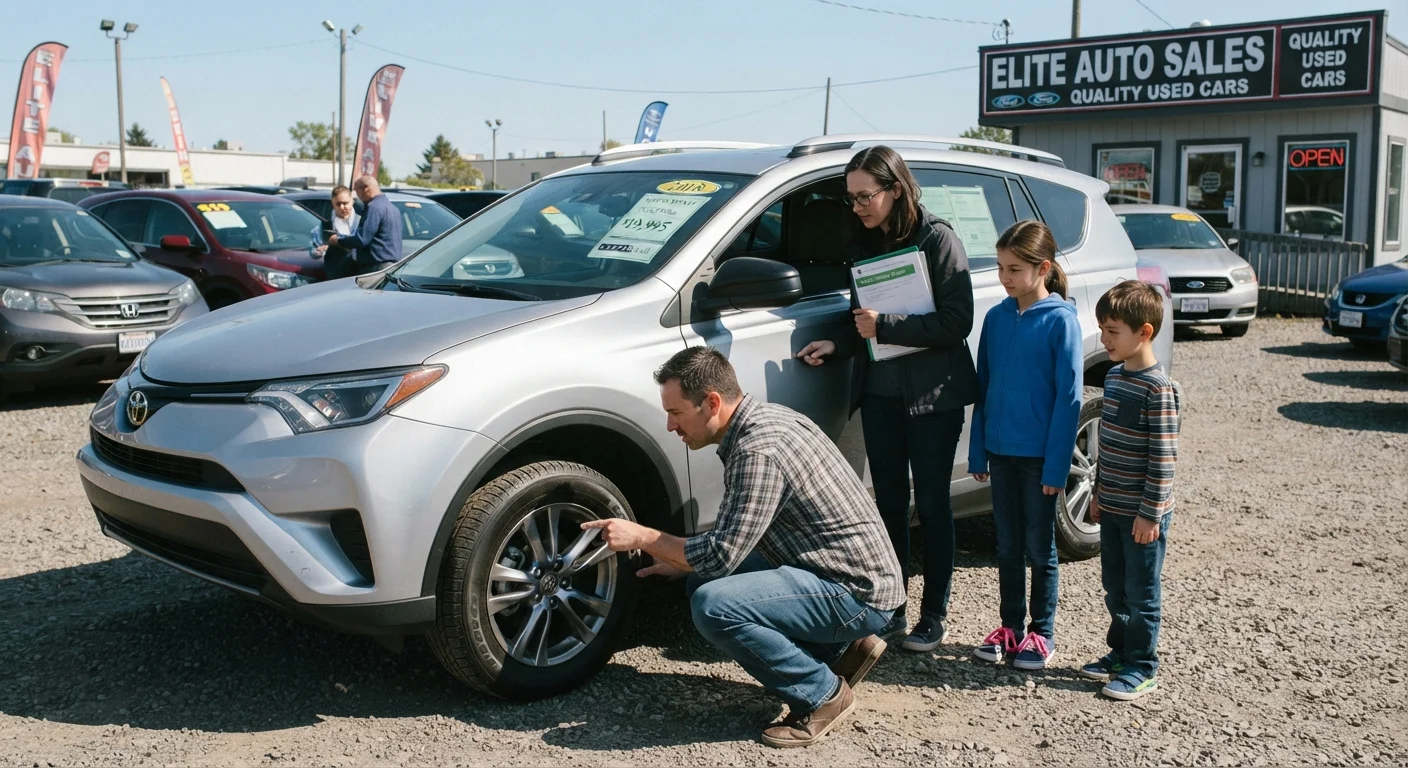
Buying a used vehicle is one of the larger financial decisions a household makes, and the risks are real: hidden accident damage, undisclosed mechanical problems, outstanding liens, and inflated pricing can turn a seemingly good deal into a prolonged financial headache. The good news is that most of these risks are manageable with a structured process carried out before you ever sign anything.
This checklist is designed to walk you through every major checkpoint - from initial online research to the final contract review - so you arrive at a decision with clear information rather than assumptions. Think of it as your due-diligence framework, not a shortcut. Once you've completed a purchase, our first-time owner's maintenance roadmap can help you establish the right upkeep habits from day one.
NHTSA VIN Lookup
Check for open safety recalls tied to the vehicle's VIN at no cost.
Vehicle History Report Service
Provides accident history, title status, odometer records, and prior owner count for a specific VIN.
Independent Licensed Mechanic
Performs a pre-purchase inspection to identify mechanical issues not visible to the untrained eye.
State DMV Lien Search
Confirms whether an active loan or lien is still attached to the vehicle's title.
OBD-II Diagnostic Scanner
Reads stored trouble codes from the vehicle's computer to surface hidden issues before the PPI.
Using This Checklist Effectively
The 22 items below are organized into six logical phases that match the natural sequence of a used-car purchase. Start with remote research - you should be able to eliminate a significant number of candidates before visiting in person. The items marked must are non-negotiable steps that protect your financial and legal interests. Items marked should are strongly recommended and will give you a more complete picture of the vehicle's condition and true cost.
Read Every Word Before You Sign
Purchase contracts can include 'as-is' clauses that eliminate any recourse if a problem surfaces immediately after sale. Add-on fees, dealer-installed accessories, and extended warranty terms may also appear in the fine print. Take the time to read the full agreement and ask for clarification on any language you don't fully understand before signing.
Budget at least one to three hours spread across the research phase and the in-person visit. If a seller pressures you to decide without time to complete these steps, treat that urgency itself as a warning sign. For broader guidance on evaluating major purchases, the reading the fine print guide covers contract and terms review in detail.
Research Before You Visit
Title and Ownership Verification
Exterior and Interior Condition
Mechanical and Safety Check
Test Drive
Financial and Legal Review
After the Inspection: Before You Finalize
Once you have completed the test drive and received the mechanic's written report, take time to calculate your realistic first-year ownership cost. This means adding estimated insurance premiums, registration and title transfer fees, any sales tax applicable in your state, and the cost of any repairs or maintenance items the inspection surfaced. Building this number into your household budget before committing helps you avoid stretching finances on a vehicle that looks affordable upfront but carries hidden carrying costs.
Never Skip the Independent Mechanic
A seller's assurance that a car is 'in great shape' is not a substitute for a professional inspection. A qualified mechanic can identify issues with brakes, suspension, engine mounts, and emissions systems that are invisible during a casual walkthrough. A pre-purchase inspection typically costs far less than the repairs it may help you avoid.
Liens Follow the Vehicle, Not the Seller
If you purchase a vehicle that still has an unpaid loan attached to it, that lender may have a legal claim to the car - even though you paid for it in good faith. Always verify lien status through your state's DMV or a reputable lien search service before completing any transaction.
Pay particular attention to brake condition - it's one of the most safety-critical and commonly deferred maintenance items on used vehicles. Our guide on brake warning signs can help you interpret what your mechanic finds. Once you're confident the numbers and the condition align with your needs, review the purchase agreement carefully - and don't hesitate to walk away if something doesn't add up.
This article is for general informational purposes only and does not constitute financial, legal, or mechanical advice. Consult a qualified mechanic, attorney, or financial professional for guidance specific to your situation.
The content provided on our blog site traverses numerous categories, offering readers valuable and practical information. Readers can use the editorial team’s research and data to gain more insights into their topics of interest. However, they are requested not to treat the articles as conclusive. The website team cannot be held responsible for differences in data or inaccuracies found across other platforms. Please also note that the site might also miss out on various schemes and offers available that the readers may find more beneficial than the ones we cover.