

Start here
Why Routine Maintenance Matters for New Owners
Next
Fluids: What to Check and How Often
Then
Tires, Brakes, and Lights: Your Safety Checklist
When you're ready
Reading Warning Lights Without Panic
Finally
Building a Maintenance Habit That Sticks
Why Routine Maintenance Matters for New Owners
Owning a car for the first time comes with a learning curve that extends well beyond knowing how to park. The habits you build in the first year of ownership - or skip - will shape what you spend and how safely you drive for years to come.
Routine maintenance isn't about being a gearhead. It's about catching small problems before they become expensive ones. A low oil level left unchecked can lead to engine damage that costs thousands of dollars. A worn wiper blade is a nuisance until a rainstorm makes it a visibility hazard. These aren't edge cases - they're among the most common reasons cars end up in the shop unexpectedly.
The good news: the foundational tasks are genuinely manageable for most people. You don't need a garage full of tools or mechanical experience. What you need is a basic understanding of what to look for and a consistent schedule. See our overview of high-value maintenance tasks to understand which habits deliver the most protection for your budget.
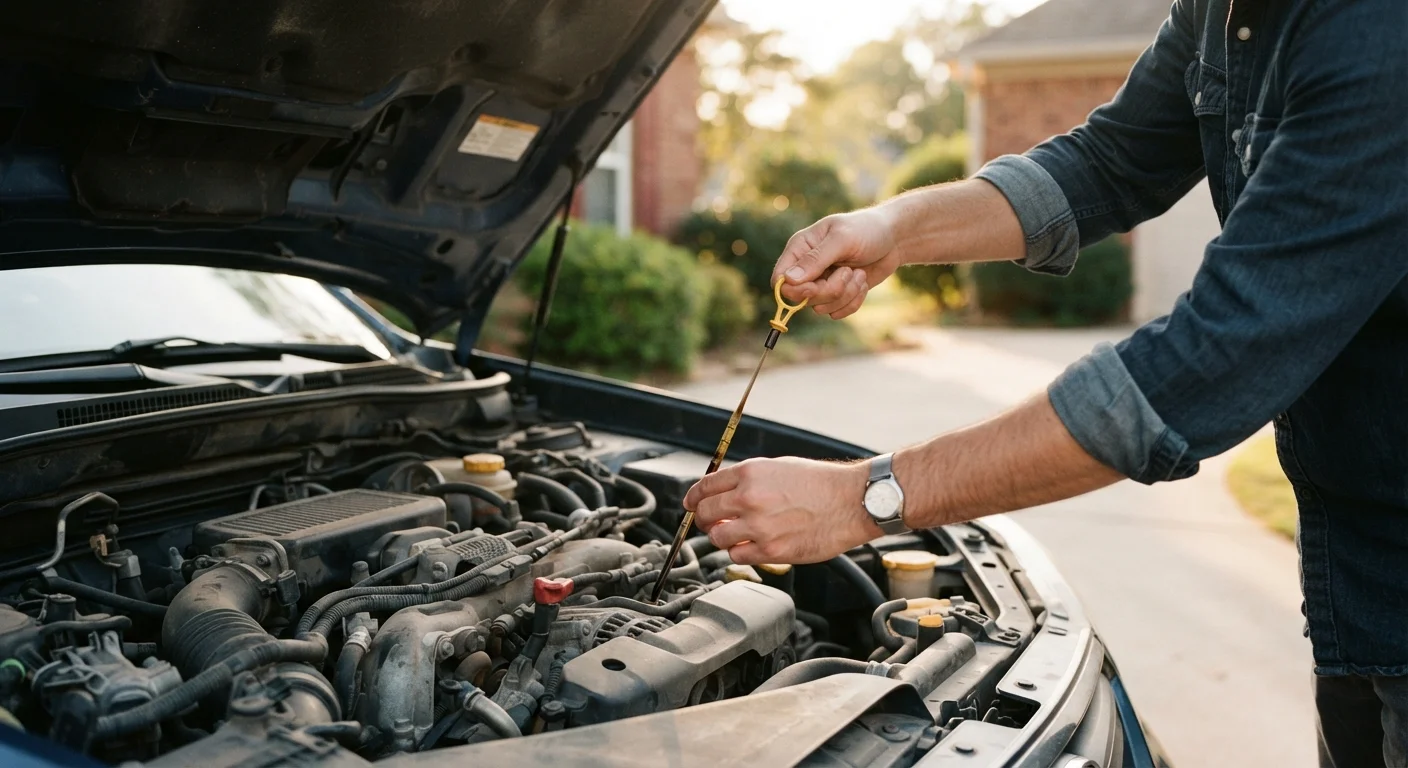
Dipstick
A long metal rod inserted into the engine oil reservoir. You pull it out, wipe it clean, reinsert it, and pull it out again to read the oil level and condition.
Viscosity
How thick or thin a fluid is. For motor oil, the viscosity rating (like 5W-30) tells you how the oil flows at different temperatures - a spec your owner's manual will specify.
Tread depth
The measurement of the grooves in a tire's surface. Adequate tread depth is critical for maintaining grip, especially on wet roads.
Diagnostic trouble code (DTC)
An error code stored by your car's onboard computer when it detects a problem. Mechanics (and some auto parts stores) use a scanner to read these codes and identify issues.
Coolant
A liquid mixture (usually water and antifreeze) that circulates through your engine to regulate temperature and prevent overheating or freezing.
Valve stem
The small metal or rubber tube sticking out of each wheel where you attach a pump or pressure gauge to inflate or check your tire.
Fluids: What to Check and How Often
Your car relies on several fluids to keep its systems running safely. Checking them takes less than ten minutes and requires nothing more than opening the hood and reading a dipstick or reservoir level. Here are the five fluids every new owner should monitor:
- Engine oil: The most critical fluid. Pull the dipstick, wipe it clean, reinsert it fully, then pull it again. The oil level should fall between the two marks. The color should be amber to dark brown - not milky or gritty.
- Coolant (antifreeze): Check the plastic reservoir near the radiator. The level should sit between the MIN and MAX lines when the engine is cold. Never open the radiator cap on a hot engine.
- Brake fluid: Located in a small reservoir near the firewall. It should be within the marked range. A significant drop may indicate a leak or worn brake pads and warrants a mechanic's attention.
- Power steering fluid: Many newer vehicles use electric power steering and have no fluid reservoir - check your manual. On vehicles that do have it, the reservoir is usually near the engine and has MIN/MAX markings.
- Windshield washer fluid: The easiest to refill. Use a product rated for your climate - in winter, a freeze-resistant formula matters.
For oil type specifics, understanding the difference between synthetic and conventional motor oil can help you make the right call at your next oil change.
Check Fluids When the Engine Is Cold
For the most accurate readings, check engine oil and coolant before driving or at least 30 minutes after the engine has been running. Hot fluids expand and can give misleading level readings - and opening the coolant system while hot can cause serious burns.
Tires, Brakes, and Lights: Your Safety Checklist
Beyond fluids, three areas have the most direct bearing on your family's safety on the road: tires, brakes, and lights. Each can be assessed with a quick visual and tactile inspection.
Tires
Check tire pressure at least once a month and before any long drive. The correct pressure is printed on a sticker inside the driver's door jamb - not on the tire itself. Underinflated tires reduce fuel efficiency and increase blowout risk. For tread depth, insert a quarter into a tread groove with Washington's head pointing down. If you can see the top of his head, the tread is worn and replacement is due. For a complete pre-trip tire and safety check, bookmark the road trip readiness checklist.
Brakes
Squealing or grinding sounds when stopping, a pulsing sensation in the brake pedal, or a car that pulls to one side while braking are all signs to have brakes inspected promptly by a qualified mechanic. Do not attempt brake servicing without proper training, equipment, and safety precautions.
Exterior Lights
Walk around your vehicle periodically to confirm that headlights, taillights, brake lights, and turn signals all function. A burned-out brake light is both a safety hazard and a traffic citation waiting to happen. Most bulb replacements are straightforward; your owner's manual will show you how.
Reading Warning Lights Without Panic
Dashboard warning lights are your car's way of communicating - but without context, they can feel alarming. Understanding what they mean helps you respond appropriately rather than either ignoring them or pulling off the highway unnecessarily.
Most warning lights follow a color system:
- Red lights indicate urgent conditions. Oil pressure, engine temperature, and brake system warnings in red mean stop driving safely as soon as possible and seek professional assistance.
- Yellow or amber lights signal conditions that need attention soon but allow you to continue driving cautiously. The check engine light is the most common example - it can indicate anything from a loose gas cap to a sensor issue.
- Green or blue lights are informational: high beams on, turn signal active, and similar statuses.
When a check engine light appears, avoid ignoring it for weeks. Many auto parts retailers can read the diagnostic trouble code (a stored error code from the car's computer) for free, which gives you and your mechanic a starting point. Your owner's manual contains a full guide to every warning symbol specific to your vehicle - it's worth reviewing that section before you need it.
Never Ignore a Red Warning Light
A red dashboard warning light - especially oil pressure or engine temperature - signals a condition that can cause permanent engine damage within minutes of continued driving. If a red light illuminates while driving, find a safe place to pull over, turn off the engine, and contact a qualified mechanic before driving further.
Building a Maintenance Habit That Sticks
Knowledge without a system fades quickly. The most effective approach to car maintenance isn't memorizing every interval - it's building a simple, repeatable routine.
Start with a monthly five-minute check: fluid levels, tire pressure, and a walk-around for lights and obvious damage. Tie this check to something you already do, like the first Sunday of the month or right after you fill up with gas. Consistency matters more than perfection.
For mileage-based services - oil changes, tire rotations, air filter replacements - write down your odometer reading after each service so you know exactly when the next one is due. Many mechanics provide reminder stickers for oil changes, but don't rely solely on those. Decoding your full maintenance schedule helps you plan these intervals in advance rather than scrambling when something's overdue.
Keeping a simple log - even a notes app on your phone - of what was done and when creates a useful service history, which also adds value if you ever sell the vehicle. For a broader look at what car ownership costs over time, the annual car ownership cost reference provides useful benchmarks for US families. And if you're weighing which tasks to handle yourself versus when to call a professional, this guide on DIY versus shop maintenance lays out the practical distinctions clearly.
This article is for general informational purposes only. For tasks involving vehicle safety systems such as brakes, consult a qualified mechanic. Always refer to your vehicle's owner's manual for manufacturer-specific guidance.
Frequently Asked Questions
A monthly visual check of engine oil, coolant, and windshield washer fluid is a reasonable baseline for most drivers. Brake and transmission fluid levels change more slowly and can be checked every few months. Always consult your owner's manual for manufacturer-specific guidance.
Red warning lights - including the engine oil pressure, brake system, and engine temperature lights - signal conditions that can cause immediate damage and should prompt you to stop driving safely and seek professional help. Yellow or amber lights indicate issues that need attention soon but are generally not emergencies.
Yes. A basic tire pressure gauge costs only a few dollars and is easy to use. Remove the valve cap from each tire, press the gauge firmly onto the valve stem, and read the result. Compare it to the recommended pressure listed on the sticker inside your driver's door jamb - not the number on the tire sidewall.
Tasks like checking fluid levels, replacing wiper blades, and monitoring tire pressure are straightforward for most owners. Work involving brakes, suspension, electrical systems, or anything requiring the vehicle to be raised safely on a lift should generally be handled by a qualified mechanic.
Your owner's manual specifies the correct oil viscosity (such as 5W-30) and whether synthetic or conventional oil is recommended. Using the wrong type can affect engine performance and potentially void warranty coverage, so it's worth looking this up before your next oil change.
Set a recurring calendar reminder tied to a meaningful milestone - the first of each month, for instance, for fluid checks. For mileage-based tasks like oil changes, note the current odometer reading when service is done so you know exactly when the next one is due.
The content provided on our blog site traverses numerous categories, offering readers valuable and practical information. Readers can use the editorial team’s research and data to gain more insights into their topics of interest. However, they are requested not to treat the articles as conclusive. The website team cannot be held responsible for differences in data or inaccuracies found across other platforms. Please also note that the site might also miss out on various schemes and offers available that the readers may find more beneficial than the ones we cover.