

Start here
What Situational Awareness Actually Means for Drivers
Build the foundation
The Three Layers of Road Awareness
Practice it
Habits That Build Stronger Awareness
Avoid the traps
What Breaks Situational Awareness
Apply it
Applying These Skills in Challenging Conditions
What Situational Awareness Actually Means for Drivers
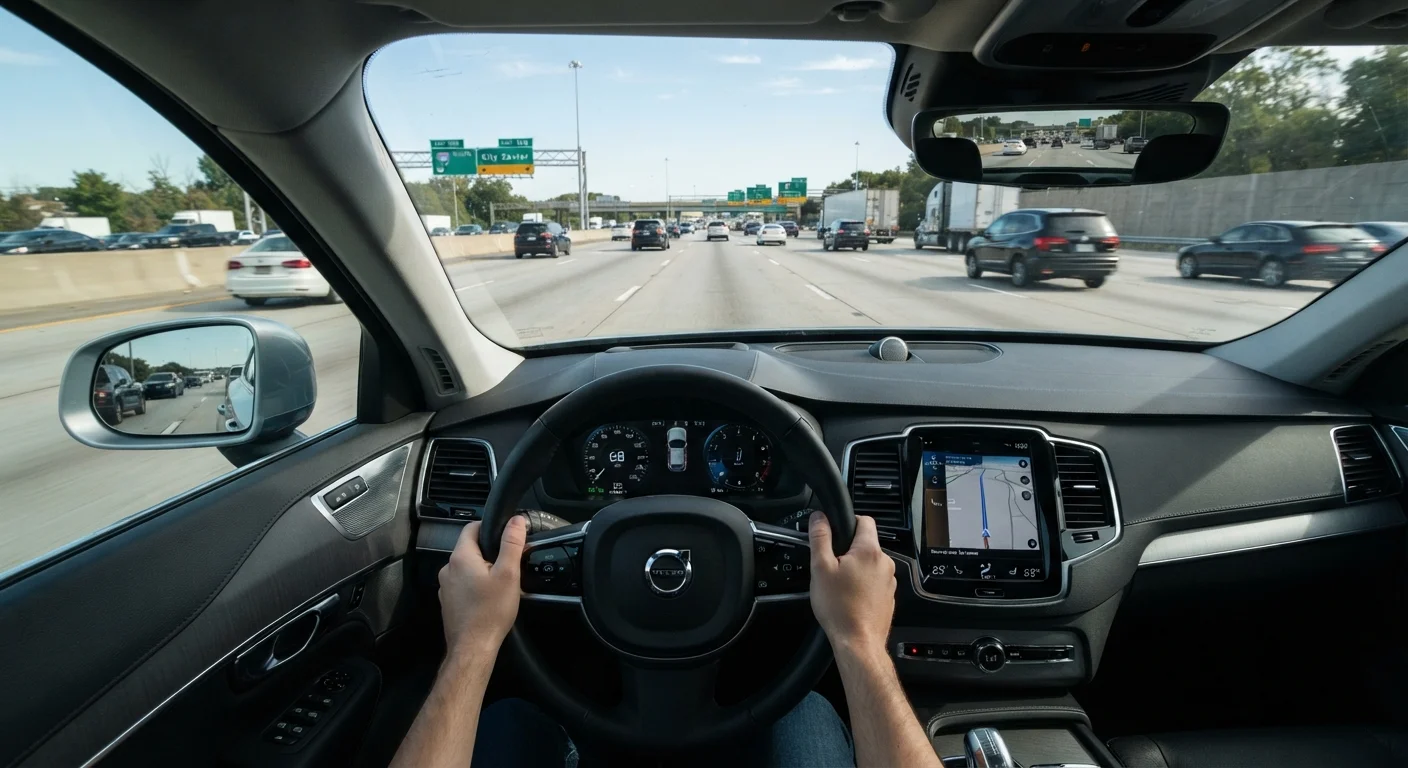
Situational awareness is the ability to perceive what is happening around you, understand what it means, and anticipate what is likely to happen next. Behind the wheel, that translates to a continuous mental picture of traffic flow, road conditions, pedestrians, and developing hazards - updated in real time as you drive.
The concept originated in aviation safety research, but it applies just as powerfully to everyday driving. Most collisions are not caused by mechanical failure or unforeseeable events; they stem from a driver who missed a signal that was already there. Situational awareness is the skill that closes that gap.
For a beginner, it can help to think of it in three questions you're always asking: What do I see? What does it mean? What might happen next? Answering all three - not just the first - is what separates reactive driving from truly safe driving.
Situational awareness
The ongoing process of observing your environment, understanding what's happening, and anticipating what is likely to happen next - applied here to driving.
Following distance
The gap of space - measured in time or distance - that you maintain between your vehicle and the one ahead, giving you room to react to sudden stops.
Blind spot
An area around your vehicle that your mirrors do not fully capture, typically alongside the rear quarters of the car. Head checks help confirm these areas are clear.
Scanning
The deliberate habit of moving your eyes systematically across the road environment - mirrors, ahead, adjacent lanes - rather than fixating on one spot.
Tunnel vision
A state of narrowed attention where a driver focuses on only one point or area, missing hazards developing in the periphery or at greater distance.
The Three Layers of Road Awareness
Experienced drivers naturally operate across three zones of attention simultaneously:
- Immediate zone - the space directly around your vehicle, including the car ahead and your side mirrors. This is where most new drivers focus exclusively, which limits their response time.
- Mid-range zone - roughly 4-8 seconds of travel time ahead. Scanning here lets you spot slowing traffic, merging vehicles, or lane obstructions before they become urgent.
- Far-ahead zone - on highways, this extends 12-15 seconds or more ahead. Noticing brake lights far in the distance, highway on-ramps feeding in traffic, or road signs early gives you the most time to plan your response.
Balancing attention across all three zones - rather than fixating on any one - is the foundation of proactive driving. It's also why building these scanning habits early is so valuable for new drivers.
Habits That Build Stronger Awareness
Situational awareness is not passive - it requires deliberate habits practiced consistently until they become second nature.
- Mirror cycling: Check your rearview and side mirrors every 5-8 seconds. This keeps your mental picture of surrounding traffic current without requiring you to look away from the road for long.
- Head checks before lane changes: Mirrors have blind spots. A quick shoulder glance before any lateral movement is a non-negotiable habit, not optional.
- Maintaining following distance: Space equals time. The three-second rule - choosing a fixed point and counting three seconds from when the car ahead passes it to when you do - provides a baseline buffer. Increase it in poor conditions.
- Tracking adjacent lanes: Knowing where vehicles are beside you prevents being caught off-guard by a sudden merge.
- Reading driver behavior: Erratic speed, weaving, or prolonged signal use are early signals of a driver who may be distracted or impaired. Give them space.
Practice the 5-8 Second Mirror Cycle
Set a mental rhythm to glance at your mirrors every 5-8 seconds. It sounds frequent, but each glance is brief - a quick sweep, not a stare. Drivers who cycle their mirrors consistently maintain a far more accurate picture of surrounding traffic than those who check only when they feel the need.
What Breaks Situational Awareness
Understanding the threats to awareness is just as important as building the skill itself.
Distraction is the most significant modern hazard. A phone glance lasting just two seconds at 55 mph means traveling approximately 160 feet without meaningful attention on the road. Even hands-free calls reduce cognitive bandwidth available for environmental scanning.
Fatigue degrades perception and reaction time in ways that feel subtle from the inside. Drowsy drivers often don't recognize how impaired their awareness has become until after an incident.
Tunnel vision on familiar routes is a quieter risk. Driving the same road daily creates a false sense that nothing unexpected will occur, reducing active scanning without the driver noticing.
It's also worth noting that aggressive driving behaviors like tailgating and rapid lane changes actively destroy awareness - you're reacting rather than anticipating, and you've eliminated the buffer space that gives you decision time.
Phone Use Impairs More Than Reaction Time
Research consistently shows that cognitive distraction from mobile phone use persists even after the phone is put down. Hands-free use reduces manual distraction but does not eliminate mental distraction. The safest approach is to put the phone out of reach and out of mind before the car moves.
Applying These Skills in Challenging Conditions
Good situational awareness is tested most when conditions deteriorate. Rain, fog, construction zones, night driving, and heavy traffic each compress the time and visibility you have to perceive and respond to hazards.
In these situations, the core response is consistent: increase your awareness effort and reduce your speed. Slowing down expands the time window between perceiving a hazard and needing to act on it. Increasing following distance compounds that benefit.
Construction zones deserve particular attention - lane markings may be absent or confusing, speeds drop suddenly, and workers may be present near live traffic. Active scanning at lower speeds is essential.
For a deeper look at how weather changes your driving calculus, see our guide on rainy weather driving habits. And if you're thinking about how these skills apply across different life stages, road safety risks shift as drivers age in ways worth understanding.
Ultimately, situational awareness is not a technique you apply occasionally - it's the mindset you bring to every trip, regardless of distance or familiarity.
Frequently Asked Questions
Situational awareness in driving means continuously gathering and processing information about your surroundings - other vehicles, road conditions, pedestrians, and potential hazards - so you can anticipate problems before they develop. It goes beyond simply watching the car ahead; it's an active, ongoing mental picture of everything around you.
Practice routine mirror checks every 5-8 seconds, scan at least 12-15 seconds ahead on highways, and actively track vehicles in adjacent lanes. Eliminating in-car distractions and adjusting your following distance give you more time and space to process what you're seeing.
Distraction - especially mobile phone use - is the leading threat. Fatigue significantly degrades your ability to notice and respond to hazards. Overconfidence from routine routes can also cause drivers to stop actively scanning because the road feels familiar.
Yes, though new drivers face steeper challenges because they spend more mental effort on basic vehicle control, leaving less capacity for environmental scanning. Experienced drivers can develop complacency, which is its own hazard. Both groups benefit from deliberate awareness practices.
A greater following distance gives you more time to perceive a hazard and decide how to respond - two critical steps before you even act. The three-second rule (at minimum) is a widely recommended baseline, with longer gaps recommended at highway speeds or in poor conditions.
Absolutely. Rain, fog, and low light reduce visibility and increase stopping distances, compressing the time you have to respond. Higher awareness and lower speeds are both necessary adjustments. See our guide on <a href="/auto-essentials/safe-driving-habits/rainy-weather-driving-habits-that-make-a-real-difference">rainy weather driving habits</a> for condition-specific guidance.
The content provided on our blog site traverses numerous categories, offering readers valuable and practical information. Readers can use the editorial team’s research and data to gain more insights into their topics of interest. However, they are requested not to treat the articles as conclusive. The website team cannot be held responsible for differences in data or inaccuracies found across other platforms. Please also note that the site might also miss out on various schemes and offers available that the readers may find more beneficial than the ones we cover.