

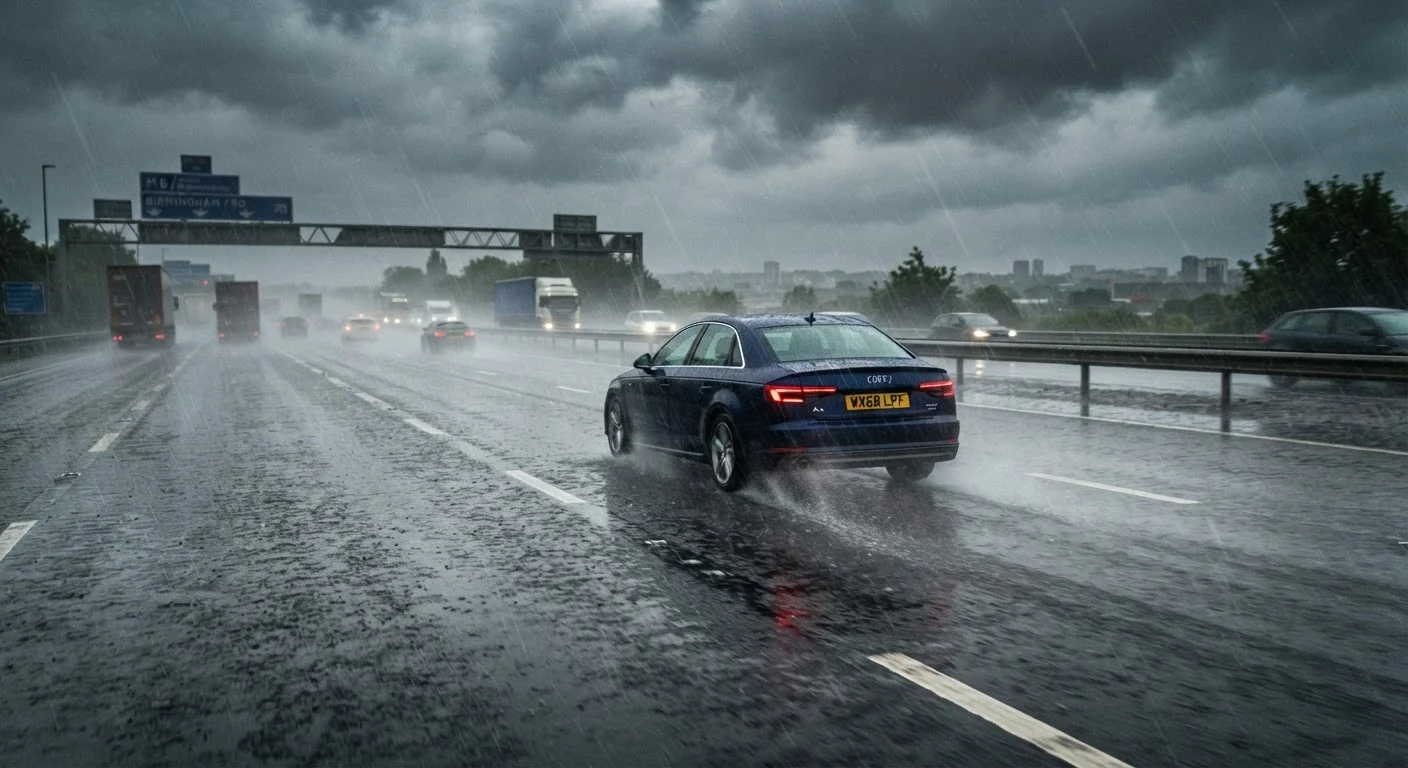
Why Rain Changes the Rules of the Road
Rain does more than make the windshield wet. It fundamentally alters the physics of driving. Water on pavement reduces the friction your tires rely on for every braking, turning, and acceleration input. The first 10 to 15 minutes of rainfall are often the most hazardous, as water mixes with oil and residue on the road surface to create a slick film before the precipitation washes it away.
Stopping distances that feel routine on a dry road can extend dramatically on wet pavement. Many drivers underestimate this shift. Posted speed limits assume ideal conditions - rain means the genuinely safe speed is often lower than the sign suggests. Adjusting your mindset before you adjust your speed is the real first step.
Increase your following distance to at least four seconds in rain
Wet pavement extends stopping distances considerably. The standard two-second rule is calibrated for dry conditions - doubling it gives your brakes enough room to work without rear-ending the vehicle ahead. This buffer also gives you time to steer around a hazard if braking alone isn't enough.
Turn on your headlights whenever your wipers are running
Headlights in rain aren't just about what you can see - they're about making your vehicle visible to other drivers, pedestrians, and cyclists. Many states legally require headlights when wipers are in use, and it's a sound habit regardless. Daytime running lights are not a substitute for full headlights in poor visibility.
Apply brakes gently and progressively, never sharply
Hard braking on wet pavement can cause wheels to lock up or trigger abrupt weight transfer, both of which reduce steering control. Even vehicles with anti-lock braking systems (ABS) benefit from steady, firm pressure rather than a sudden stomp. Smooth inputs keep the tires working efficiently.
Avoid driving through standing water of unknown depth
A few inches of moving water can cause a loss of control, and water deeper than the door sill can damage a vehicle's electrical systems or engine. Standing water can also conceal road damage, debris, or severely uneven pavement. Hydroplaning - where tires ride on a film of water rather than the road - can occur without warning.
Steer smoothly and avoid sudden lane changes
Abrupt steering inputs on wet roads can break traction far more easily than on dry pavement. Gradual steering corrections keep weight distribution stable and maintain grip. This is especially important when changing lanes, where tires briefly cross paint markings or raised lane dividers that can be extremely slippery when wet.
Check tire tread depth regularly and before extended rainy-season driving
Tire grooves are engineered to channel water away from the contact patch, maintaining grip. As tread wears down, this channeling ability decreases significantly. Tires at or below 2/32 of an inch of tread are considered legally worn, but many safety professionals suggest considering replacement at 4/32 on wet-road safety grounds. See seasonal car care guidance for tire inspection intervals.
Core Habits That Reduce Risk in Wet Conditions
The following practices are grounded in how vehicles actually behave on wet surfaces. They apply whether you're navigating a light drizzle on a suburban street or a downpour on the interstate. Building strong situational awareness before conditions deteriorate makes these habits easier to apply under pressure.
75%
Weather-related crashes occurring on wet pavement
According to the U.S. Federal Highway Administration, approximately 75% of weather-related vehicle crashes occur on wet pavement rather than snow or ice.
35 mph
Speed at which hydroplaning can begin
Tire and safety researchers generally note that hydroplaning can start at speeds as low as 35 mph when tread depth is low and standing water is present.
Quick Actions You Can Take Before Every Rainy Drive
Preparation before you even start the engine matters. Drivers who build a brief pre-drive routine are better positioned to handle sudden changes in conditions. These actions take seconds but pay off significantly when the rain intensifies or visibility drops unexpectedly. If you're also helping a new driver learn these habits, the habits worth building from day one include exactly this kind of weather-specific preparation.
This article provides general driving safety information for educational purposes. Always follow local traffic laws and consult a qualified driving instructor for personalized guidance.
The content provided on our blog site traverses numerous categories, offering readers valuable and practical information. Readers can use the editorial team’s research and data to gain more insights into their topics of interest. However, they are requested not to treat the articles as conclusive. The website team cannot be held responsible for differences in data or inaccuracies found across other platforms. Please also note that the site might also miss out on various schemes and offers available that the readers may find more beneficial than the ones we cover.