

Why Small Grocery Habits Have an Outsized Budget Impact
Groceries are unlike most household expenses - they're not a single annual bill but hundreds of small decisions made every week. That frequency is exactly what makes grocery habits either a budget anchor or a budget leak. According to USDA food plan data, a family of four can land anywhere in a wide spending range depending almost entirely on shopping patterns, not what they eat.
The families at the lower end of that range aren't eating worse food. They're making more deliberate, consistent choices at the store. Understanding where grocery money actually goes is the starting point for identifying which habits to change first.
$270-$680
Monthly grocery cost for a family of four
According to USDA food plan cost data, a family of four can spend anywhere from a thrifty $270 to a liberal $680+ per month depending on shopping patterns and food choices.
30-40%
Share of food supply wasted at consumer level
The USDA estimates that roughly one-third of the U.S. food supply is lost or wasted, with a significant portion occurring in households.
~$1,500
Estimated annual family food waste cost
Research from various food waste organizations suggests the average U.S. household throws away the equivalent of approximately $1,500 in food annually.
The Habits That Add Up - And How to Shift Them
Most grocery overspending doesn't come from a single bad decision. It comes from a handful of consistent patterns that feel normal because they're repeated so often. The mistakes below are among the most common - and the most correctable.
Shopping without a list or a loose meal plan for the week.
Why it happens: Many families treat grocery shopping as a spontaneous errand rather than a planned task, grabbing whatever looks appealing or seems useful in the moment.
Ignoring unit prices and comparing only the sticker price on packages.
Why it happens: Package sizes vary enough across brands and product lines that the lower-priced item is sometimes the more expensive one per ounce or per serving - and most shoppers never look past the front label.
Making multiple short grocery trips each week instead of one structured shop.
Why it happens: Running out of a single ingredient feels urgent, and a "quick trip" seems harmless - but every unplanned store visit introduces exposure to impulse purchases.
Consistently buying pre-cut, pre-seasoned, or single-serving convenience formats.
Why it happens: Convenience packaging solves real time problems for busy families, and the per-unit markup is rarely visible at the point of purchase.
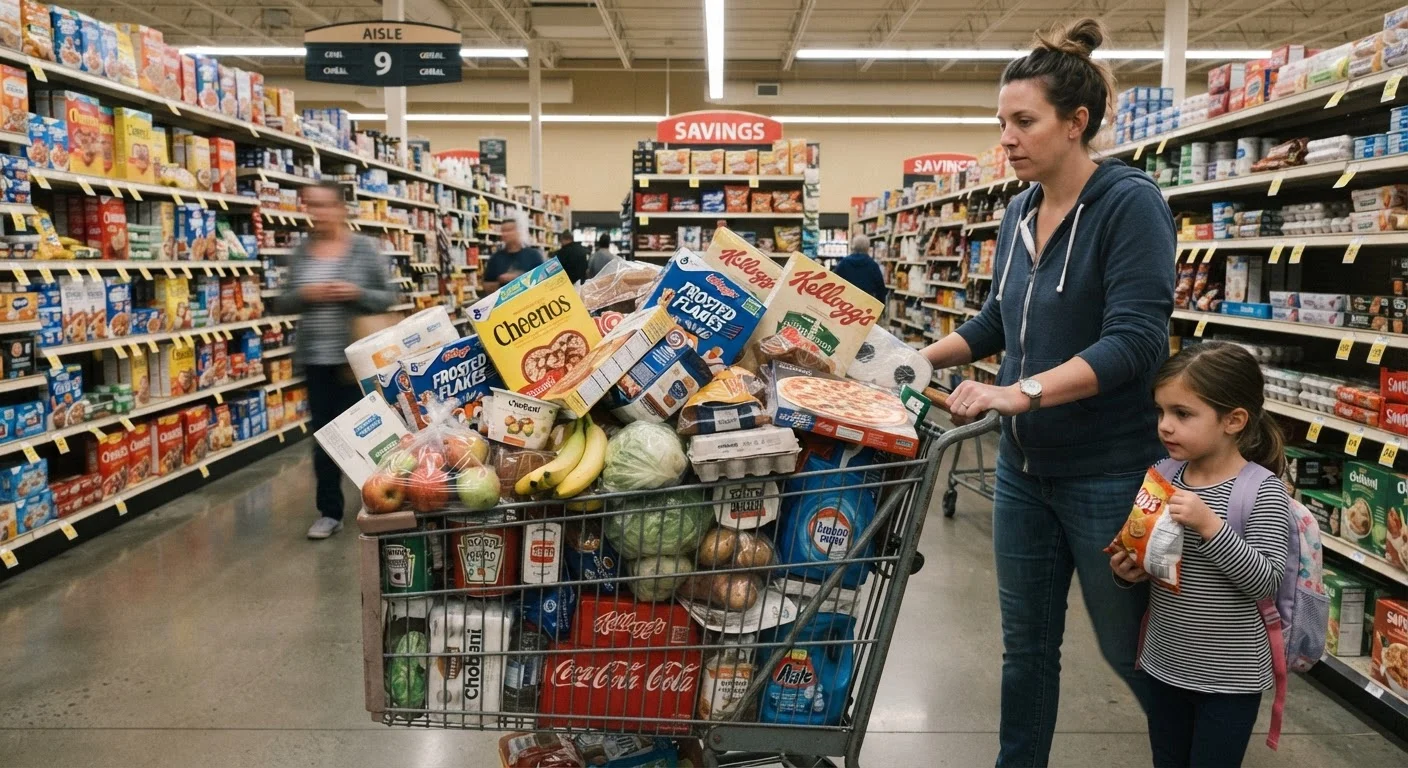
Shopping hungry or with children who haven't eaten, leading to unplanned additions.
Why it happens: Hunger and tired kids are a combination that predictably inflates grocery totals through snack additions, treat requests, and general cart-filling that departs from the list.
Never checking the weekly store circular or skipping the store's loyalty program.
Why it happens: Browsing sales takes time, and many families assume the savings aren't substantial enough to bother with.
For a broader look at routine shopping patterns that quietly cost more, the same logic applies across household categories beyond just food.
Food Waste Is a Hidden Budget Leak
The USDA estimates that American households waste roughly 30-40% of the food supply, much of it at the consumer level. For a family spending $800 a month on groceries, that could represent $240 or more discarded each month. Tracking what actually gets eaten - and buying accordingly - is one of the highest-impact budget moves available to most families.
Building a Grocery Routine That Holds
Correcting grocery habits is less about willpower and more about structure. A meal plan reduces decision fatigue. A list reduces impulse buys. A single weekly shop reduces exposure to unplanned spending. These aren't deprivation tactics - they're friction reduction for your wallet.
Families who keep well-stocked pantry staples on hand find it easier to stick to a plan because there's always a base to build meals from, which reduces the pull toward expensive convenience options mid-week.
Bulk Buying Isn't Always a Bargain
Large-format purchases only save money when the item gets fully used before it expires. Perishables bought in bulk that end up thrown away cost more than their smaller-package equivalents. Before buying in volume, honestly assess your household's actual consumption rate for that specific item.
If you want to go further, a household spending audit can surface where grocery patterns intersect with other routine costs. The goal isn't perfection - it's consistent, small improvements that compound over months and years into real savings.
This article is for general informational purposes only and does not constitute personalized financial advice. Consult a qualified financial professional for guidance specific to your household circumstances.
The content provided on our blog site traverses numerous categories, offering readers valuable and practical information. Readers can use the editorial team’s research and data to gain more insights into their topics of interest. However, they are requested not to treat the articles as conclusive. The website team cannot be held responsible for differences in data or inaccuracies found across other platforms. Please also note that the site might also miss out on various schemes and offers available that the readers may find more beneficial than the ones we cover.