

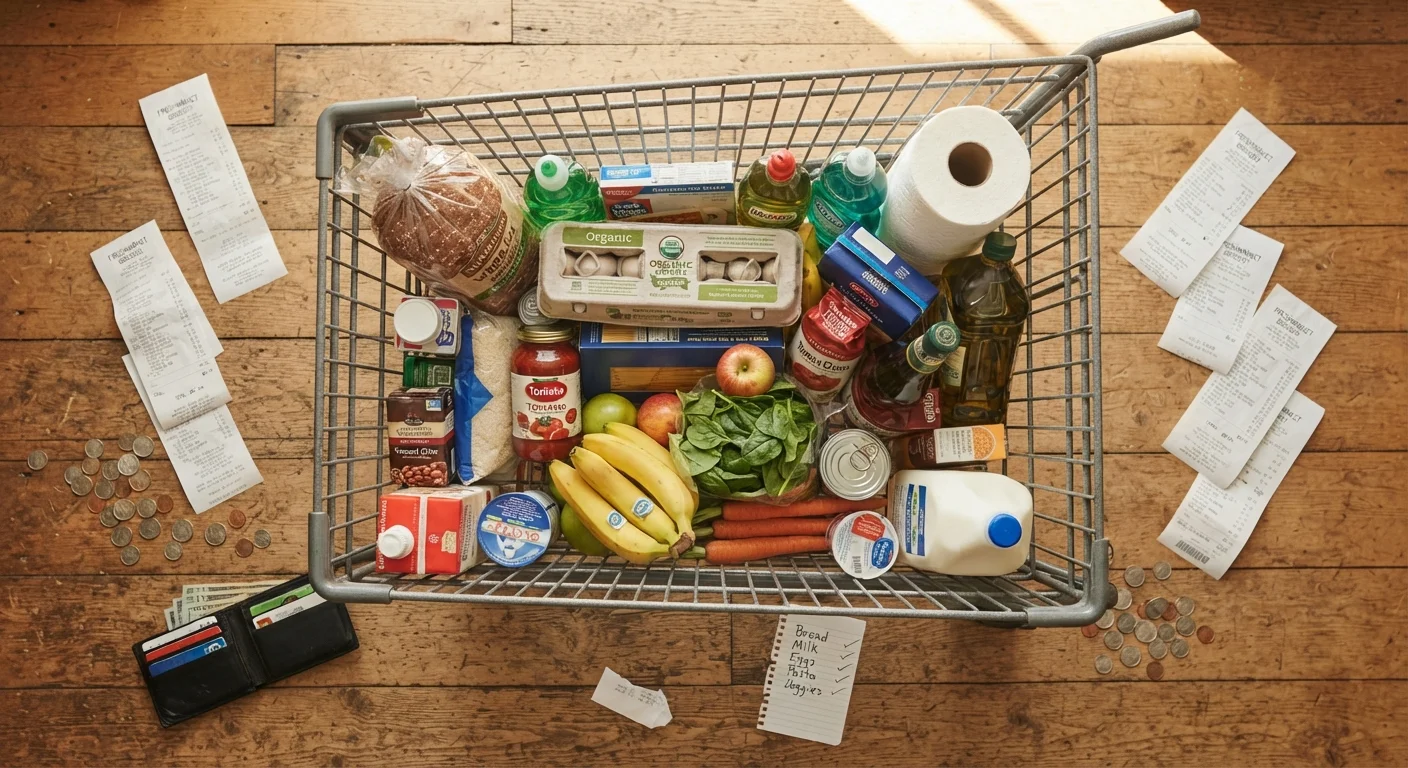
Why Routine Habits Are the Biggest Budget Leak
Most families focus budget attention on large, visible expenses - a car payment, a medical bill, a home repair. But for the majority of US households, grocery and household supply spending represents one of the largest truly flexible line items in the monthly budget. And unlike fixed costs, it shifts week to week based almost entirely on habit.
The problem is that overspending in this category rarely feels dramatic. It arrives as an extra item here, a convenience upgrade there, a discount missed at checkout. No single transaction looks alarming. Cumulatively, though, these patterns can represent hundreds of dollars annually - money that leaves the household without a deliberate decision being made.
For a fuller picture of where grocery dollars tend to go inside a typical family budget, see where the money actually goes. The patterns below are among the most common - and the most correctable.
Small Habits, Real Dollar Amounts
Consumer research consistently finds that unplanned grocery trips cost meaningfully more per visit than planned ones. Across a full year, the cumulative difference for a typical US family can reach several hundred dollars - without any change in what they actually eat or use. These are not edge-case scenarios; they reflect ordinary weekly shopping patterns.
The Most Common Overspending Patterns - and How to Shift Them
These mistakes aren't signs of carelessness. They're the predictable result of shopping environments designed to encourage spending, combined with habits that most people never think to examine. Understanding why each pattern happens is what makes it possible to interrupt it.
Shopping without a written list and entering the store with only a vague mental plan.
Why it happens: Most shoppers believe they know what they need well enough to remember it. In practice, store layouts and merchandising are designed to surface unplanned items at every turn.
Comparing package prices instead of unit prices, leading to misjudged value across sizes.
Why it happens: Package prices are prominently displayed while unit prices appear in small print on shelf tags, making them easy to overlook under normal shopping conditions.
Ignoring store loyalty programs and app-based discounts available at no cost.
Why it happens: Signing up feels like an added hassle, or shoppers assume the savings aren't meaningful enough to bother with.
Defaulting to convenience formats: pre-cut produce, single-serve packaging, and pre-portioned items.
Why it happens: Convenience formats save time and effort, which makes the price premium feel justified in the moment - even when the underlying product is identical.
Buying in bulk without tracking whether the household actually consumes that volume.
Why it happens: Bulk pricing looks compelling at the point of purchase, and consumers tend to underestimate how quickly perishables spoil or how slowly non-perishables actually get used.
Shopping when hungry, which consistently leads to a larger and less planned basket.
Why it happens: Hunger heightens attention to food cues and makes high-calorie or indulgent items more appealing in the moment, weakening planned-purchase discipline.
Bulk Buying Can Backfire
Warehouse-club quantities save money only when the full amount gets used. Perishables bought in oversized portions frequently get thrown out, turning a perceived discount into an actual loss. Before buying large-format items, honestly assess how much your household uses within the product's shelf life.
Beyond these structural habits, impulse spending plays a consistent supporting role. If you find that unplanned additions frequently appear in your cart, friction tactics like the 24-hour rule can help create a useful pause between the urge and the purchase.
Tracking What You Actually Spend
One reason these habits persist is that most households don't have a clear view of what routine shopping actually costs month to month. Receipts disappear, card statements blur together, and the true pattern only becomes visible when someone looks deliberately.
~$1,500
Estimated annual US household food waste in dollars
The USDA has estimated that US families discard roughly one-third of food purchased, representing significant lost spending on items never consumed.
~$60+
Average additional spend per unplanned shopping trip
Consumer behavior studies have repeatedly found that shoppers without a list or plan spend considerably more per trip than those who arrive with a specific plan.
A structured spending audit - reviewing actual grocery and household receipts or card transactions monthly - makes the patterns visible. A spending audit doesn't require complicated tools; categorizing expenses once a month by hand is enough to reveal where adjustments would have the most impact.
Similarly, grocery pricing follows predictable promotional cycles that reward shoppers who time purchases with some intentionality. Understanding those seasonal patterns means fewer missed opportunities to stock common items at lower prices - without chasing deals or changing what you buy.
For a more complete framework that applies these principles across both grocery and household supply categories, the Everyday Savings guide covers the methods families use to build durable, consistent savings over time.
This article is for general informational purposes only and does not constitute financial advice. For guidance tailored to your specific financial situation, consider consulting a qualified financial professional.
The content provided on our blog site traverses numerous categories, offering readers valuable and practical information. Readers can use the editorial team’s research and data to gain more insights into their topics of interest. However, they are requested not to treat the articles as conclusive. The website team cannot be held responsible for differences in data or inaccuracies found across other platforms. Please also note that the site might also miss out on various schemes and offers available that the readers may find more beneficial than the ones we cover.