

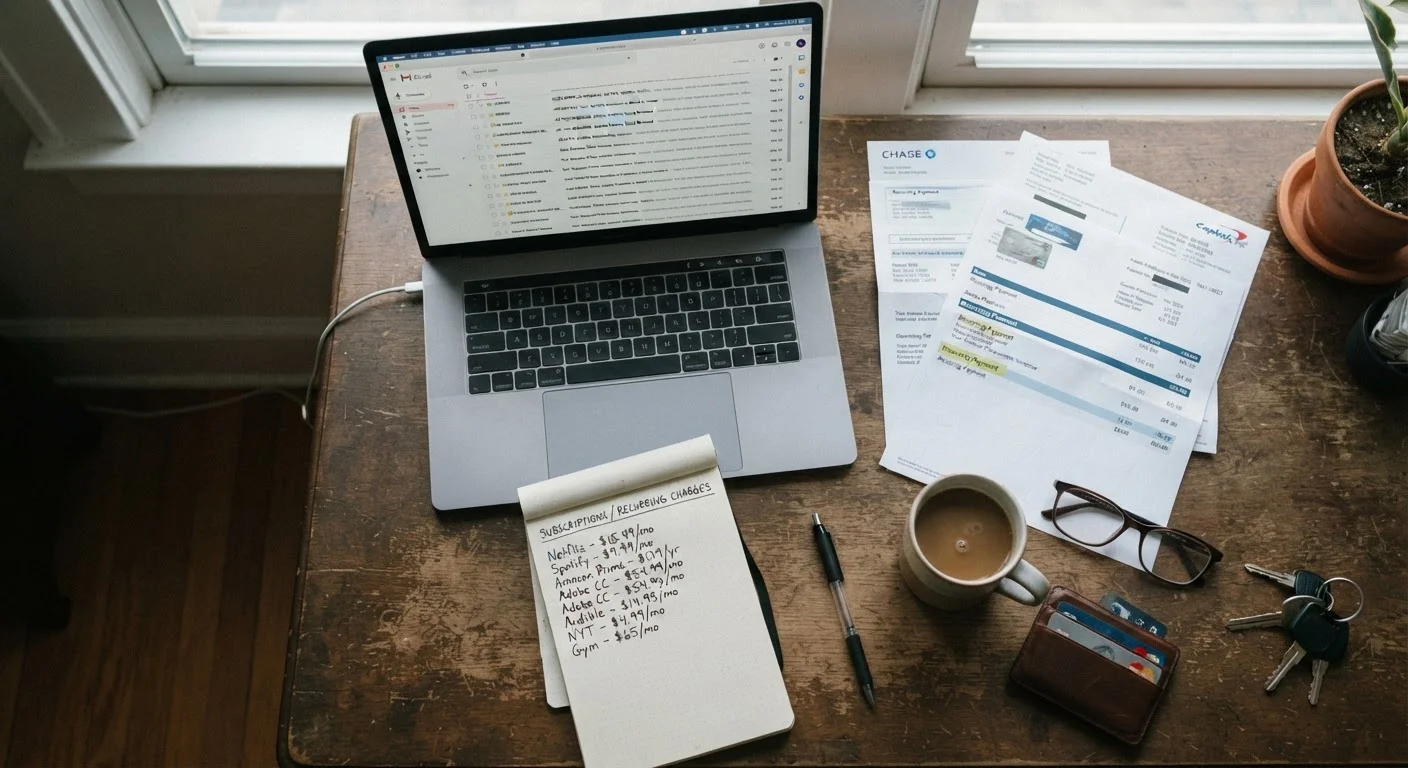
Why Subscription Creep Goes Undetected
The core reason subscription creep is so effective at draining household budgets is structural: automatic billing removes the decision point. When you pay for something manually - handing over cash, entering card details - you experience what behavioral economists call "transaction pain." That friction prompts a natural cost-benefit check. Subscriptions eliminate that check entirely.
Each charge arrives quietly, processed in the background, rarely surfacing unless you scrutinize a statement. And because each individual service is priced to feel affordable - $5.99 here, $12.99 there - no single line item ever triggers concern. The problem is cumulative, and cumulative problems are the ones budgets are worst at catching.
This dynamic is compounded by free trials that convert to paid plans, price increases rolled out with minimal notice, and annual renewals that arrive just once a year and are easy to forget. The services are designed to minimize cancellation - not out of malice, but because frictionless retention is a standard business model in the subscription economy.
Free Trials Deserve Immediate Action
When accepting any free trial, treat the billing start date as the most important piece of information - not the trial length. Set a reminder two days before billing begins and make a deliberate keep-or-cancel decision at that point. Defaulting through a trial end date is one of the most common entry points for subscription creep.
For households already working through a broader spending review, our household spending audit checklist can help surface recurring costs alongside other routine expenses worth examining.
How to Measure What You're Actually Spending
The most important step is the least glamorous: pull two or three months of statements from every bank account and credit card your household uses, and flag every charge that appears more than once. Don't filter by size - include the $1.99 cloud backup and the $79 annual membership alike.
Then build a simple list with four columns: service name, monthly cost (convert annual fees by dividing by 12), last time you used it, and whether it's essential, nice-to-have, or forgotten. That classification does the analytical work for you. Most households find at least two or three "forgotten" services in the first pass.
~40%
Typical underestimate of subscription spending
Multiple consumer finance surveys have found that households consistently underestimate their total monthly subscription costs by around 40% or more when asked to recall them from memory.
$300-$600
Potential annual savings from a basic subscription audit
Canceling three to five unused recurring services - a realistic outcome for most households - commonly frees up this range annually, based on typical subscription pricing patterns.
4 in 10
Consumers unaware of all active subscriptions
Industry research consistently shows a significant share of consumers cannot accurately list all active recurring charges without reviewing their statements first.
Don't overlook phone app stores. Both iOS and Android have built-in subscription management screens that show every active in-app subscription - a category that often contains the most surprises, particularly for households with children who may have started free trials on gaming or education apps.
This kind of review pairs naturally with broader family budget thinking. If your household budget needs adjusting as circumstances change, the guide to budgeting with kids addresses how to revisit recurring costs at each stage of family growth.
The Decision Framework: What Stays, What Goes
Once you have your list, the goal isn't to cancel everything - it's to make conscious decisions. A service you use weekly and genuinely value is worth keeping. The question is whether you're keeping subscriptions by choice or by default.
A useful test: if the service disappeared tomorrow without warning, would you notice within 48 hours? If the honest answer is "probably not," that's a strong signal it's not earning its spot in the budget. Apply this test to every item on your list before deciding.
For services in the "nice-to-have" column, consider whether overlapping alternatives exist. Many households carry two or three streaming platforms when regular viewing habits concentrate on one. Rotating services - subscribing to one, finishing what you wanted to watch, then switching - captures most of the value at a fraction of the ongoing cost.
Subscription creep also shares a pattern with other forms of unconscious spending. The same habits that inflate grocery bills - defaulting to convenience, avoiding the friction of a decision - show up in recurring charges too. Our article on grocery habits that quietly undermine food budgets covers that parallel in more detail.
Keeping Creep From Coming Back
A one-time audit solves today's problem. Preventing recurrence requires a light but consistent system. The most effective approaches tend to be simple: designate a single credit card or account for all recurring charges, so new subscriptions can't hide across multiple statements. Review that account once per quarter - blocking thirty minutes on a calendar keeps this from becoming optional.
When signing up for any free trial, set a reminder two days before the trial ends with a single decision prompt: keep or cancel? That reminder converts a default "forget and get billed" outcome into an active choice.
Subscription creep is ultimately a symptom of defaulting - spending that happens because nobody stopped it rather than because someone chose it. The fix isn't dramatic; it's building the habit of small, consistent reviews. Over a year, canceling three or four unused services can recover $300-$600 in household spending, with no reduction in anything you actually use. That's exactly the kind of low-effort, high-return adjustment that compounds across a family budget over time.
For more patterns worth examining in routine household spending, see our overview of common habits that quietly cost more and the broader everyday savings strategies resource hub.
Frequently Asked Questions
Any recurring automatic charge counts - streaming platforms, music apps, cloud storage, gym memberships, software licenses, meal kit deliveries, news paywalls, and even annual renewals. If your card is billed on a schedule without you actively re-purchasing, it qualifies.
Research from financial services firms has consistently found that consumers underestimate their subscription spending by 40% or more. Some studies suggest average US households carry $200-$300 in monthly recurring charges, though this varies widely by household size and lifestyle.
Start by reviewing two to three months of bank and credit card statements, flagging any charge that appears more than once. Also check your email inbox for billing receipts and your phone's app store for active in-app subscriptions, which are easy to overlook.
Yes, if you don't use it. A $3/month charge you've forgotten about costs $36 per year - and subscription creep is built from exactly these small amounts stacking up. The dollar amount per service is less important than whether you're getting genuine value from it.
A quarterly review - roughly every three months - is a practical frequency for most families. It catches new sign-ups before they become invisible, and aligns well with seasonal changes in usage (e.g., a fitness app used in January but abandoned by April).
Use a dedicated card or account for subscriptions so all recurring charges are visible in one place. Set a calendar reminder to review that account quarterly. When signing up for any free trial, note the billing start date immediately and decide in advance whether you intend to keep it.
The content provided on our blog site traverses numerous categories, offering readers valuable and practical information. Readers can use the editorial team’s research and data to gain more insights into their topics of interest. However, they are requested not to treat the articles as conclusive. The website team cannot be held responsible for differences in data or inaccuracies found across other platforms. Please also note that the site might also miss out on various schemes and offers available that the readers may find more beneficial than the ones we cover.