

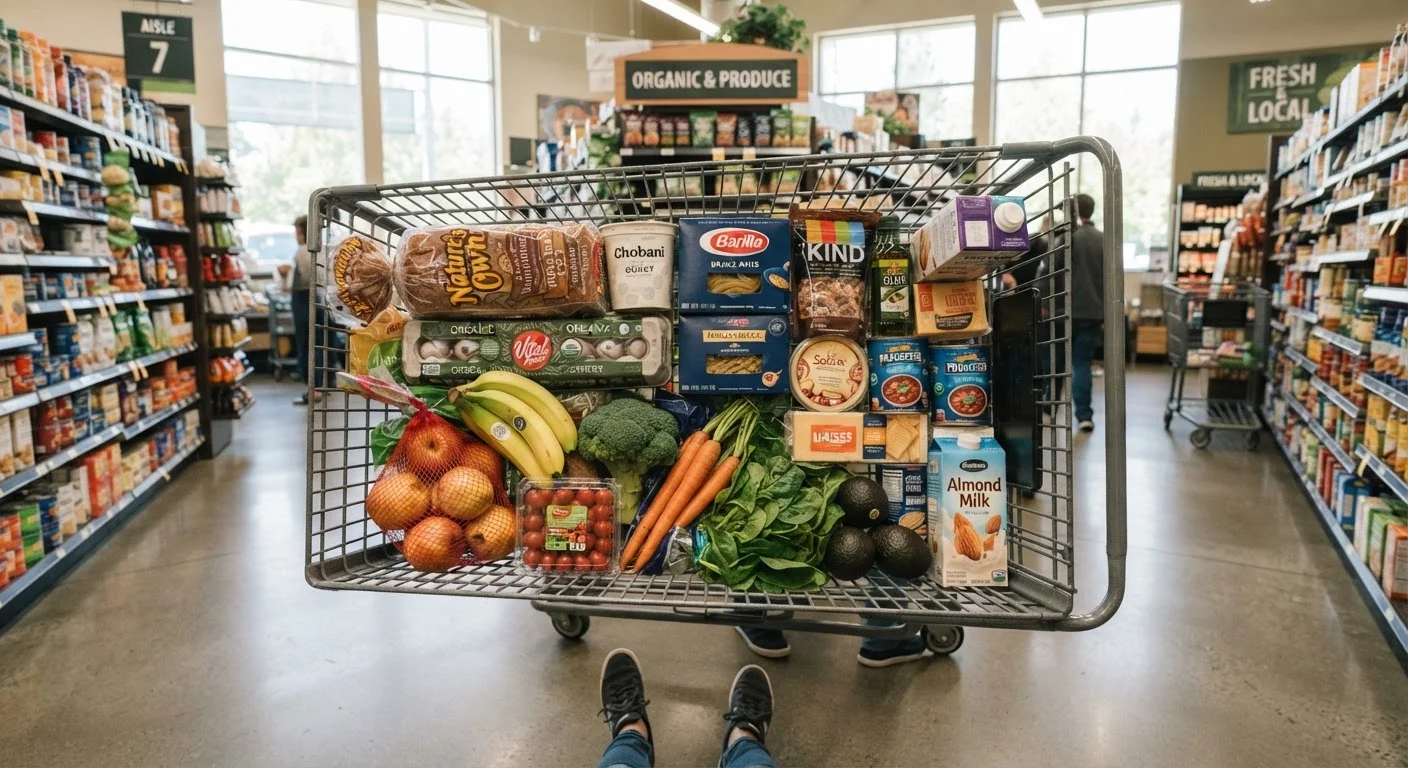
Why Grocery Habits Matter More Than Grocery Prices
For most US families, groceries represent one of the largest flexible expenses in the household budget - often sitting just behind housing and transportation. Unlike a fixed mortgage payment, food spending shifts week to week, and those shifts are heavily driven by habit rather than intention. Small, repeated patterns - a few unplanned items here, unused produce there - can add up to hundreds of dollars annually without any single purchase feeling excessive.
Understanding which habits quietly inflate the bill is the first step toward changing them. The patterns below are among the most common, and none of them require dramatic lifestyle changes to correct. For a broader look at where grocery money actually flows, see where grocery spending typically lands in a family budget.
Shopping without a list or a meal plan for the week.
Why it happens: Many shoppers head to the store with a general sense of what's needed, trusting memory and instinct to fill the cart. This feels faster than planning, but it reliably leads to both forgotten essentials and unintended extras.
Buying in bulk for items that won't realistically be used in time.
Why it happens: Bulk packaging appears to offer clear savings per unit, which makes it psychologically appealing regardless of actual household consumption rates.
Shopping while hungry, which amplifies impulse purchasing.
Why it happens: Research consistently shows that hunger increases desire for higher-calorie, higher-cost items and weakens resistance to unplanned additions. It's a well-documented cognitive bias, not a personal failing.
Defaulting to pre-cut, pre-washed, or single-serve convenience packaging.
Why it happens: These products genuinely save preparation time, and the cost difference per item can feel minor. But the premium across a weekly shop compounds quickly.
Failing to account for what's already in the pantry and refrigerator.
Why it happens: Without a quick pre-shop inventory check, it's easy to rebuy items already on hand, particularly pantry staples like canned goods, condiments, and grains that get buried over time.
Treating store sales as a reason to buy rather than a coincidence with actual need.
Why it happens: Promotional pricing creates a sense of opportunity that can override rational need assessment. Buying something "because it was on sale" is one of the most common justifications for off-list spending.
The Habits Behind the Overages
Most grocery overspending isn't driven by extravagance - it's driven by routines that feel efficient but aren't. Recognising these patterns gives families concrete places to adjust rather than vague instructions to "spend less."
Sales and Bulk Deals Can Backfire
Promotional pricing and large-format packaging create a strong impression of savings, but only when the purchase aligns with actual consumption. Buying more than your household uses - especially for perishables - turns a perceived deal into a guaranteed loss. Before stocking up, consider whether the item will realistically be used within its shelf life.
If food waste is a recurring problem, tracking what gets discarded for two to three weeks is a revealing exercise. It often shows that over-purchasing fresh items, not poor meal quality, is the core issue. Pairing this insight with meal planning as a regular financial habit turns those observations into lasting savings.
For families looking to get more mileage from each shopping trip, pantry staples that stretch a grocery budget further outlines which shelf-stable ingredients consistently lower per-meal costs. And if grocery habits are just one piece of a larger spending picture, a household spending audit can surface where else routine purchases are quietly adding up.
~$1,500
Average annual household food waste cost
The USDA estimates that US households waste roughly 30-40% of the food supply; consumer advocacy researchers have translated this into an estimated annual household loss in the range of $1,500.
Up to 40%
Premium on pre-cut produce vs. whole
Consumer Reports and grocery industry analyses have noted that pre-cut or pre-washed produce often carries a price premium of 20-40% compared with equivalent whole versions.
The content provided on our blog site traverses numerous categories, offering readers valuable and practical information. Readers can use the editorial team’s research and data to gain more insights into their topics of interest. However, they are requested not to treat the articles as conclusive. The website team cannot be held responsible for differences in data or inaccuracies found across other platforms. Please also note that the site might also miss out on various schemes and offers available that the readers may find more beneficial than the ones we cover.