

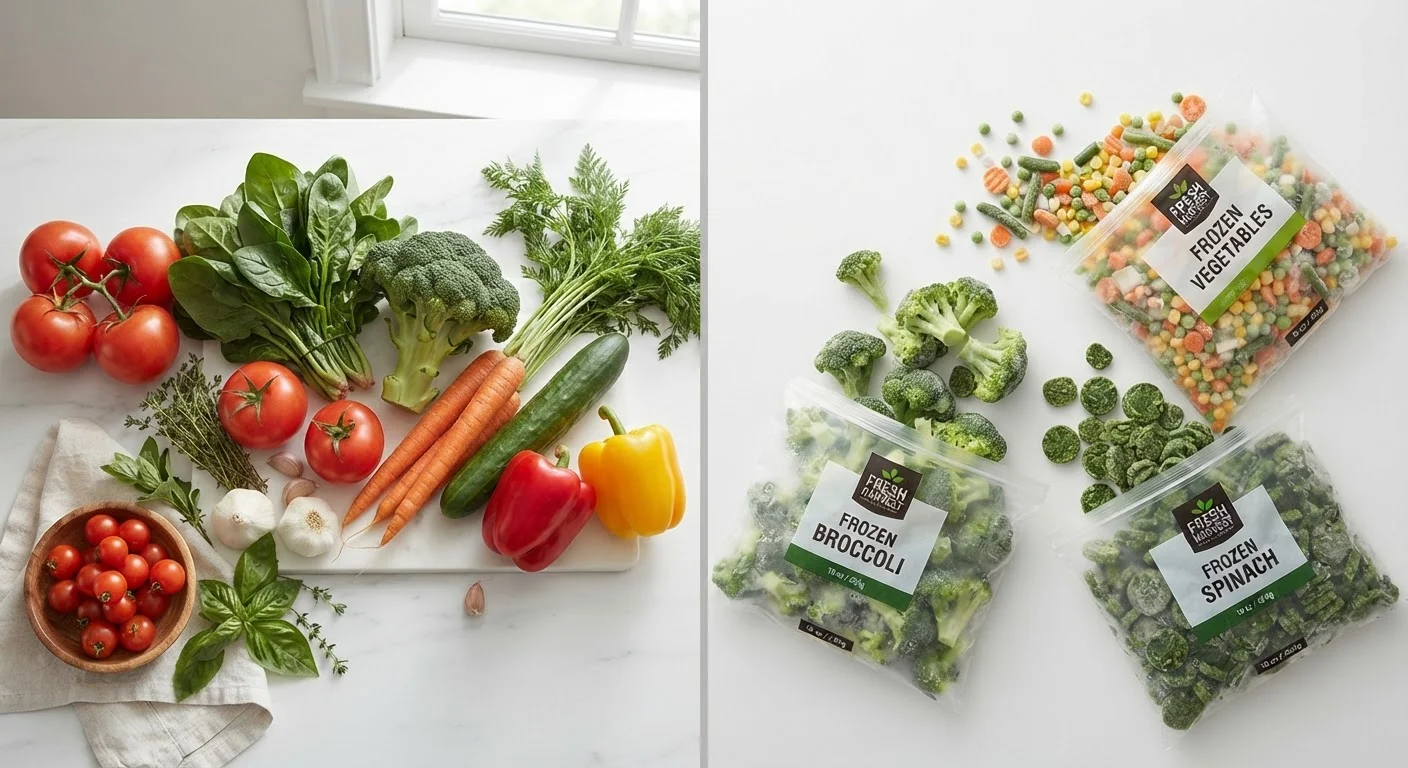
Option A
Fresh Produce
The sensory-rich, seasonal choice.
Best for: Families who shop frequently, prioritize texture, or want to take advantage of local seasonal abundance.
Option B
Frozen Produce
The convenient, nutrition-stable alternative.
Best for: Families managing food waste, tight budgets, or inconsistent shopping schedules who still want nutrient-dense vegetables and fruit.
The Nutrition Reality: Does Freezing Diminish Quality?
One of the most persistent myths in family nutrition is that frozen produce is a nutritional step down from fresh. Research reviewed by institutions including the USDA consistently shows this isn't straightforwardly true. Most commercially frozen vegetables and fruits are harvested at or near peak ripeness, then blanched briefly and flash-frozen - a process that preserves the majority of vitamins and minerals.
Fresh produce, by contrast, begins losing nutrients the moment it's picked. By the time it travels from farm to distribution center to store shelf to your refrigerator, several days may have passed - and water-soluble vitamins like vitamin C and certain B vitamins degrade meaningfully during that window. One commonly cited comparison is that fresh peas can lose up to half their vitamin C within a day or two of harvest, while frozen peas retain most of it.
That said, the blanching step used before freezing does cause some loss of heat-sensitive nutrients. The net result is that frozen and fresh tend to be broadly comparable in nutritional value, with the winner depending on the specific nutrient, vegetable, and how long the fresh item spent in transit and storage.
| Criterion | Fresh Produce | Frozen Produce |
|---|---|---|
| Nutritional value | High when truly fresh; degrades with transit time | Stable; locked in at peak harvest |
| Cost per serving | Higher, especially out of season | Generally lower year-round |
| Food waste risk | High - spoils within days | Low - months of freezer life |
| Texture for raw use | Excellent - crisp and firm | Poor - softens when thawed |
| Texture for cooked use | Good | Good to excellent |
| Convenience | Requires frequent shopping | Always on hand; minimal prep |
| Variety and availability | Seasonal limitations | Consistent year-round selection |
| Best use cases | Salads, raw snacking, garnishes | Soups, stir-fries, smoothies, baking |
Cost, Waste, and Practical Kitchen Trade-offs
For most US families, cost and convenience are inseparable from nutrition decisions. Frozen produce holds a clear practical advantage on both fronts. Per serving, frozen vegetables and fruit are generally less expensive than their fresh equivalents - and that gap widens for out-of-season items. A bag of frozen broccoli florets in January typically costs a fraction of fresh broccoli shipped from warmer climates.
Food waste is an equally significant factor. The USDA estimates that American households waste roughly 30-40% of the food they buy, and fresh produce is a leading contributor. Frozen items carry no spoilage deadline beyond a multi-month freezer window, which means families use what they need and store the rest without loss. See our guide to pantry staples for more on building a low-waste, cost-effective kitchen base.
Fresh produce wins on texture and versatility for raw preparations. Salads, slaws, vegetable platters, and dishes where crunch matters require fresh ingredients - frozen vegetables release water when thawed and typically work better in cooked applications like soups, stir-fries, and casseroles.
30-40%
Household food waste estimate
The USDA estimates US households waste approximately 30-40% of the food supply, with fresh produce among the most commonly wasted categories.
~$1,500
Average annual family food waste cost
The Natural Resources Defense Council has estimated that an average American family of four discards roughly $1,500 worth of food per year, much of it perishable produce.
Thinking about how produce costs fit into your broader grocery picture? Our article on grocery spending inside a family budget covers where produce typically falls among your household's flexible food expenses.
When to Choose Fresh, When to Reach for Frozen
The smartest approach for most families is to use both, deliberately. Certain items consistently perform better fresh: herbs, delicate salad greens, tomatoes intended for raw eating, stone fruits, and any produce you plan to serve within a day or two of purchase. In-season local options can also be exceptional - if you have access to a farmers market or roadside stand, those items are often harvested closer to sale and may represent the freshest option available.
Frozen shines for: staple vegetables your family eats regularly (broccoli, spinach, peas, corn, edamame), fruit used in smoothies or baking, and anything you'd otherwise struggle to use quickly. Seasonal shopping cycles can also help you identify when fresh prices drop enough to make bulk buying and home freezing worthwhile.
A Note on Added Ingredients in Frozen Produce
Not all frozen produce is plain. Some frozen vegetable and fruit products include added salt, sugar, sauces, or syrups - which can meaningfully change their nutritional profile. When comparing options, check the ingredients list and nutrition facts panel. Single-ingredient frozen items (just the vegetable or fruit, nothing else) offer the most direct nutritional comparison to fresh.
A practical household strategy: keep frozen staples as the backbone of your vegetable supply and use fresh produce for items you'll eat within two to three days. This combination reduces waste, controls costs, and maintains nutritional quality without requiring daily grocery trips.
This article is for general informational and educational purposes only and is not a substitute for advice from a registered dietitian or qualified healthcare professional. Consult a healthcare provider for guidance specific to your family's nutritional needs.
The content provided on our blog site traverses numerous categories, offering readers valuable and practical information. Readers can use the editorial team’s research and data to gain more insights into their topics of interest. However, they are requested not to treat the articles as conclusive. The website team cannot be held responsible for differences in data or inaccuracies found across other platforms. Please also note that the site might also miss out on various schemes and offers available that the readers may find more beneficial than the ones we cover.