

Why Grocery Prices Move the Way They Do
Food prices are not arbitrary. They respond to a fairly consistent set of forces: agricultural supply, transportation costs, retailer promotion schedules, and broader commodity markets. For families managing a household budget, understanding those forces - even at a surface level - makes it easier to anticipate when prices will be favorable rather than reacting after the fact.
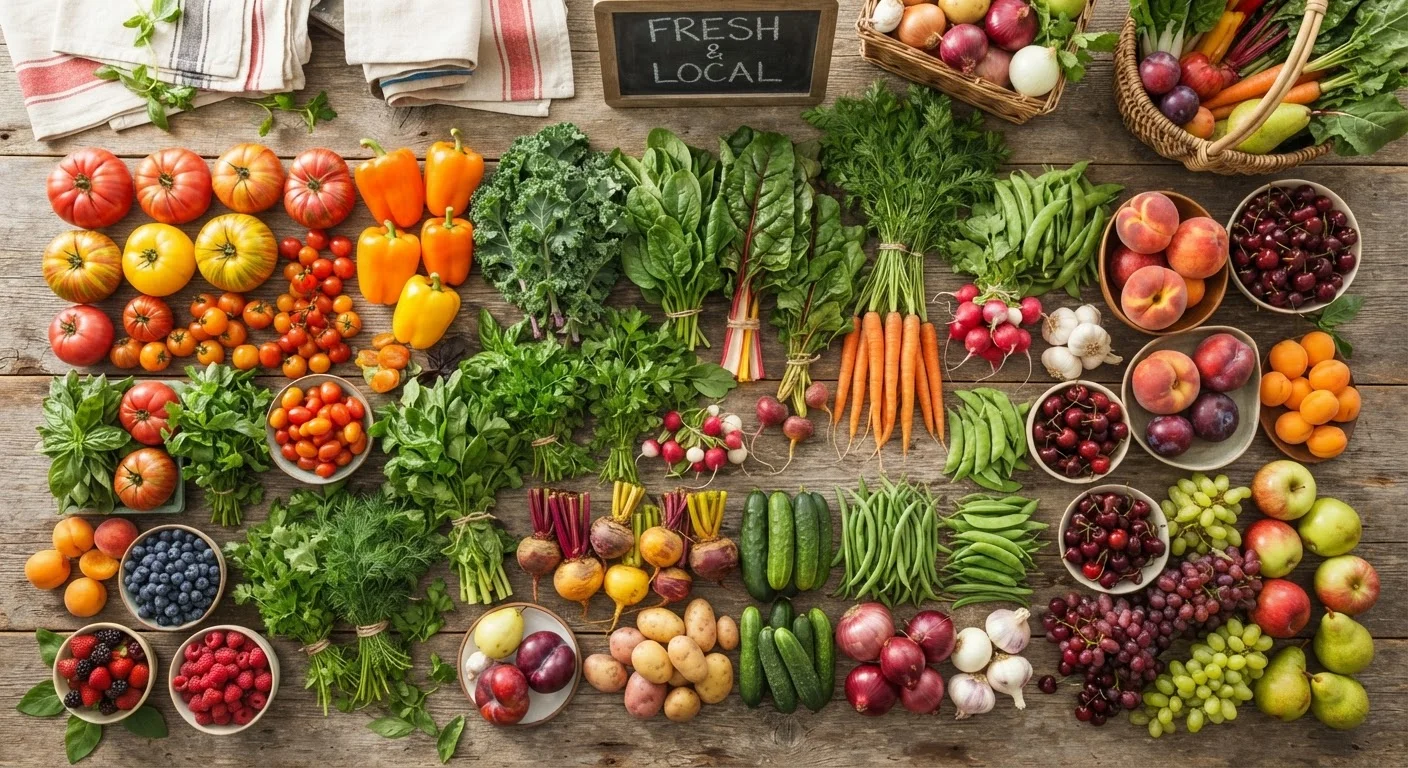
The most accessible lever for most shoppers is the agricultural calendar. Produce grown in abundance during its natural harvest window is cheaper to source and transport, and those savings typically reach the shelf price. Conversely, the same item grown out of season or shipped from distant growing regions carries higher costs that show up in what you pay. This is the core logic behind seasonal shopping: not a lifestyle choice, but a pricing reality.
Retailer promotion cycles add a second layer. Grocery chains plan their weekly and monthly sales well in advance, often coordinating with supplier promotions and inventory management needs. These cycles are structured enough that a regular shopper can begin to anticipate them with modest observation. Our broader look at where grocery money actually goes puts these pricing forces into the context of a full household food budget.
Seasonal Produce Pricing: The Basic Pattern
Most fresh produce follows a recognizable arc. Prices tend to be highest when supply from domestic growing regions is low - typically late winter and early spring for many vegetables - and lowest when regional harvests peak. Tomatoes are cheaper in late summer. Apples drop in price in fall. Citrus is most affordable in winter when Florida and California harvests are at full volume.
This pattern holds broadly, but it is not uniform. Regional climate, drought, early frosts, and transportation disruptions can all compress or extend a typical pricing window. A cold snap in a key growing region can push prices up mid-season, while a bumper crop year can keep prices low well into what is normally a higher-cost period.
~30%
Typical produce price variation in vs. out of season
USDA Economic Research Service data consistently shows fresh produce prices varying by roughly 20-40% between peak domestic supply and off-season periods for commonly consumed fruits and vegetables.
4-6 weeks
Typical grocery promotional cycle length
Consumer research and retail industry analyses generally place the standard promotional rotation for staple grocery categories at four to six weeks at major US chain grocery stores.
$1,500+
Estimated annual US household food waste cost
USDA estimates suggest the average US family discards a significant portion of purchased food; buying produce timed to seasonal abundance - when prices are lower and quality higher - can reduce this waste.
For families, the practical implication is simple: checking what is at peak supply before building a week's meals - rather than starting from a fixed recipe list - can meaningfully reduce the fresh produce portion of the grocery bill. This approach pairs well with a structured weekly grocery planning framework that builds flexibility around what is currently affordable.
When fresh prices are high, frozen is often the practical bridge. Produce frozen at harvest typically retains strong nutritional value, making it a reasonable substitute in most cooked applications. For a detailed comparison, see our article on what families should know about frozen vs. fresh produce.
Retailer Promotion Cycles and How to Use Them
Beyond produce, grocery pricing follows retailer-driven cycles that are largely independent of growing seasons. Most major chains run structured promotional calendars that rotate through categories on a predictable schedule. Canned goods, pasta, and cooking oils may cycle through a sale roughly every four to six weeks at many stores. Meat departments often mark down specific cuts on a weekly rotation tied to inventory turnover.
“Retail grocery promotions are planned weeks or months in advance. Shoppers who understand that rhythm are essentially seeing the sale before the sign goes up.”
— Phil Lempert, Food industry analyst and retail trend commentator
Several annual windows are particularly consistent for non-perishable staples. The weeks immediately following Thanksgiving and Christmas often bring promotions on baking ingredients, canned goods, and pantry items as stores clear holiday overstock. The late-summer back-to-school period frequently sees promotions on lunchbox staples, snacks, and breakfast items. Stocking up on non-perishables during these windows - within reason and budget - can reduce per-unit costs over the following months.
One caution worth noting: not every sale tag represents a genuine price reduction. Retailers use several pricing mechanics - including artificially elevated reference prices and multi-buy offers - that can obscure whether a promoted item is actually cheaper than its typical shelf price. Our article on how sale pricing actually works unpacks the common tactics. Cross-referencing against a household price reference for common grocery categories helps establish whether a promoted price is genuinely favorable.
Building a Simple Personal Pricing Calendar
The most reliable guide to grocery pricing cycles at any specific store is your own purchase history. A few months of receipts, with prices noted for five to ten items you buy regularly, is enough to identify whether a current shelf price is high, low, or typical for that item. This does not require a spreadsheet or a dedicated app - a notepad or a photo of receipts works just as well.
Store loyalty programs can accelerate this process. Many major chain apps now display price history for items in your purchase record, which removes the manual tracking step entirely. Using that data to identify the low point in a pricing cycle for a given staple - and buying a slightly larger quantity at that point - is a straightforward way to reduce average per-unit costs without changing what you eat.
Families who combine awareness of seasonal produce peaks with basic observation of retailer promotion cycles tend to find consistent, modest savings over time. Neither approach requires dramatic changes to shopping habits. For a look at the grocery habits that erode savings quietly in the opposite direction, see grocery shopping habits that quietly drain family budgets and routine shopping habits that cost more than they should.
Frequently Asked Questions
Yes, in most cases. When crops are harvested at peak volume, supply is high and prices at retail typically drop. Buying strawberries in early summer or butternut squash in fall generally costs less than buying the same items out of season, when they must be imported from distant growing regions.
Most major grocery retailers run promotional cycles lasting roughly four to six weeks, though this varies by chain and category. Staple categories like canned goods, dairy, and meat tend to cycle on predictable schedules, while produce sales follow a mix of seasonal availability and store-level promotions.
Often, yes. Frozen produce is typically harvested and frozen at peak ripeness, which preserves much of its nutritional value. For cooked dishes, smoothies, or soups, frozen can be a cost-effective alternative when fresh prices spike. See our <a href="/smart-shopping/everyday-savings/freezer-shopping-vs-fresh-nutritional-value-cost-and-practical-trade-offs">comparison of frozen vs. fresh trade-offs</a> for a fuller picture.
Canned and dry goods often go on deep promotion in the weeks following major holidays and during the late-summer back-to-school period. Baking staples tend to be promoted in the fall ahead of the holiday cooking season. These patterns are consistent enough to plan around, though individual store promotions vary.
Holding onto a few weeks of receipts and noting the price of two or three regularly purchased items is enough to spot trends. Some store loyalty apps also display price history for items you buy frequently, which can make comparison straightforward.
Not always. Sale tags use several pricing mechanics that don't always reflect a true reduction from the regular price. Understanding how promotional pricing works helps separate real savings from shelf-level marketing. Our article on <a href="/smart-shopping/everyday-savings/what-sale-price-really-means-at-major-grocery-chains">what sale price really means</a> explains the common tactics.
The content provided on our blog site traverses numerous categories, offering readers valuable and practical information. Readers can use the editorial team’s research and data to gain more insights into their topics of interest. However, they are requested not to treat the articles as conclusive. The website team cannot be held responsible for differences in data or inaccuracies found across other platforms. Please also note that the site might also miss out on various schemes and offers available that the readers may find more beneficial than the ones we cover.