

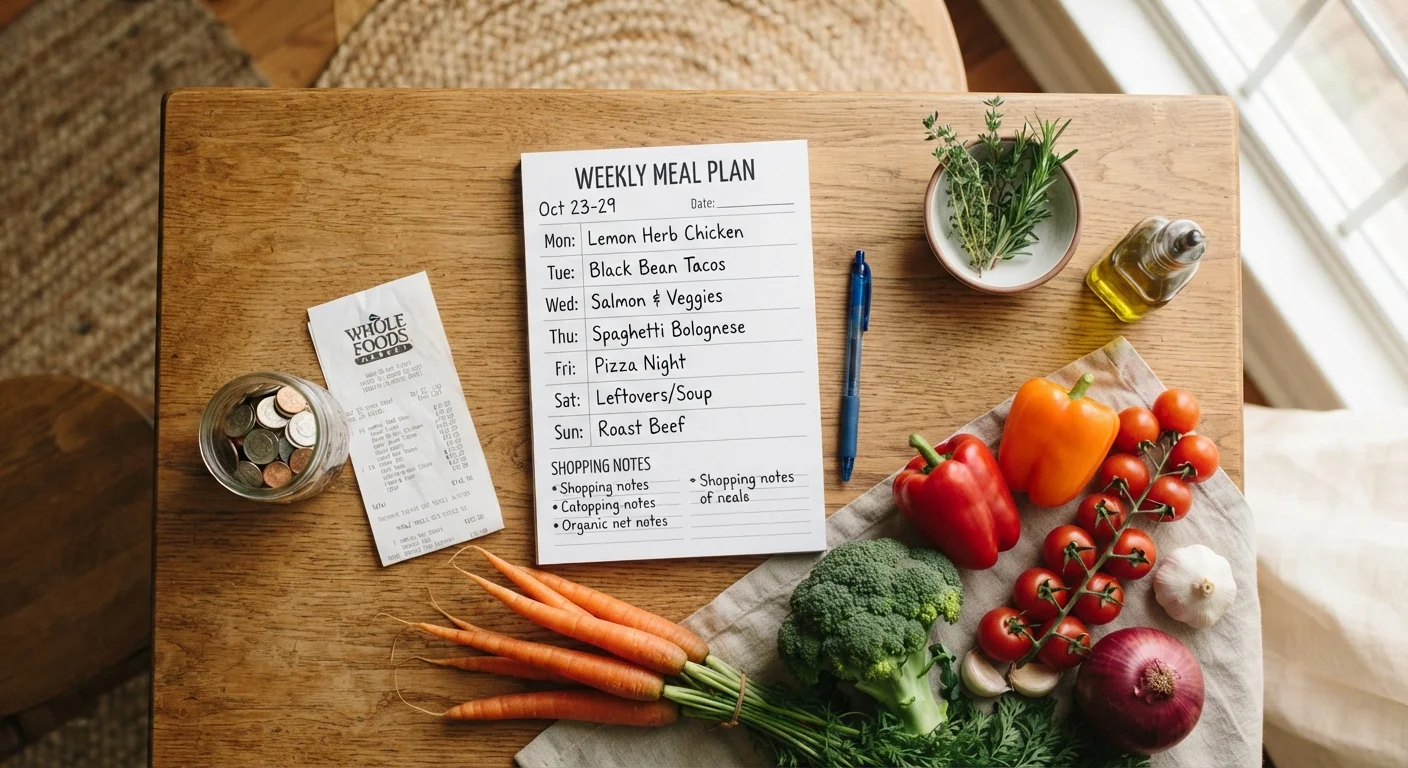
Why Meal Planning Is a Money Habit First
Most households think of meal planning as a time-management tool - a way to avoid the 5 p.m. panic of figuring out dinner. That framing undersells it. At its core, meal planning is one of the most effective financial habits available to the average family. Food is typically the third-largest household expense after housing and transportation, and it's one of the few major budget categories where consistent small decisions create outsized results.
The connection is direct: when you plan meals in advance, you buy only what you need, waste less of what you buy, and resist the expensive default of takeout or last-minute convenience shopping. According to the USDA, American households throw away roughly 30-40% of the food supply - much of it perishables that were purchased without a clear plan for use. That's not a cooking problem. It's a planning problem with a financial consequence.
For families working to strengthen their household budget, meal planning belongs on the same list as automating savings or reviewing subscriptions. It's repeatable, low-effort once established, and compounds in impact over time. See also how common grocery habits quietly inflate costs - many of which meal planning directly counteracts.
Best Practices for Meal Planning That Actually Saves Money
The following practices are grounded in how real families sustain a planning habit - not as a perfect system, but as a workable one that keeps grocery spending in check week after week.
Plan meals before you build your grocery list - never the other way around.
Shopping without a meal plan is the single biggest driver of food waste and impulse spending. When you decide what you'll eat before you shop, your list becomes precise, and precision eliminates the duplicate ingredients and forgotten-until-they-spoil purchases that inflate costs.
Do a pantry and refrigerator audit before planning each week.
Most households already have ingredients that could form the backbone of several meals. Auditing before planning prevents buying duplicates and forces older items into rotation before they expire - directly reducing waste-related losses.
Build at least two 'flexible' meals per week using interchangeable proteins or vegetables.
Rigid plans fail when life intervenes - a late meeting, a sick child, or an unexpectedly busy evening. Flexible meals, like grain bowls or stir-fries, can absorb whatever produce needs using and adapt to what's available, reducing both waste and the temptation to order out.
Set a target number of takeout meals per week and plan around it - not against it.
Budgeting zero takeout is unrealistic for most families and leads to plan abandonment. Acknowledging one or two planned restaurant or takeout nights prevents the 'we already broke the plan' mindset that leads to unplanned spending the rest of the week.
Batch-cook one or two components each week to reduce the friction of weeknight cooking.
Convenience is the primary reason families turn to takeout. Cooking a large pot of grains or roasting a tray of vegetables on the weekend reduces weeknight prep time to minutes - making planned meals genuinely competitive with delivery speed.
For a structured framework on turning these habits into a weekly routine, the weekly grocery planning framework provides a practical starting point.
Quick Wins to Start This Week
You don't need a perfect system to start saving. These immediate actions move the needle without requiring a full overhaul of how you shop or cook.
Even applying one or two of these consistently adds up. Families who follow core budget meal planning principles typically find that the habit becomes self-reinforcing - the savings motivate continued planning.
Building the Habit for the Long Term
The biggest obstacle to meal planning isn't knowledge - it's consistency. Most families try it, see results, then drift back to unplanned shopping when life gets busy. The fix is making the habit as frictionless as possible.
$1,500+
Estimated annual household food waste value
The USDA and <abbr title="Environmental Protection Agency">EPA</abbr> estimate the average US family of four discards between $1,500 and $1,800 in food per year.
$200-$300
Potential monthly savings from consistent meal planning
Financial planning resources and consumer research consistently cite reduced impulse purchases and takeout as the primary drivers of this monthly reduction for typical households.
Keep your plan simple enough to complete in 15 minutes. Repeat proven meals rather than experimenting every week. Use a shared digital note or whiteboard that the whole household can see. And treat deviations - ordering pizza on a Wednesday - as expected variation, not failure. Rigid systems break; flexible ones stick.
Meal planning also pairs naturally with other savings strategies. When combined with intentional grocery shopping, it supports broader goals like building household savings and reducing debt. A family that cuts $200 per month from food spending has found $2,400 per year - money that can fund an emergency account, pay down a credit card, or reduce financial stress in measurable ways.
For families ready to go deeper, a structured weekly meal plan offers a proven blueprint that balances both nutrition and budget. And for households where cost is the primary constraint, feeding a family on a tight budget demonstrates how to maintain nutritional quality while spending less.
This article is for general informational purposes only and does not constitute personalised financial or dietary advice. Consult a qualified financial adviser or registered dietitian for guidance specific to your situation.
The content provided on our blog site traverses numerous categories, offering readers valuable and practical information. Readers can use the editorial team’s research and data to gain more insights into their topics of interest. However, they are requested not to treat the articles as conclusive. The website team cannot be held responsible for differences in data or inaccuracies found across other platforms. Please also note that the site might also miss out on various schemes and offers available that the readers may find more beneficial than the ones we cover.