

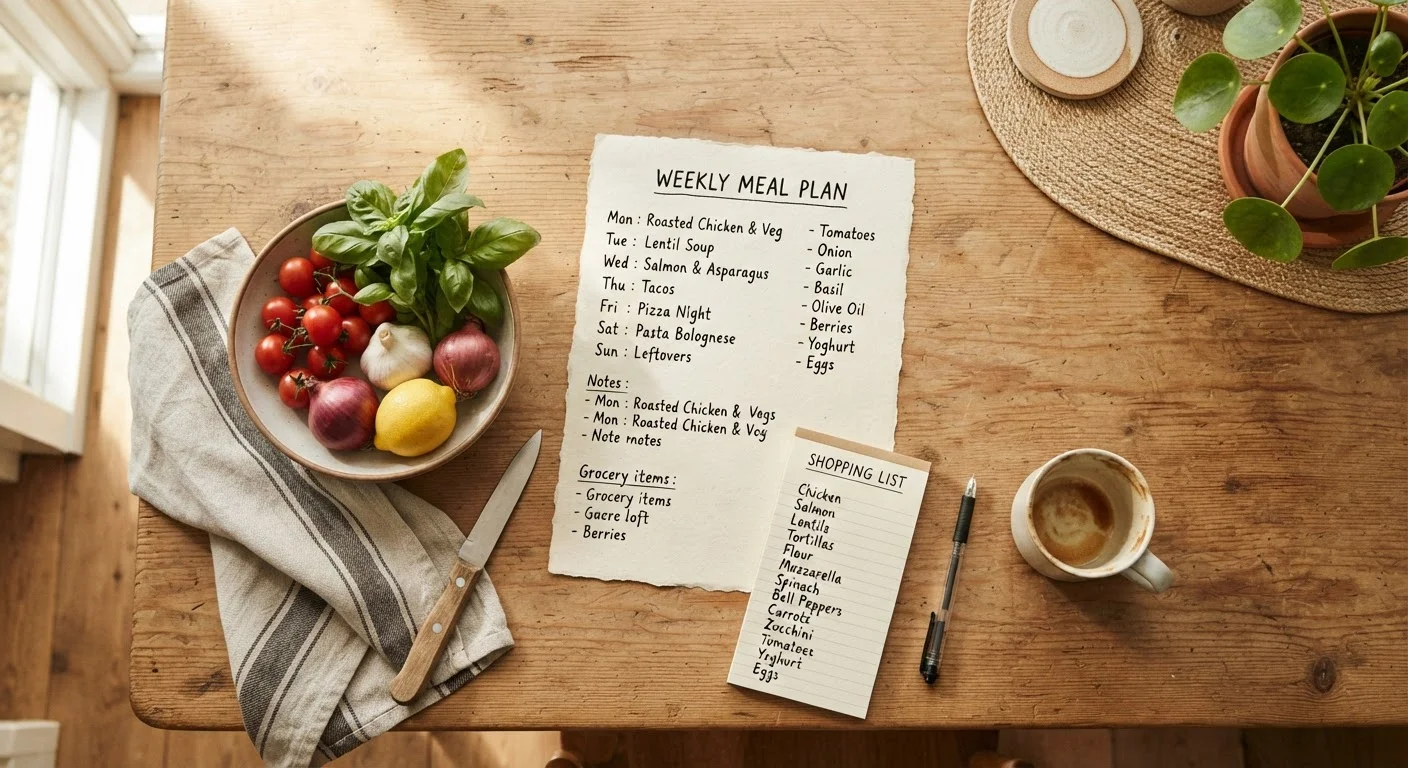
Why Meal Planning Pays Off Beyond the Kitchen
For most families, dinnertime stress doesn't start at 6 p.m. - it starts the moment someone asks, "What are we having tonight?" Without a plan, that question triggers a scramble: fridge-staring, last-minute takeout orders, or a meal assembled from random ingredients that nobody particularly wanted. The costs add up fast, both financially and emotionally.
Research consistently links structured meal planning to lower food expenditure and reduced household food waste. When you know what you're cooking, you buy only what you need. When ingredients are already home and prepped, the appeal of expensive convenience meals drops considerably. As we explore in our guide on meal planning as a financial habit, the discipline of planning ahead functions more like a money skill than a cooking skill.
Nutritionally, planned meals also tend to be more balanced. When dinner isn't decided under pressure, it's easier to include vegetables, whole grains, and varied proteins rather than defaulting to whatever is fastest. Families dealing with picky eaters or competing schedules can find additional perspective in our article on managing mealtime conflict.
Start Simple, Not Perfect
Families new to meal planning often overcommit by trying to plan elaborate recipes every night. Start by planning just three or four dinners in your first week. A modest, realistic plan you actually follow is far more valuable than an ambitious one that falls apart by Tuesday.
What You Need Before You Start
Effective meal planning requires a few minutes of preparation before you build your first weekly plan. Skipping this groundwork is why many families abandon the habit after one or two tries.
What you will need
If your goal is also to stretch your grocery dollars further, our resource on feeding a family on a tight budget pairs well with this guide.
Weekly planner template (paper or digital)
Provides a visual layout of the week so meals can be assigned to specific days at a glance.
Grocery list app or notepad
Used to build a shopping list organized by store section directly from the weekly meal plan.
Slow cooker or Instant Pot
Enables hands-off cooking on busy weeknights, allowing meals to be started earlier in the day.
Airtight food storage containers
Keeps batch-prepped ingredients fresh in the refrigerator for use across multiple meals during the week.
How to Build Your Weekly Meal Plan
Follow these steps each week. The process gets faster as it becomes routine - most families complete it in under 30 minutes after the first few attempts.
Take inventory of your pantry, fridge, and freezer
Before planning a single meal, open every cabinet and check what you already have. Note proteins in the freezer, grains in the pantry, and any fresh produce that needs to be used soon. Building meals around existing ingredients eliminates waste and reduces how much you need to spend at the store.
Check the week's schedule before assigning meals
Look at the week ahead: sports practices, late work nights, school events. Assign simpler, faster meals - sheet-pan dinners, slow-cooker recipes, or planned leftovers - to your busiest evenings. Save more involved cooking for nights when you have time and energy.
Plan for 5-6 dinners, not 7
Trying to plan every single night sets the plan up to fail. Build in one leftover night and one flexible night for unexpected changes. Planning 5 or 6 intentional dinners creates structure without rigidity, and reduces the pressure to execute perfectly every day.
Include family members in meal selection
Ask each family member - including children old enough to have preferences - to suggest one meal for the week. This simple step dramatically increases willingness to eat what's served and reduces mealtime pushback. Even giving younger children a choice between two options builds their investment in the plan.
Build your grocery list directly from the plan
Once meals are set, list every ingredient needed. Cross-reference against your pantry inventory so you only add what's genuinely missing. Organizing the list by store section (produce, proteins, dairy, dry goods) saves time and reduces backtracking in the store - which also reduces impulse purchases.
Do one small batch-prep session
After shopping, set aside 30-45 minutes to prepare components that will speed up the week: cook a batch of grains, wash and chop vegetables, marinate proteins, or portion snacks. You don't need to pre-cook entire meals. Even small prep steps compound into significant time savings across weeknight dinners.
For a deeper look at building a structured grocery strategy around your plan, see our weekly grocery planning framework.
Making the Habit Stick Week After Week
The biggest obstacle to meal planning isn't the plan itself - it's consistency. Families who succeed long-term treat planning as a fixed weekly appointment, not an optional task. Choosing a consistent day and time (Sunday morning or Thursday evening are common anchors) removes the friction of deciding when to plan.
Build flexibility into your plan from the start. Designate one or two nights as "flex nights" - slots for leftovers, a simple pantry meal, or takeout - so the plan absorbs real life rather than collapsing under it. A plan that bends doesn't break.
Rotating a core set of 10-15 family-approved meals also reduces decision fatigue. Rather than searching for new recipes each week, pull from a proven list and rotate in one new dish occasionally. This keeps meals interesting without overwhelming the planning process. For strategies on maintaining nutrition even when schedules tighten, see our article on keeping family meals nutritious on a busy schedule.
Avoid Over-Planning in Early Weeks
Trying to plan every meal - breakfast, lunch, and dinner - before you've built the habit is a common reason families give up. Focus on dinners first, since that's where most food waste and spending pressure occurs. Expand to other meals only once the dinner-planning routine feels natural.
This article is for general informational purposes only and does not constitute nutritional or medical advice. Families with specific dietary needs or health conditions should consult a registered dietitian or qualified healthcare professional.
The content provided on our blog site traverses numerous categories, offering readers valuable and practical information. Readers can use the editorial team’s research and data to gain more insights into their topics of interest. However, they are requested not to treat the articles as conclusive. The website team cannot be held responsible for differences in data or inaccuracies found across other platforms. Please also note that the site might also miss out on various schemes and offers available that the readers may find more beneficial than the ones we cover.