

Why Most Grocery Runs Cost More Than They Should
For most families, the grocery bill is one of the largest flexible line items in the household budget-yet it rarely gets the same structured attention as rent or a car payment. The result is a pattern of buying on impulse, duplicating items already in the pantry, and discarding produce that never made it into a meal. See our breakdown of where grocery money actually goes for a closer look at the patterns behind a typical family's food spending.
The fix isn't spending less time on food-it's spending a bit more time before you shop. A consistent pre-shop planning routine, done once a week, addresses the root causes of overspending: no meal plan, no pantry awareness, and no structured list. This guide walks you through that routine step by step.
What you will need
Before You Start: What You Need
The framework below requires minimal tools. Most families can complete it using items they already have.
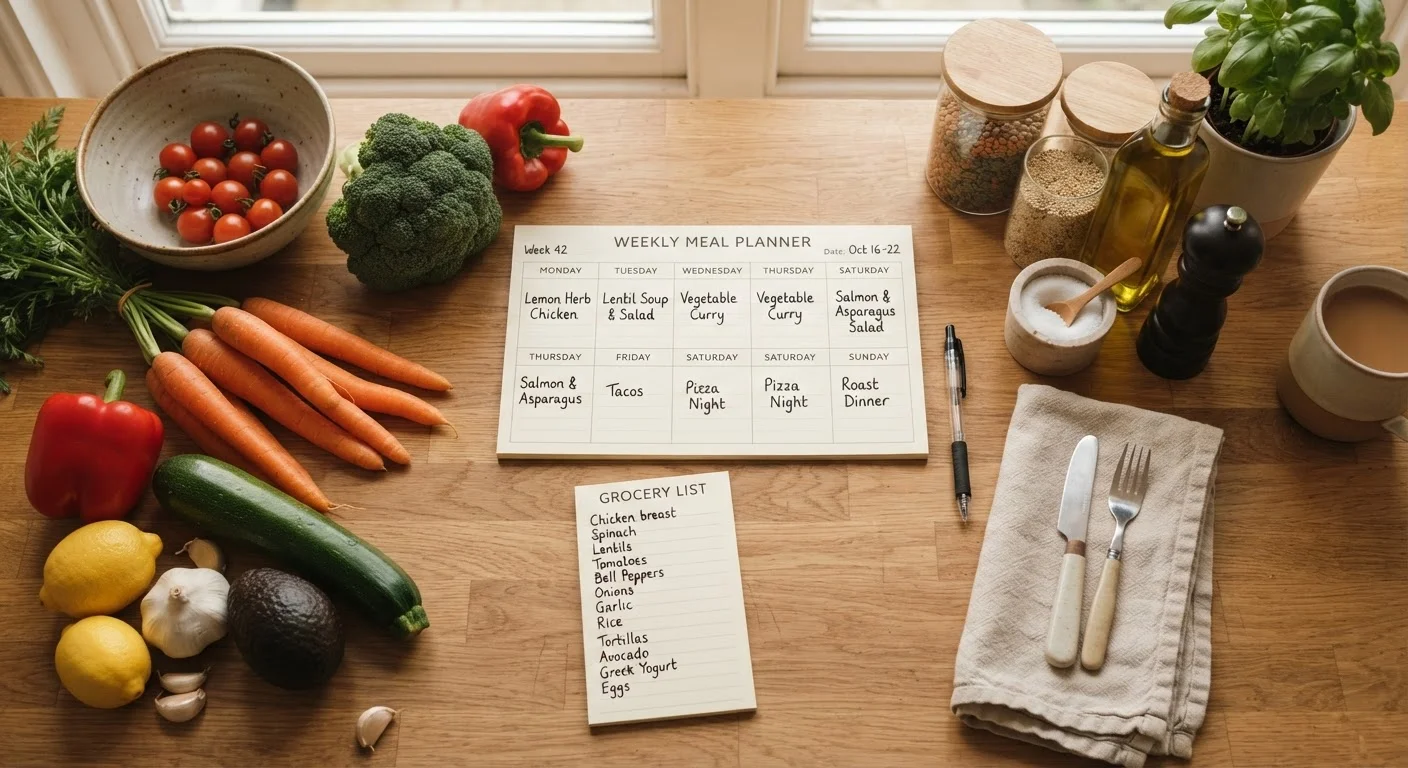
Weekly planner or calendar
Map specific meals to specific days so purchases align with what you'll actually cook.
Notepad or list-making app
Build and organize your grocery list by store section to reduce in-store time and impulse purchases.
Pantry inventory sheet
Track what staples you currently have so you don't buy duplicates.
Household budget reference
Set a spending ceiling before you plan meals so your menu fits your financial reality.
The Step-by-Step Planning Framework
Follow these steps in sequence each week. The first run-through takes the longest; subsequent weeks typically take under 30 minutes once the habit is established.
Audit your pantry, fridge, and freezer
Before deciding what to buy, establish what you already have. Open the pantry, refrigerator, and freezer and take a quick inventory-focusing on items that are nearing their use-by date, proteins in the freezer that should rotate out, and any partial bags or cans that can anchor a meal. Note these prominently; meals built around existing ingredients cost the least and reduce waste the most.
Map your family's week
Pull up your family's calendar and note each evening's constraints: late meetings, kids' activities, social commitments, and any nights when a longer cook is realistic. Assign a rough meal complexity to each night-quick assembly (under 20 minutes), standard cook (30-45 minutes), or more involved (60+ minutes). This prevents the common mistake of planning ambitious meals on busy nights and then abandoning the plan.
Select meals that use existing inventory first
With your pantry audit and weekly schedule in front of you, choose meals that consume what you already have before adding net-new ingredients. A chicken breast in the freezer, a partial bag of rice, and a can of tomatoes can anchor a meal that costs almost nothing additional. Fill remaining meal slots with recipes that share ingredients-buying one bunch of cilantro for three different dishes is more efficient than buying three specialty ingredients used once each.
For structured guidance on building a repeatable meal selection system, the core principles of budget meal planning cover ingredient overlap and flexibility in more detail.
Build your grocery list by store section
Compile every ingredient your selected meals require, subtract what you already have, and add any household staples running low. Then organize the list by store section-produce, dairy, meat, dry goods, frozen-rather than by meal. A section-organized list keeps you moving through the store efficiently and reduces the backtracking that leads to impulse purchases. Set a target total before you go so you enter the store with a number in mind, not just a list.
Do a 30-second plan review before leaving
Before heading to the store, spend 30 seconds confirming the list matches the week you actually planned. Check that every meal has all its key ingredients accounted for, that nothing on your pantry audit list was overlooked, and that the list total feels consistent with your budget. This brief check catches omissions that would otherwise require a second trip mid-week.
For a deeper look at how these steps connect to a full meal-planning system, see how a structured weekly meal plan reduces stress and waste.
Making the Routine Stick Over Time
A planning framework only pays off when it becomes a weekly habit rather than a one-time effort. The savings from avoiding a single duplicate pantry purchase or a forgotten produce item are modest on their own; compounded across 52 weeks, they become significant. Families who build everyday spending habits into a consistent routine typically find the process becomes faster and more intuitive over time.
Two adjustments help the routine absorb real-world disruption. First, always plan one or two flexible "backup" meals that can be assembled from staples you keep on hand-pasta with pantry sauce, egg-based dishes, or a grain bowl. These absorb cancelled plans or unexpectedly busy evenings without triggering an unplanned store run. Second, revisit your plan mid-week for about five minutes to confirm you're on track, swapping meals if schedules shifted.
Batch the Planning, Not Just the Cooking
Consider doing your weekly plan on the same day and at the same time each week-Sunday morning and Thursday evening are common anchors for families. Pairing planning with an existing routine (morning coffee, after the kids are in bed) dramatically increases how consistently the habit sticks. Consistency matters more than perfection: a decent plan executed every week outperforms a perfect plan done sporadically.
For families ready to go further, understanding seasonal and promotional pricing cycles can inform which weeks to stock up on specific categories. And if you're building this routine into a broader household financial plan, the complete guide to spending less on what you already buy covers strategies that extend well beyond the grocery aisle.
The content provided on our blog site traverses numerous categories, offering readers valuable and practical information. Readers can use the editorial team’s research and data to gain more insights into their topics of interest. However, they are requested not to treat the articles as conclusive. The website team cannot be held responsible for differences in data or inaccuracies found across other platforms. Please also note that the site might also miss out on various schemes and offers available that the readers may find more beneficial than the ones we cover.